The Democratic Party has recorded a sweeping victory in the 2026 United States midterm elections, taking control of both chambers of Congress in a major political setback for President Donald Trump and his Republican Party.
Results released by the Associated Press on Wednesday showed that Democrats had secured a majority in the House of Representatives and established a commanding position in the Senate, reversing the Republican dominance that characterized the beginning of Trump’s second presidential term.
The outcome represents a significant shift in the balance of political power in Washington and is expected to complicate the president’s legislative agenda during the remaining two years of his administration.

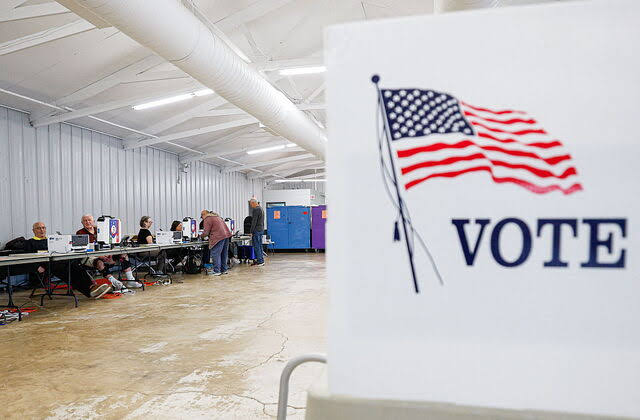
In the House of Representatives, which has 435 seats, Democrats had secured 224 seats, while Republicans had won 135 seats as of Wednesday morning. Another 72 constituencies were still reporting leading candidates, while four seats had no reported leader.
With 218 seats required for an outright majority, the Democratic Party had already crossed the threshold, putting it in a strong position to take control of the chamber when the new Congress convenes in January 2027.
The development marks a dramatic reversal for Republicans, who entered the elections with 219 seats in the House, compared with 215 held by Democrats and one independent member caucusing with the Republicans.
The Senate results also favored the Democrats, strengthening their position in the upper chamber of the US legislature.
According to the Associated Press figures, Democrats had secured 20 Senate election victories and retained 32 existing seats. Two independent senators who caucus with Democrats also retained their positions, bringing the Democratic-aligned bloc to 54 secured seats.
Republicans, meanwhile, had secured 12 election victories and retained 31 existing seats, giving them 43 confirmed seats. Two additional Republican candidates were leading in outstanding races.
The Senate has 100 seats, with 51 required for a simple majority. The Democratic-aligned bloc had therefore established a majority position, putting Republicans on the defensive as the final results continued to emerge.
The elections, held on Tuesday, November 3, were closely watched as a referendum on Trump’s leadership, economic policies, immigration agenda and handling of international affairs.
Midterm elections traditionally provide American voters with an opportunity to express their approval or dissatisfaction with the sitting president, particularly as all 435 House seats and approximately one-third of the Senate seats are contested.
For Trump, the Democratic victory could substantially alter the political dynamics of his presidency.


With the opposition controlling both chambers, the administration may encounter greater resistance to proposed legislation, federal spending priorities, presidential appointments and other major policy initiatives.
Democratic lawmakers are also expected to intensify congressional oversight of the administration, potentially opening investigations into controversial government decisions and policies.
Control of Congress would give Democrats considerable influence over legislative hearings, committee leadership and the direction of congressional investigations.
The development could also create fresh uncertainty around Trump’s domestic policy priorities, including immigration enforcement, taxation, government spending and healthcare reforms.
Beyond domestic politics, the election outcome could have implications for American foreign policy. Congressional control over funding, military assistance, foreign aid and international agreements gives lawmakers considerable influence over the administration’s engagement with other countries.
However, the extent to which Democrats can translate their electoral victory into legislative achievements will depend on internal party unity and their ability to navigate disagreements over policy priorities.
The results also reinforce the importance of the midterm elections in determining the effectiveness of a president’s political mandate. Although Trump remains in the White House, the loss of Republican control of Congress could significantly restrict his ability to implement his agenda without negotiating with Democratic lawmakers.
Political observers will now be watching how the Republican leadership responds to the defeat and whether the party can rebuild its electoral fortunes ahead of the 2028 presidential election.
For Democrats, the immediate challenge will be to consolidate their gains, fulfil campaign promises and demonstrate that their congressional majority can deliver tangible improvements in the lives of Americans.
Although some constituency results were still outstanding as of Wednesday morning, the Associated Press figures indicated that the Democrats had achieved the most significant political breakthrough of the election.
The new congressional balance of power is expected to take effect in January 2027, when the 120th United States Congress begins its legislative session.
The election has therefore set the stage for a potentially confrontational final two years of Trump’s second term, with Democrats preparing to exercise greater influence over the direction of American politics and governance.