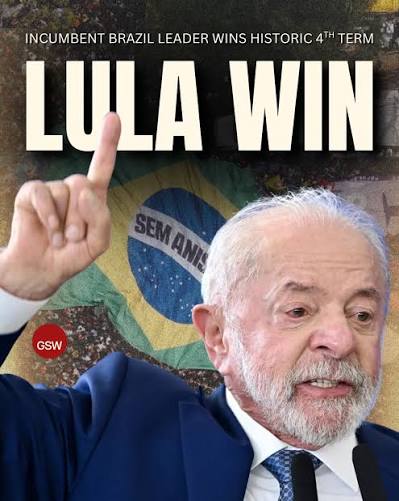
German Chancellor Friedrich Merz has congratulated Brazilian President Luiz Inácio Lula da Silva on his re-election, signalling Germany’s readiness to strengthen diplomatic and economic relations with Latin America’s largest economy.
Merz conveyed his congratulations on Monday, expressing optimism that Lula’s renewed mandate would provide an opportunity for both countries to deepen cooperation on issues of mutual interest.
The congratulatory message highlights the importance Germany attaches to its relationship with Brazil, a major emerging economy and an influential voice among developing nations.
Brazil plays a significant role in international discussions on climate change, sustainable development, global trade and the reform of multilateral institutions. Germany, meanwhile, remains one of the European Union’s leading economic powers and an important partner for Brazil in Europe.
The two countries have longstanding diplomatic and commercial relations, with cooperation spanning industrial development, renewable energy, scientific research and environmental protection.
Lula’s return to the presidency has placed renewed emphasis on Brazil’s international partnerships, particularly efforts to attract investment, promote economic growth and restore the country’s influence in global diplomacy.
Germany has also maintained an interest in expanding economic engagement with Brazil, especially in areas linked to clean energy, technological innovation and the transition towards more sustainable industrial production.
Merz’s message could provide an opening for further discussions between Berlin and Brasília on shared priorities, including strengthening trade relations and encouraging private-sector investment.
Climate policy is another important area of potential cooperation. Brazil is home to much of the Amazon rainforest, which plays a crucial role in regulating the global climate. Germany has supported international efforts to protect forests and promote sustainable development, making environmental cooperation an important component of bilateral relations.
Both countries also have interests in maintaining a rules-based international order and strengthening multilateral cooperation amid growing geopolitical tensions.
However, translating diplomatic goodwill into concrete results will depend on negotiations, economic conditions and the willingness of both governments to align their policy priorities.
For Brazil, stronger ties with Germany could help attract European investment and expand access to technology and markets. For Germany, deeper engagement with Brazil could strengthen its economic presence in South America and support efforts to diversify international partnerships.
Merz’s congratulatory message therefore represents more than a diplomatic courtesy. It underscores the potential for continued engagement between two countries seeking opportunities for cooperation in an increasingly complex global environment.
As Lula begins his renewed term, attention will turn to how Brazil intends to advance its international agenda and how European partners, including Germany, respond to its priorities.