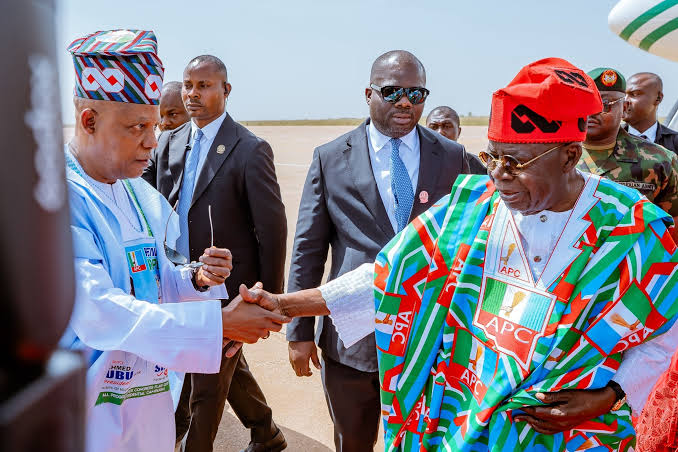
The All Progressives Congress (APC) on Saturday, October 24, 2026, formally kicked off its presidential campaign in Kaduna State, marking a significant step in its preparations for the 2027 general elections.
The campaign flag-off brought the ruling party’s presidential ambitions into sharper focus as President Bola Tinubu and other party leaders sought to mobilise supporters, consolidate the APC’s political base and strengthen its position ahead of the presidential election scheduled for January 16, 2027.
Kaduna, one of Northern Nigeria’s most politically influential states, provided a strategic setting for the campaign, given its sizeable electorate and importance in the region’s electoral calculations.
The rally signalled the beginning of an intensified political engagement by the APC as it seeks to persuade Nigerians to renew the party’s mandate for another four years.
The campaign is expected to centre on the Tinubu administration’s economic reforms, infrastructure programmes, security policies and efforts to improve public services.
However, the party faces the challenge of convincing voters that its policies are translating into tangible improvements in their daily lives.
The rising cost of living, unemployment, insecurity and pressure on household incomes remain among the major issues likely to influence voting decisions in the months leading to the election.
For the APC, the Kaduna flag-off offered an opportunity to present its record in government, outline its priorities and reassure supporters that its policies would deliver improved economic conditions and national development.
The party will also need to sustain unity among its leaders and grassroots supporters while strengthening its mobilisation structures across the 36 states and the Federal Capital Territory.
Political observers are expected to pay particular attention to the APC’s ability to maintain its support base in Northern Nigeria, where electoral participation and voter preferences could play a decisive role in determining the outcome of the presidential contest.
Kaduna’s political significance also makes it an important arena for opposition parties seeking to challenge the ruling party’s influence and persuade voters to support alternative candidates.
Beyond the large rallies and campaign appearances, the APC’s prospects will depend on its ability to connect its policy arguments with the everyday concerns of Nigerians.
Young voters, women, workers, traders and rural communities are likely to be important constituencies in the contest.
The opposition is also expected to scrutinize the administration’s record on economic management, security and governance, setting the stage for an increasingly competitive campaign.
With the Kaduna flag-off concluded, the APC faces the task of translating the enthusiasm generated at the rally into sustained grassroots mobilisation and electoral support.
As the 2027 general elections draw closer, the coming months will test the ruling party’s organisational strength, its capacity to respond to public concerns and its ability to convince voters that President Tinubu deserves another term.
The Kaduna rally has therefore placed the APC’s re-election campaign firmly in the national political conversation, setting the stage for a contest likely to be shaped by performance, public confidence and the competing promises of Nigeria’s political parties.