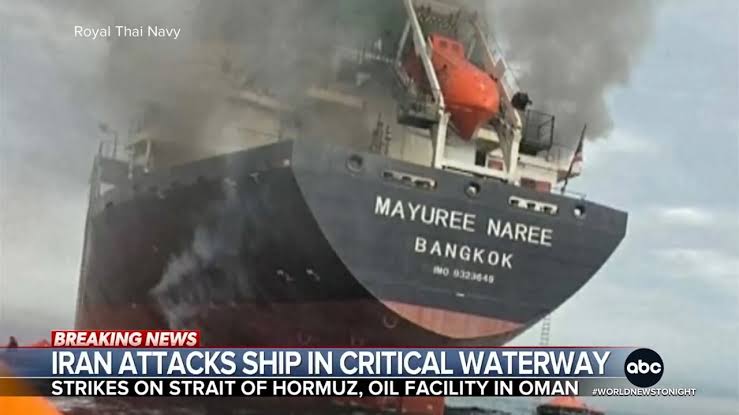
The crisis surrounding the Strait of Hormuz has intensified following reports that 113 ships have come under attack and 24 seafarers have been killed, raising fresh concerns about the safety of international shipping through one of the world’s most strategically important waterways.
The reported attacks highlight the growing vulnerability of commercial vessels operating in and around the Gulf, where escalating geopolitical tensions have threatened maritime traffic, disrupted shipping operations and heightened uncertainty across global energy markets.
The Strait of Hormuz, situated between Iran and Oman, is a critical passage connecting the Persian Gulf to the Gulf of Oman and the Arabian Sea. It serves as a major transit route for crude oil, petroleum products and liquefied natural gas destined for markets across Asia, Europe and other regions.
Any prolonged disruption to shipping through the narrow waterway could have far-reaching consequences for global commerce, particularly for countries heavily dependent on imported energy.
The reported loss of 24 seafarers has also brought renewed attention to the dangers faced by crews working aboard merchant vessels in high-risk maritime zones. Seafarers, many of whom operate far from their home countries for extended periods, can find themselves caught in conflicts over which they have little control.
Industry observers have repeatedly warned that attacks on commercial shipping can lead to higher insurance premiums, increased freight charges, delayed deliveries and the rerouting of vessels along longer and more expensive routes.
Such developments could ultimately affect consumers through higher transport costs and increased prices for essential commodities.
The crisis also presents a significant challenge to shipowners, maritime insurers, port authorities and governments seeking to maintain the uninterrupted movement of goods through international waters.
Shipping companies may respond to heightened risks by suspending voyages, deploying additional security measures or diverting vessels away from dangerous areas. However, such decisions can increase operating costs and place additional pressure on already strained global supply chains.
International maritime organisations and governments are expected to face growing calls to strengthen protections for civilian vessels and ensure that commercial seafarers are not exposed unnecessarily to the consequences of regional conflicts.
The protection of civilian maritime traffic is a central concern under international maritime law, while attacks on commercial shipping can raise serious legal and diplomatic questions depending on the circumstances.
Beyond the immediate danger to crews, the situation threatens to deepen economic uncertainty. Energy markets are particularly sensitive to developments around Hormuz because of the volume of oil and gas transported through the passage.
A sustained interruption could push energy prices higher, intensify inflationary pressures and complicate economic planning for countries already facing high import and transportation costs.
For developing economies, including Nigeria, movements in international oil prices can have mixed consequences, influencing government revenues while also affecting domestic fuel costs, foreign exchange conditions and inflation.
As tensions continue, the reported attacks and fatalities underline the urgent need for de-escalation, diplomatic engagement and credible arrangements to safeguard commercial shipping.
The central concern remains whether international efforts can prevent further casualties and restore confidence in a waterway whose security is vital to global trade.
With 113 vessels reportedly attacked and 24 seafarers dead, the deepening Hormuz crisis has become a stark reminder that regional conflicts can carry consequences far beyond the immediate battlefield.