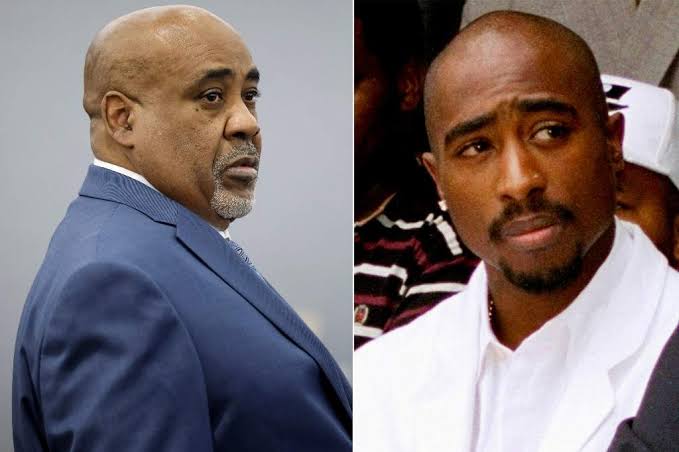
Nearly three decades after the killing of American rap icon Tupac Shakur, Duane “Keffe D” Davis has received a sentence of 40 years to life in prison for his role in the murder, marking a significant development in a case that has remained one of the most closely watched mysteries in music history.
Shakur, popularly known as 2Pac, was shot on September 7, 1996, while travelling in a BMW with Death Row Records founder Suge Knight in Las Vegas, Nevada. He died six days later, on September 13, at the age of 25.
The rapper’s death shocked the entertainment industry and left millions of fans around the world mourning one of hip-hop’s most influential figures. Known for his politically charged lyrics, emotional storytelling and uncompromising personality, Shakur became a defining voice of 1990s rap.
Davis, a former member of the South Side Compton Crips gang, was arrested in September 2023 in connection with the killing. Prosecutors alleged that he helped organise the shooting following a confrontation involving Shakur and members of the rival gang-associated circle of Orlando Anderson at a Las Vegas casino.
Investigators said the confrontation occurred shortly before Shakur was shot in a drive-by attack near the Las Vegas Strip. The killing unfolded against the backdrop of tensions between prominent figures associated with rival factions in the American hip-hop scene.
Davis had previously spoken publicly about the shooting and described his alleged involvement in accounts that attracted renewed attention from investigators. His statements became an important part of the renewed investigation into the rapper’s death.
For years, the case remained unresolved despite numerous theories, documentaries, investigative reports and public speculation about the identities of those responsible. Shakur’s murder, alongside the 1997 killing of fellow rap superstar Christopher Wallace, better known as The Notorious B.I.G., fueled longstanding debates about violence, rivalry and the culture surrounding American gangsta rap.
Davis’s arrest represented a turning point in the investigation, which had faced decades of uncertainty and repeated demands from Shakur’s family and supporters for accountability.
The case also highlighted the challenges investigators face when revisiting decades-old crimes, particularly when witnesses are reluctant to cooperate, evidence must be reassessed and public accounts conflict.
Shakur’s influence has continued to grow since his death. His music remains widely celebrated, while his image, lyrics and political commentary continue to inspire artists, scholars and fans across generations. He was posthumously inducted into the Rock & Roll Hall of Fame in 2017, cementing his legacy beyond hip-hop.
The lengthy sentence marks a dramatic chapter in the pursuit of justice for the slain rapper.
However, the circumstances surrounding Shakur’s death and the wider tensions of the era continue to attract public interest, ensuring that the case remains a defining story in the history of American popular music.