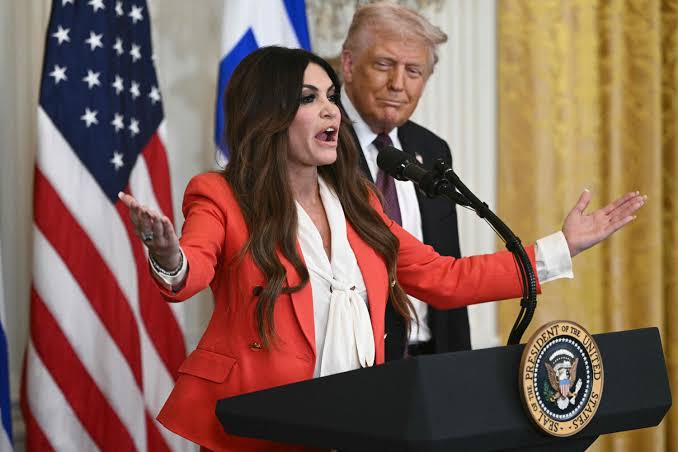
Kimberly Guilfoyle has stepped down as United States ambassador to Greece after the White House asked her to resign amid allegations that she sought $100,000 from a Republican donor to pay her personal credit card bill.
The development, announced on Tuesday, October 13, 2026, followed reports that President Donald Trump was unhappy with the allegations involving the former Fox News personality and one-time fiancée of his son, Donald Trump Jr.
White House Press Secretary Katie Zacharia confirmed the decision, telling reporters that the administration had asked Guilfoyle to resign while acknowledging her contributions to the government.
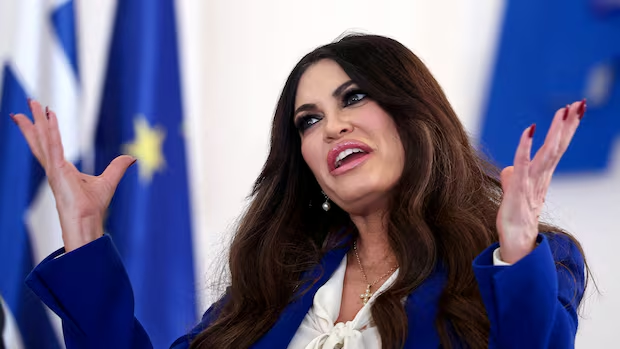
The controversy centres on allegations published by The Wall Street Journal, which reported that Guilfoyle contacted longtime Trump supporter and donor Eric Deters in July 2025, shortly before her Senate confirmation hearing, seeking assistance with a $100,000 American Express bill.
According to the report, messages exchanged between the pair suggested that Guilfoyle wanted the payment arranged in a manner that would avoid leaving a financial paper trail.
The alleged communications also indicated that she offered to help Deters gain access to senior officials in the Trump administration regarding his tax and legal concerns.
Deters, a conservative media personality and former congressional candidate, alleged that the proposed arrangement amounted to an exchange of money for political influence.
He reportedly said he had paid Guilfoyle approximately $300,000 over several years in connection with speaking engagements while seeking assistance with matters involving government officials.
However, Deters did not pay the $100,000 credit card bill, according to published reports.
Guilfoyle has disputed the allegations and challenged the authenticity of the messages. She has maintained that she intends to defend her reputation and rejected claims of wrongdoing.
In announcing her departure, Guilfoyle described serving as ambassador to Greece as the honour of a lifetime. She also expressed gratitude to Trump and Secretary of State Marco Rubio for entrusting her with the diplomatic assignment.
Despite her departure, questions remain over the allegations and their potential implications for diplomatic accountability and ethical standards among presidential appointees.
The State Department’s Office of Inspector General had begun examining the allegations, with reports also raising concerns about other aspects of Guilfoyle’s conduct while representing Washington in Athens.
These included claims that she promoted the interests of a Greek construction and energy company during official engagements and received benefits associated with luxury travel. Guilfoyle has disputed allegations of improper conduct.
The controversy has attracted calls from Democratic lawmakers for further scrutiny, particularly over whether personal financial arrangements involving political donors could compromise the integrity of public office.
Guilfoyle’s departure also comes after a period in which she played a prominent role in promoting US energy interests in southeastern Europe, including efforts to encourage European countries to reduce their reliance on Russian energy supplies.
Her exit leaves the Trump administration facing the task of determining future leadership at the US embassy in Athens as the investigation and political fallout continue.
The allegations have not, by themselves, established criminal wrongdoing, and the outcome of the investigation remains uncertain.