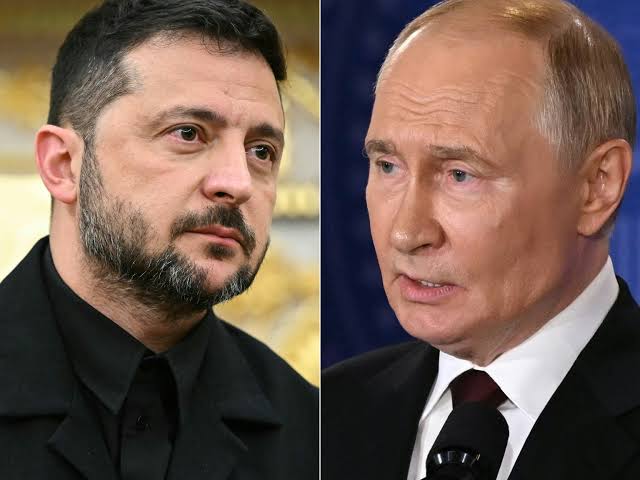
Ukrainian President Volodymyr Zelenskyy has warned that his country will continue retaliatory strikes against Russian energy facilities if President Vladimir Putin refuses to agree to a mutual truce targeting energy infrastructure.
Zelenskyy made the declaration on Monday, October 12, while addressing the Warsaw Security Forum virtually, insisting that any agreement to suspend attacks must be respected by both sides.
The warning comes amid renewed diplomatic efforts to de-escalate the nearly four-and-a-half-year war, following United States President Donald Trump’s announcement that Russia and Ukraine had agreed to an immediate ceasefire covering energy infrastructure.
However, uncertainty remains over the terms of the proposed arrangement, as Moscow has yet to clearly confirm its commitment.
According to reports, Zelenskyy said Ukraine was prepared to respect the proposed truce if Russia agreed to do the same, stressing that Kyiv would not unilaterally suspend its military operations while Russian attacks continued.
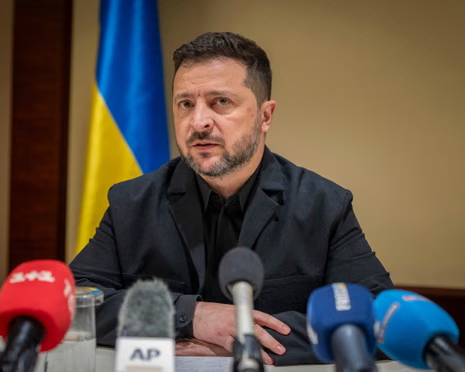
“This winter, if Russia does not agree to an energy ceasefire, we will respond,” Zelenskyy said, underscoring Ukraine’s determination to protect its national interests.
The Ukrainian leader’s position reflects Kyiv’s growing concern over Russian attacks on electricity-generating facilities, heating plants and other critical infrastructure as the country prepares for the winter season.
Russia’s repeated strikes on Ukrainian energy installations have caused widespread damage, disrupted electricity supplies and increased the risk of hardship for millions of civilians.
Ukrainian authorities fear that further attacks during the colder months could leave households struggling to access heating and other essential services.
Zelenskyy’s remarks also follow reports of continued Russian attacks despite Trump’s ceasefire announcement.
Ukrainian officials have accused Moscow of striking energy facilities after the US president declared that both countries had agreed to halt such operations.
The Ukrainian president has maintained that any genuine truce must cover all forms of attacks on energy infrastructure, including Russian strikes on Ukraine’s power and gas facilities and Ukrainian attacks on Russian oil refineries.
Kyiv has increasingly targeted Russian refineries and other petroleum installations, arguing that revenues from the country’s energy exports help finance its military campaign.
Such attacks have also become part of Ukraine’s broader strategy to weaken Russia’s capacity to sustain the war.
Trump’s intervention has introduced fresh uncertainty into the negotiations, particularly because Zelenskyy indicated that he had not been fully briefed before the American president publicly announced the agreement.
Nevertheless, Ukraine has signalled its willingness to cooperate with Washington’s initiative, provided that Russia demonstrates a corresponding commitment to ending attacks.
The latest developments have placed renewed pressure on Putin to clarify Moscow’s position and indicate whether Russia is prepared to accept a reciprocal suspension of strikes.
Diplomatic observers say an energy truce could offer temporary relief to civilians and reduce the risk of further damage to essential infrastructure.
However, the absence of clearly established terms, monitoring arrangements and enforcement mechanisms could undermine any agreement.
For Ukraine, the immediate priority remains preventing further destruction of its energy network while retaining the ability to respond to Russian attacks.
As winter approaches, the success or failure of the proposed truce could have significant consequences for civilian welfare, regional security and the broader international effort to end the conflict.
For now, Zelenskyy’s message is clear: Ukraine is prepared to stop striking Russian energy targets, but only if Moscow is willing to make the same commitment.