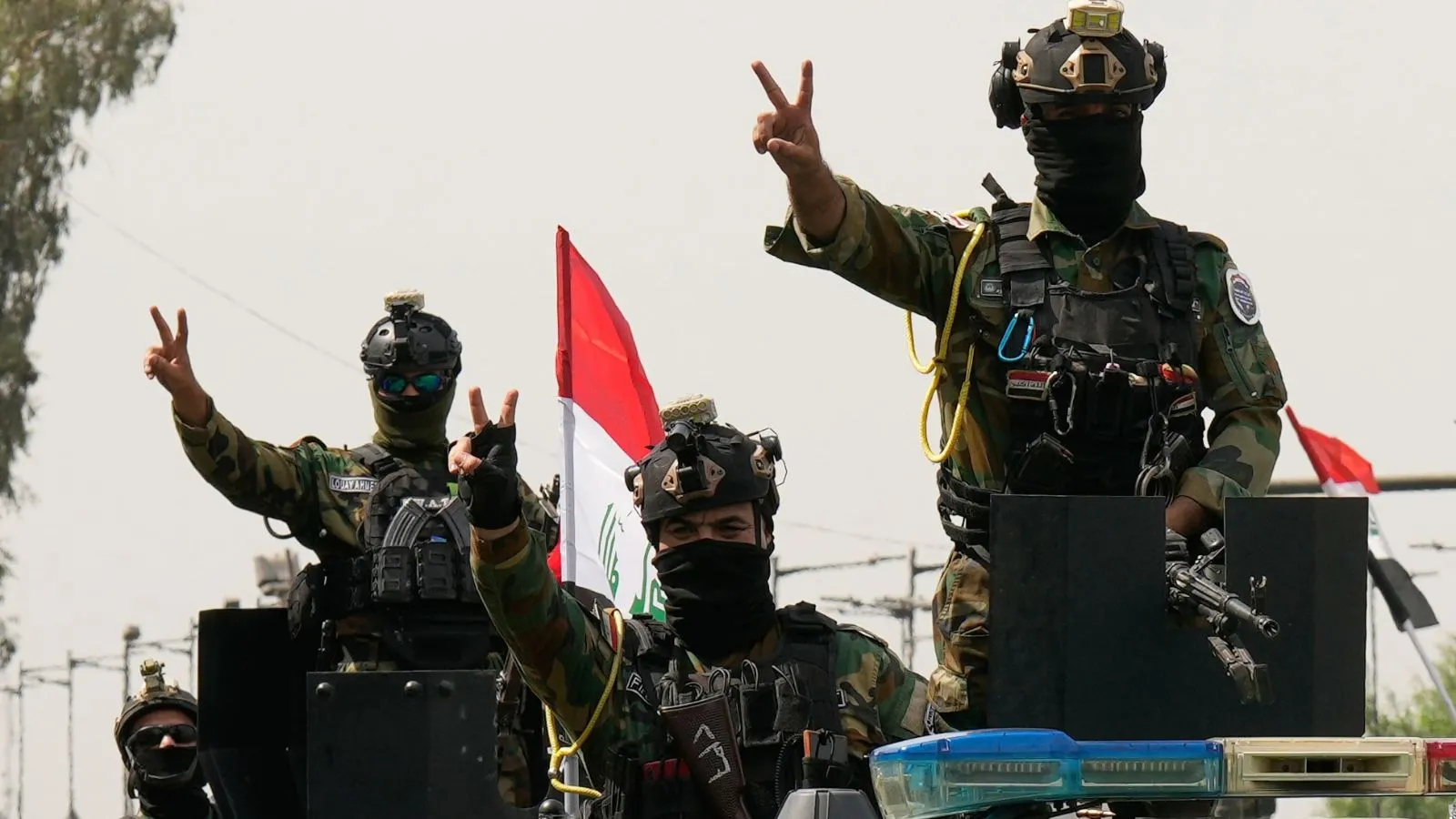
U.S. troops have withdrawn from Iraq, bringing the military chapter of the American-led campaign against ISIS to an end. But this is not the Iraq that President Joe Biden agreed to leave behind in 2024.
The withdrawal was agreed under Biden after Washington and Baghdad determined that Iraqi security forces had developed sufficient capacity to take primary responsibility for combating the remaining ISIS threat.
Under the transition plan, the U.S.-led coalition mission was to wind down, with the two countries moving toward a bilateral security relationship based on training, intelligence sharing and military assistance.
That transition has now been completed.
On September 30, the United States completed the withdrawal of its remaining troops from Iraq, ending Operation Inherent Resolve and a 12-year military campaign that followed the return of American forces in 2014 to fight the Islamic State.
Washington has said the conclusion of the coalition mission does not mean the end of security cooperation, with targeted training and intelligence support expected to continue.
But the end of the U.S. military presence has exposed another unresolved problem: Iraq’s powerful militia networks.
Many armed factions operate within the Popular Mobilization Forces, a state-recognised security structure created during the fight against ISIS.
Yet some of the most powerful groups, particularly those aligned with Iran, retain substantial military and political influence and have resisted demands to surrender their weapons.
The Iraqi government had initially linked the September 30 U.S. withdrawal deadline with efforts to disarm non-state armed groups.
However, powerful factions including Kataib Hezbollah and Harakat al-Nujaba have rejected disarmament or attached conditions that make an immediate settlement difficult.
Baghdad has subsequently pushed the militia disarmament deadline to June 2027.
For Prime Minister Mohammed Shia al-Sudani’s government, the challenge is now how to maintain state authority while managing armed groups that possess their own political influence, military capabilities and regional relationships.
The issue is particularly sensitive because Iran-backed Iraqi militias have previously attacked U.S.-linked targets and become involved in wider regional conflicts. With American forces gone, analysts say Iran and its allied groups could gain greater room to influence Iraq’s security and political affairs.
At the same time, the threat from ISIS has not completely disappeared.
The group no longer controls large territories as it did at its height, but sleeper cells remain active.
Iraqi and Kurdish security officials have expressed concern that the loss of U.S. intelligence, surveillance and logistical support could provide ISIS remnants with opportunities to regroup.
The U.S. departure therefore leaves Baghdad with a difficult balancing act. Iraq wants full sovereignty over its security while ensuring that no armed organisation becomes powerful enough to operate independently of the state.
The central question after the American exit is no longer simply whether Iraq can defeat ISIS. It is whether Baghdad can establish effective control over all armed groups within its borders.
The American military has left Iraq. The struggle over who controls Iraq’s security architecture, however, is far from over.