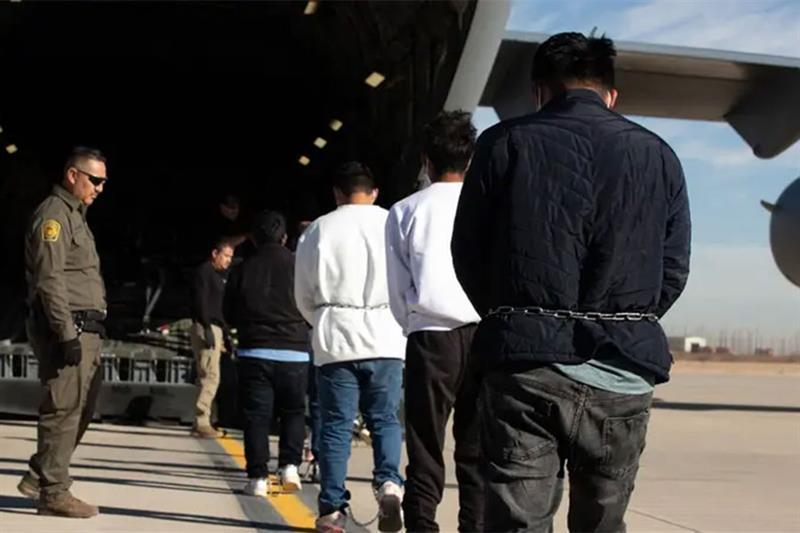
The United States has deported more than 25,000 migrants to countries with which they have no previous connection under a growing network of agreements negotiated by the administration of President Donald Trump, according to a new international investigation.
The investigation, published Monday by Forbidden Stories and a consortium of media organisations, found that at least 25,447 people had been deported to third countries by August 31, 2026.
The arrangements involve 35 countries and have been accompanied by plans to provide hundreds of millions of dollars to receiving governments and international organizations.
The policy concerns migrants who, for various legal or diplomatic reasons, cannot be returned directly to their countries of origin.
Instead, Washington has negotiated with other countries to accept them, sometimes despite the migrants having no family, residency or other established connection there.
The investigation found that approximately 20,000 of those deported were sent to Mexico, while thousands of others were transferred to 27 countries across Latin America, Africa and the Pacific.
Agreements have also reportedly been finalized with seven additional countries.
The scale of the programme has brought renewed attention to the Trump administration’s immigration strategy and the role of third-country deportations in its broader effort to increase removals from the United States.

According to the investigation, the US administration has earmarked about $410 million for the arrangements. Internal State Department records reportedly show that $81 million was designated for governments that signed agreements, while more than $178 million was intended for the International Organization for Migration and about $123 million for the UN Refugee Agency, UNHCR.
The agreements differ from country to country. Some specify which nationalities can be accepted, while others address whether countries will take migrants with criminal records.
Among the countries involved is Cameroon, which signed an agreement with Washington to accept deportees.
The first flight carrying migrants reportedly arrived there on January 14, 2026. The investigation also examined a separate US commitment of $30 million to UNHCR in Cameroon to support refugee-related activities and combat irregular migration.
Another arrangement involves Palau, a Pacific island country with a population of fewer than 18,000 people.
According to the investigation, Palau agreed in December 2025 to accept as many as 75 third-country nationals in return for $7.5 million. Only three people had been transferred under that arrangement at the time of the report.
In Eswatini, 32 people had arrived since July 2025 under an agreement that could cover as many as 160 migrants. The country has accepted some deportees with criminal records, according to the investigation.
The arrangements have also generated legal controversy in the United States. On September 18, a federal appeals court rejected a Trump administration policy allowing rapid deportations to third countries without giving affected migrants adequate opportunity to raise concerns about persecution or other safety risks. The court largely upheld a lower-court ruling requiring meaningful due-process protections.
More than 25,000 migrants have been affected by third-country deportations, according to court-related reporting.
Critics, including immigration lawyers and rights organisations, argue that sending people to countries where they have no ties can leave them in prolonged legal uncertainty and potentially expose them to detention, persecution or further removal.
An earlier investigation by AFP reported allegations that Washington had used visa restrictions and other diplomatic measures to encourage African governments to accept deportees. Forbidden Stories said 49 of Africa’s 54 countries had been approached about accepting people deported from the United States.
The US government, however, has defended the policy. A White House spokeswoman cited by The Washington Post said third-country removals involve people whose home countries will not accept them, including people with criminal convictions or individuals with removal orders who do not want to be returned to their countries of origin.
The programme is being coordinated largely through the State Department’s Office of Remigration, established in May 2025. According to the investigation, the office has taken a central role in negotiating agreements and arranging payments with participating countries.
The new figures illustrate the rapid expansion of a deportation system that has received relatively little public attention compared with removals directly to migrants’ home countries.
The Washington Post reported that more than 25,000 people had been sent to at least 28 third countries, based on data from several independent monitoring organisations.
For the countries involved, the arrangements represent a mixture of diplomatic negotiations, financial incentives and immigration cooperation.
For migrants, they can determine where they will live after leaving the United States, sometimes in countries with which they have no previous relationship.
As court challenges continue and more details emerge about the agreements, the third-country deportation programme is likely to remain a significant issue in debates over immigration, due process and the responsibilities of countries accepting migrants removed from the United States.