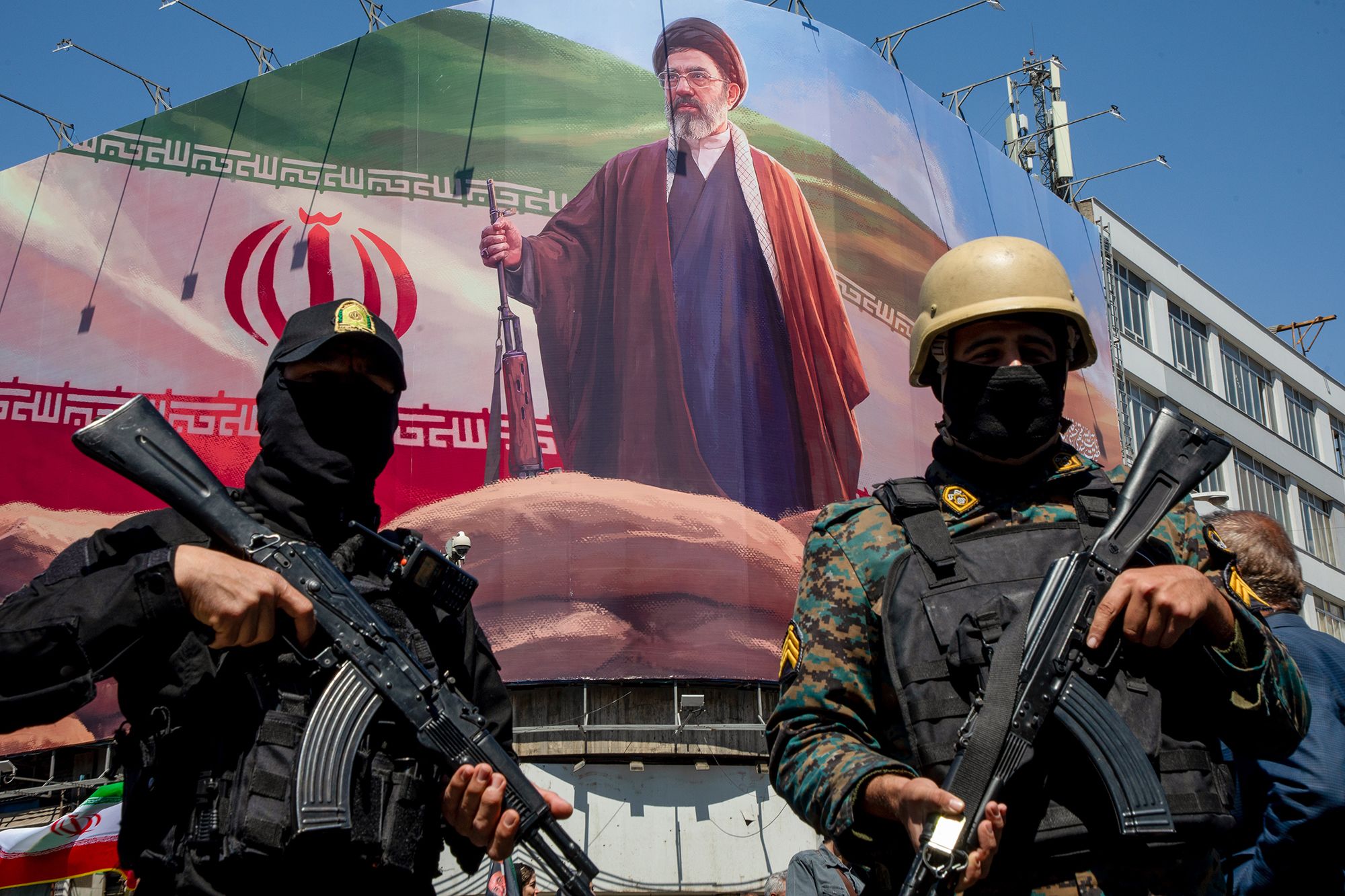
Iran has warned that any new United States military assault would lead Tehran to expand the geographical scope of the ongoing conflict, while introducing weapons and targeting locations that have not previously been attacked.
The warning was issued on Monday by Brigadier General Hossein Mohebbi, spokesman for Iran’s Islamic Revolutionary Guard Corps (IRGC), as tensions between Tehran and Washington remained high and the possibility of renewed US military action continued to dominate regional security concerns.
“If a new aggression occurs, we will certainly change the weaponry and the geography of the war,” Mohebbi said, according to Iranian media reports. He added that Iran was prepared for the conflict to continue for a prolonged period.
The statement represents one of Tehran’s clearest warnings that another direct US attack could produce a significantly wider confrontation rather than simply a repeat of previous strikes. Mohebbi said Iran’s response would involve changes in its defensive and counteroffensive operations, including new weapons and military capabilities.
He also indicated that Iran had identified targets that had not previously been attacked.
According to the IRGC spokesman, Tehran’s objectives in a renewed phase of the conflict would not necessarily remain limited to those targeted during earlier fighting.
The warning comes as the United States and Iran remain locked in a broader confrontation involving military, diplomatic and economic pressure. US President Donald Trump said over the weekend that he was considering several options concerning Iran, while also indicating that he could be open to meeting Iranian President Masoud Pezeshkian on the sidelines of the United Nations General Assembly in New York.
At the same time, fighting involving Yemen’s Iran-backed Houthi movement has added another layer to the regional crisis.
The United States has issued security alerts to its citizens across the Middle East amid concerns that the conflict could spread further.
Another major flashpoint is the Strait of Hormuz, one of the world’s most important energy shipping routes. Iranian officials have linked the reopening of the waterway to conditions including an end to hostilities and the removal of the naval blockade.
Disruption around the strait has already raised concerns about global energy supplies and shipping.
Iran’s military leadership has also warned regional countries against assisting any renewed American offensive.
Al Jazeera reported that Iran’s central military command believes Washington is preparing to resume strikes and has threatened retaliation against US bases and interests in the Middle East.
The significance of the phrase “geography of the war” remains deliberately unclear.
Iranian officials have not publicly identified all the areas that could become targets, meaning the warning does not establish that particular countries or facilities will necessarily be attacked.
However, the statement signals that Tehran wants any potential US decision to resume military operations to carry a clear expectation of retaliation. With fighting already involving several theatres and strategic waterways, a renewed US-Iran confrontation could create additional pressure on regional security, international shipping and global energy markets.
For now, diplomacy remains part of the picture, with international efforts continuing alongside military threats. The coming days, particularly during the UN General Assembly, could therefore prove important in determining whether the confrontation moves toward negotiations or another escalation.