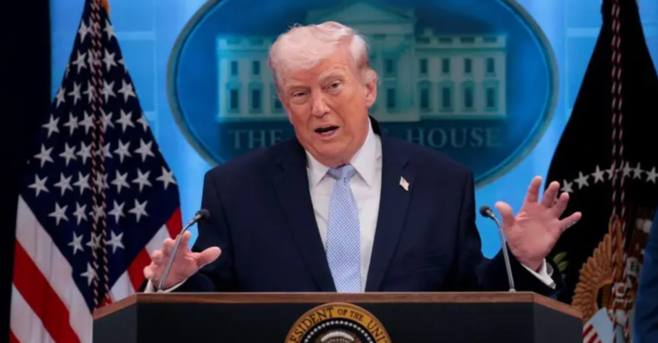
U.S. President Donald Trump has announced that a new round of talks with Iran is expected to begin on Monday, raising hopes of a diplomatic breakthrough after days of heightened tensions and the postponement of planned U.S. military action against Tehran.
Speaking after deciding against launching what he described as a “massive” strike on Iran, Trump said negotiations would commence Monday afternoon, expressing optimism that diplomacy could reduce tensions and address longstanding disputes over Iran’s nuclear ambitions and regional security.
The announcement comes amid one of the most volatile periods in the Middle East in recent months, with disruptions to shipping in the Strait of Hormuz, renewed concerns over regional stability and continued international scrutiny of Iran’s nuclear activities.
Trump indicated that diplomatic engagement had become the preferred option after consultations with key Gulf allies, including Saudi Arabia, Qatar and the United Arab Emirates.
According to the U.S. president, these discussions reinforced the need to pursue negotiations before considering further military action.
However, Iran has publicly disputed Trump’s account, insisting that no direct negotiations with the United States have been scheduled.
Iranian officials maintained that current diplomatic contacts are focused on discussions with Oman regarding maritime security and safe navigation through the Strait of Hormuz rather than bilateral talks with Washington.
The differing accounts underscore the fragile nature of efforts to de-escalate a crisis that has unsettled global markets and heightened fears of a broader regional conflict.
The Strait of Hormuz remains at the center of international concern. The narrow waterway carries a significant share of the world’s seaborne oil exports, making any disruption a major risk to global energy supplies.
Reports of attacks on vessels and slower shipping traffic have already affected oil markets, although prices eased after Trump’s decision to delay military action fueled hopes that diplomacy could prevail.
Financial markets responded positively to the prospect of renewed negotiations.
Benchmark crude oil prices fell sharply as traders interpreted Trump’s comments as reducing the immediate likelihood of military confrontation that could threaten energy exports from the Gulf.
Analysts cautioned, however, that market volatility is likely to persist until there is greater clarity on the diplomatic process.
Despite Trump’s optimistic tone, questions remain over whether meaningful progress can be achieved.
Previous attempts to revive dialogue between Washington and Tehran have frequently been interrupted by disagreements over sanctions, uranium enrichment and regional security issues.
The latest developments also come against the backdrop of continued instability across the Middle East.
Iran recently carried out executions of individuals accused of spying for Israel, while violence has continued elsewhere in the region, including Gaza, adding further complexity to an already delicate diplomatic landscape.
International observers are watching closely to see whether Monday’s proposed talks materialize and whether they can lay the groundwork for a broader agreement addressing both Iran’s nuclear programme and regional security concerns.
For Washington, a successful negotiation could help reduce military tensions, restore confidence in Gulf shipping routes and ease pressure on global energy markets.
For Tehran, any future agreement would likely depend on guarantees regarding sanctions relief, security arrangements and recognition of its strategic interests.
As both sides continue to present conflicting narratives over the status of negotiations, uncertainty remains the defining feature of the situation. Whether Monday’s planned discussions represent the beginning of a substantive diplomatic process or simply another episode in the long-running U.S.-Iran standoff may become clearer in the days ahead.