FIFA has refused to abandon its controversial proposal to bring private investment into the commercial side of the World Cup and other major competitions, despite an escalating confrontation with UEFA that could see European national teams boycott FIFA tournaments.
The world football governing body said on Friday that it would continue with what it described as an “open and democratic” consultation involving its 211 member associations.
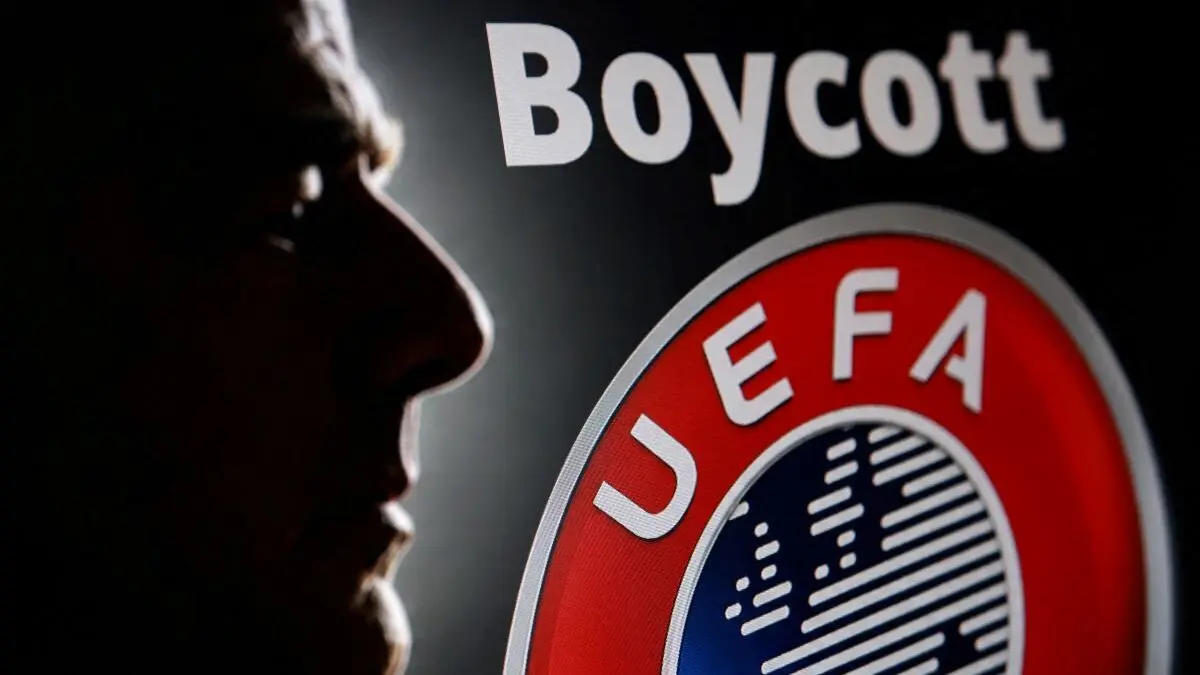
FIFA’s position came a day after UEFA and all 55 of its member associations unanimously rejected the proposal and threatened to withdraw from FIFA competitions if the plan goes ahead.
At the centre of the dispute is FIFA’s proposed FIFA Forward Enterprise (FFE), a structure that would potentially allow private investors to acquire stakes connected to the commercial rights of future World Cups and other FIFA competitions.
FIFA President Gianni Infantino and the organisation have faced growing criticism over the proposal, with opponents arguing that football’s biggest tournaments should not be turned into investment vehicles for private capital.

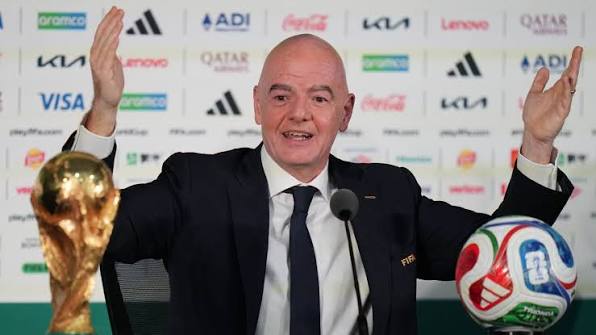
FIFA, however, insists the proposal does not amount to selling the World Cup. In its latest response, the organisation said “nobody is selling football” and argued that every member association should be given the opportunity to consider the proposal before any final decision is taken.
The dispute intensified after UEFA issued a strongly worded statement rejecting the investment model.
European football’s governing body accused FIFA of attempting to commercialise competitions that belong to the wider football community rather than private investors.
According to Reuters, UEFA described the proposal as a threat to the traditional model of football and said the World Cup should be regarded as a global sporting legacy rather than an investment product.
UEFA also criticised FIFA for what it considered a lack of transparency and meaningful consultation during the development of the plan.
The Guardian reported that UEFA’s 55 member associations agreed unanimously to boycott FIFA competitions if the proposed partial sale of World Cup-related interests proceeds.
Such a move could have serious consequences for international football because European teams are among the strongest and most commercially valuable participants in FIFA competitions.
The potential boycott would also create uncertainty around upcoming FIFA tournaments, including the 2027 Women’s World Cup and youth competitions. The Guardian noted that UEFA’s position could also have implications for the 2030 men’s World Cup, which is due to be hosted partly in Spain and Portugal.
Despite the pressure, FIFA appears unwilling to withdraw the proposal outright. Instead, the organization has emphasized that the consultation process should continue and that its member associations, rather than individual confederations, should have the opportunity to assess the financial and developmental benefits of the plan.
Reports have also indicated that the proposal could generate substantial financial benefits for FIFA’s member associations.
ESPN reported that the plan could trigger more than $80 million in payouts to each of FIFA’s 211 member associations between now and 2037 if it is approved.
The controversy has nevertheless exposed a widening divide between FIFA and several regional football confederations.
UEFA is not alone in opposing the proposal, with CONCACAF and the Asian Football Confederation also expressing concerns, although neither has followed UEFA in announcing a boycott.
Adding to FIFA’s difficulties, a senior adviser to Infantino reportedly resigned over the proposed World Cup investment structure, further highlighting the internal and external pressure surrounding the plan.
For now, FIFA has chosen confrontation over retreat. With UEFA threatening unprecedented action and other confederations questioning the proposal, the coming weeks could determine whether Infantino’s investment vision becomes a major new source of funding for world football or triggers one of the biggest governance disputes in the sport’s modern history.