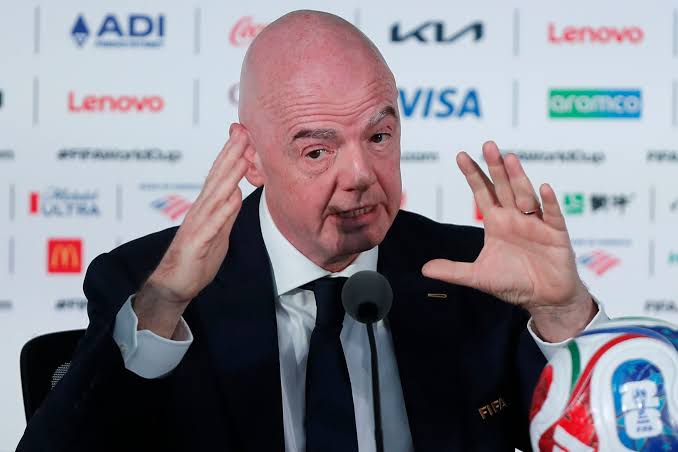
FIFA president Gianni Infantino has launched a strong defence of the 2026 World Cup, accusing critics of focusing on controversy and negativity instead of celebrating the tournament’s unity and success.
FIFA president Gianni Infantino has sharply criticized detractors of the 2026 World Cup, accusing them of spreading “hate and false rumors” while defending the tournament as a celebration of football, unity and global togetherness.
In an unusually combative open letter published on Monday, Infantino addressed journalists and other critics who had scrutinized FIFA’s organization of the tournament, which was hosted across the United States, Canada and Mexico and won by Spain.
He argued that the criticism had overshadowed the positive experiences of millions of supporters who attended matches or followed the competition around the world.
Infantino opened his message by expressing regret that some people had missed what he described as the joy, emotion and togetherness of the World Cup because they were too focused on criticism.
“Sorry that you were so consumed by hate and criticism that you missed it all,” he wrote, directly challenging those who had questioned FIFA during the tournament.
The FIFA chief went further, accusing critics operating through newspapers, television and social media of spreading hostility and misinformation while FIFA officials and staff were working on the ground to deliver the tournament.
Infantino contrasted what he described as negativity from critics with FIFA’s efforts to bring supporters together.
He highlighted the presence of families and fans from different cultures and countries, arguing that the World Cup demonstrated football’s ability to create connections despite political and social divisions.
“While you divide, we unite,” Infantino declared, presenting FIFA’s vision of the tournament as a force for international cooperation.
His comments come after a World Cup that generated substantial attention not only for its football but also for controversies surrounding FIFA and the tournament’s organisation.
Issues raised during the competition included visa restrictions affecting some participants, refereeing decisions, disciplinary disputes and questions surrounding FIFA’s handling of several politically sensitive matters.
Infantino nevertheless insisted that the overall event was a success. He pointed to the scale of the tournament and the participation of teams from countries facing political, security or other challenges as evidence of football’s ability to transcend borders.
The 2026 edition was the first World Cup to feature 48 teams and was staged in 16 host cities across the three North American countries.
Spain ultimately lifted the trophy after defeating Argentina in the final.
Infantino’s message has reignited debate over the relationship between FIFA and its critics.
While the FIFA president says legitimate scrutiny has been overwhelmed by negativity and false claims, critics argue that questioning the governing body is part of the responsibility of journalists, supporters and football stakeholders.
As the 2026 World Cup fades into history, Infantino’s letter makes clear that FIFA intends to emphasize the tournament’s legacy of unity, safety and inclusion while pushing back forcefully against those who continue to question how the event was managed.