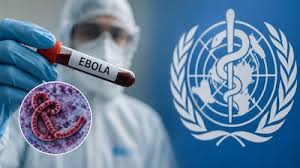
The Democratic Republic of Congo is battling a rapidly expanding Ebola outbreak, with confirmed infections jumping by about 1,000 in just 10 days as health workers struggle to contain the disease across five provinces.
The Democratic Republic of Congo (DRC) is facing a rapidly worsening Ebola outbreak, with the number of confirmed infections rising to 3,200 and deaths reaching at least 1,405, according to government data released on Sunday.
The latest figures represent a dramatic escalation in the outbreak, with confirmed cases increasing by about 1,000 in only 10 days.
The speed of the spread has raised concerns among health authorities and international organizations over their ability to contain the epidemic, which was officially declared on May 15.
The outbreak is being driven by the Bundibugyo strain of Ebola, a relatively rare form of the virus for which there is currently no approved vaccine or specific treatment.
The World Health Organisation (WHO) has warned that the disease remains a serious threat, particularly in communities where health services are already under severe pressure.
The northeastern province of Ituri remains the epicentre, accounting for nearly 90 per cent of reported cases.
The virus has, however, spread beyond Ituri into four other provinces, raising fears that continued transmission could make containment increasingly difficult.
Health officials say improved testing and detection have contributed to the sharp rise in confirmed cases.
However, the increase also reflects the continuing spread of the virus among communities, with response teams facing difficulties reaching vulnerable populations.
The outbreak has been complicated by insecurity and humanitarian challenges in eastern DRC. Some areas are difficult for medical teams and aid workers to access, limiting their ability to investigate suspected infections, trace contacts and transport laboratory samples.
Hedley Tah of the United Nations Humanitarian Air Service said the challenge is not simply the willingness of humanitarian organizations to help, but their ability to reach communities affected by the outbreak. UNHAS has been transporting medical personnel and response teams to areas affected by the crisis while also moving samples for laboratory testing.
The response has also suffered disruption from industrial action. Healthcare workers at some facilities have gone on strike over unpaid wages, threatening to further weaken an already stretched Ebola response system.
The disruption comes at a particularly critical moment, with hospitals and treatment centers struggling to cope with rising numbers of patients.
The scale and speed of the current outbreak have drawn comparisons with the devastating 2014–2016 West African Ebola epidemic.
The current outbreak has reached more than 1,000 deaths far more quickly than that epidemic, which took about eight months to reach the same death toll.
Scientists and health authorities are racing to develop medical tools against the Bundibugyo strain.
The University of Oxford has reported that the first volunteers have received an experimental vaccine designed to target the strain, offering a potential new weapon against the outbreak.
Ebola spreads primarily through contact with the blood or other bodily fluids of infected people or those who have died from the disease.
Early symptoms can resemble other illnesses, making rapid identification and isolation especially important.
For the DRC, the immediate challenge is to slow transmission, protect health workers and ensure that communities receive reliable information and medical assistance.
With cases now confirmed in five provinces and the death toll continuing to rise, authorities face an increasingly urgent race against time.
The coming weeks will be crucial in determining whether intensified surveillance, treatment and community engagement can bring the outbreak under control or whether the epidemic will continue its rapid expansion.