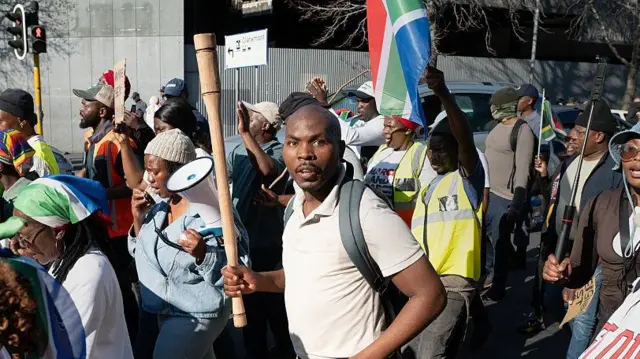
South Africa’s controversial June 30 campaign demanding that undocumented foreign nationals leave the country reached its climax this week amid nationwide protests, heightened security, and growing concern across Africa. While anti-immigration groups had promoted June 30 as a deadline for foreigners to depart, the South African government repeatedly stressed that no official state ultimatum existed and warned citizens against taking immigration enforcement into their own hands.
The events leading up to the deadline revealed the depth of public frustration over unemployment, crime, and economic hardship, while also exposing the dangers of xenophobia in one of Africa’s most influential economies.
For weeks, community groups and anti-immigration activists organized marches under slogans calling for undocumented migrants to leave South Africa. The movement gained momentum on social media, where messages circulated claiming that all illegal foreign nationals had until June 30 to exit the country or face deportation.

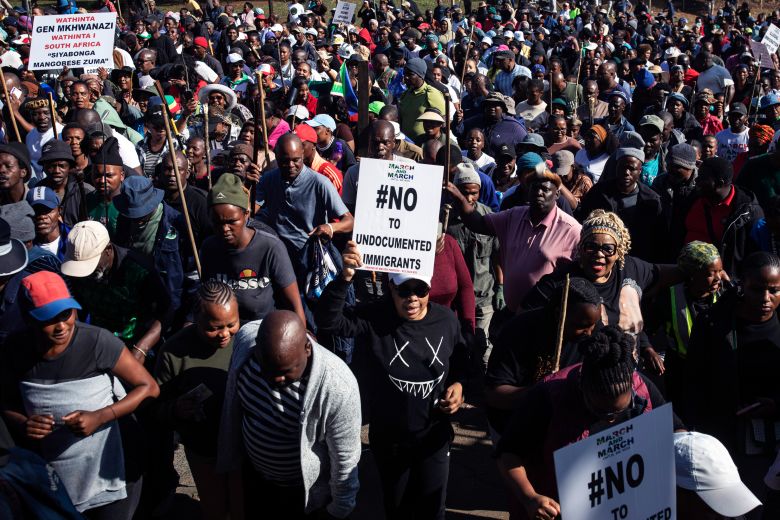
However, South African authorities quickly dismissed the notices as false. Government officials emphasized that immigration enforcement remains the responsibility of the state and that no unofficial group has the authority to issue deportation orders or demand identification documents from residents.
Despite those warnings, fear spread among migrant communities. Thousands of foreign nationals, particularly from neighboring African countries, reportedly left their homes, sought refuge in temporary camps, or returned voluntarily to their countries of origin ahead of the deadline.
Businesses owned by migrants in several communities temporarily shut their doors amid concerns over violence and looting.
On June 30 itself, demonstrations took place across major South African cities, including Johannesburg, Durban, Pretoria, and Cape Town.
While many marches remained peaceful, isolated incidents of violence, looting, and clashes with law enforcement were reported. Police arrested hundreds of individuals for offenses ranging from immigration violations and public violence to robbery and vandalism.
The protests reflected a growing sentiment among some black South Africans who believe undocumented migration has worsened unemployment and increased pressure on housing, healthcare, education, and public services. South Africa continues to struggle with one of the highest unemployment rates in the world, and many citizens argue that foreign workers are competing for scarce jobs.

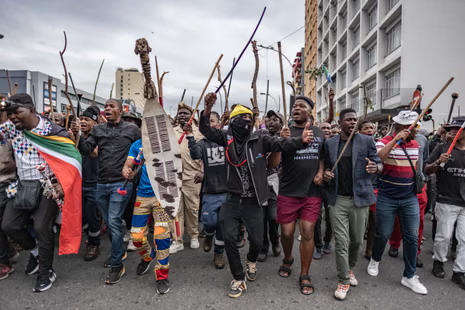
Among supporters of the campaign, the message was straightforward: stricter border controls and stronger immigration enforcement are needed to protect economic opportunities for South Africans. Protesters frequently accused employers of hiring migrants at lower wages while bypassing local workers.
Yet public opinion was far from unanimous.
Many black South Africans rejected the anti-foreigner rhetoric, arguing that migrants were being unfairly blamed for broader economic and governance failures. Human rights groups, religious leaders, academics, and civil society organizations warned that scapegoating foreign nationals would not solve structural challenges such as corruption, inequality, poor service delivery, and slow economic growth.
Online discussions and community debates reflected this division. While some citizens supported tougher migration controls, others condemned the intimidation of foreigners and warned that xenophobic violence could damage South Africa’s international reputation and undermine the country’s long-standing commitment to African solidarity.
The government’s response was firm and consistent throughout the crisis.
President Cyril Ramaphosa acknowledged public concerns regarding illegal immigration but stressed that the rule of law must prevail. Authorities launched a broader migration management strategy that includes stronger border security, increased deportation operations, immigration courts, and tougher penalties for employers who violate immigration regulations.
At the same time, government ministers repeatedly stated that violence, vigilantism, and intimidation would not be tolerated. Officials declared June 30 a normal working day and warned that anyone engaging in unlawful actions against migrants would face prosecution.
Police and security forces were deployed in several hotspots to prevent attacks and maintain order.
Following the demonstrations, government spokespeople praised communities that protested peacefully while condemning criminal acts committed under the guise of migration activism.
Beyond South Africa’s borders, the developments attracted significant attention across the African continent.
Countries such as Zimbabwe, Malawi, Mozambique, Nigeria, and others closely monitored the situation because many of their citizens live and work in South Africa.
Diplomatic missions reportedly assisted nationals seeking information or voluntary repatriation as fears of unrest intensified.
Several African commentators expressed concern that anti-migrant campaigns could undermine decades of efforts toward regional integration and free movement within Africa. Critics argued that targeting fellow Africans contradicts the spirit of continental cooperation championed by organizations such as the African Union.
Others acknowledged South Africa’s legitimate right to manage its borders and enforce immigration laws but insisted that enforcement must occur within constitutional and humanitarian frameworks rather than through public intimidation or mob action.
The June 30 episode ultimately highlighted a dilemma facing many nations worldwide: how to balance immigration control with human rights, economic realities, and social cohesion.
For South Africa, the protests exposed deep frustrations among ordinary citizens struggling with economic hardship.
At the same time, they revealed the risks of allowing those frustrations to evolve into hostility toward migrants who are often equally vulnerable.
Although the feared nationwide shutdown did not materialize, the events of June 30 demonstrated that migration will remain one of South Africa’s most contentious political and social issues.
The government now faces the difficult challenge of addressing citizens’ concerns about border management and employment while preserving the constitutional values and pan-African principles that have long defined the nation’s place on the continent.