
The decision by the West African nation of Burkina Faso to sever diplomatic relations with France has sent shockwaves across Africa, Europe, and the wider international community.
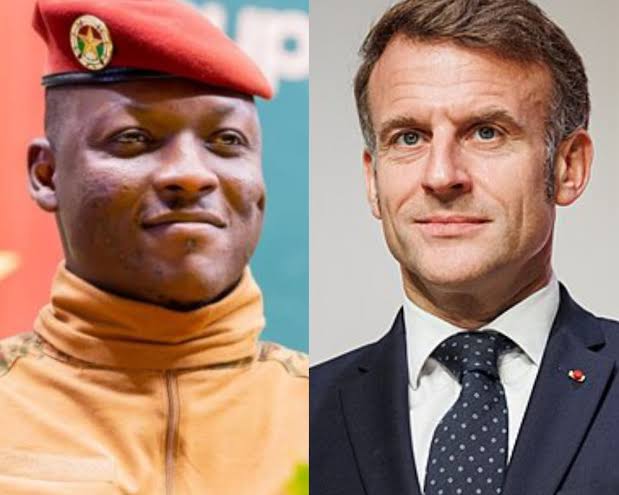
The move, announced by the military government led by Ibrahim Traoré, represents one of the most significant breaks yet in the rapidly deteriorating relationship between France and several of its former African colonies.
Burkina Faso’s government declared that diplomatic ties with France were being terminated immediately, accusing Paris of pursuing “neo-colonial ambitions,” interfering in domestic affairs, and supporting networks allegedly working against the interests of the Burkinabè state.
The accusations were strongly rejected by France, which described the decision as “hostile and without foundation.”
The rupture is the latest chapter in a broader geopolitical transformation unfolding across the Sahel region, where countries such as Burkina Faso, Mali, and Niger have increasingly distanced themselves from traditional Western allies while seeking new partnerships with Russia, China, and other emerging powers.
For many supporters of the Burkinabè government, the decision is being celebrated as a bold assertion of national sovereignty.
Since taking power following military coups in 2022, the leadership in Ouagadougou has repeatedly argued that decades of close cooperation with France failed to deliver security, economic development, or genuine independence.
Burkina Faso has battled a devastating insurgency linked to extremist groups for more than a decade.
Thousands of people have been killed and millions displaced. Despite years of French military support and counterterrorism operations in the region, insecurity continued to worsen, fueling public frustration and anti-French sentiment.
French troops were once viewed as indispensable allies in combating terrorism in the Sahel. However, public opinion gradually shifted as many citizens questioned why insecurity persisted despite France’s significant military presence. Protest movements emerged demanding the withdrawal of French forces and a complete re-evaluation of relations with Paris.
The latest diplomatic break therefore symbolizes far more than a disagreement between two governments. It reflects a wider struggle over Africa’s political future and the legacy of colonial influence.
France’s reaction was swift and uncompromising. The French Foreign Ministry expressed regret over what it called a baseless and hostile decision. Paris announced that reciprocal measures were under consideration and urged French citizens in Burkina Faso to exercise heightened caution. French authorities also emphasized that they remained committed to the people of Burkina Faso despite the actions of the country’s leadership.
While France is unlikely to suffer an immediate economic crisis as a result of losing diplomatic ties with Burkina Faso alone, the cumulative effect of similar developments across the Sahel is becoming increasingly significant.
For decades, France maintained extensive political, military, cultural, and economic influence in large parts of Africa through what critics often described as “Françafrique” a network of relationships that helped preserve French strategic interests long after formal colonial rule ended.
French companies have historically enjoyed privileged access to African markets, infrastructure projects, telecommunications sectors, mining operations, and energy resources.
As countries in the region increasingly diversify their partnerships, French businesses risk losing opportunities worth billions of euros over the coming decades.
The economic impact is therefore less about direct trade with Burkina Faso and more about the erosion of France’s long-term strategic position on the continent. Investors and policymakers in Paris worry that the collapse of influence in one country may accelerate similar trends elsewhere.
Indeed, Burkina Faso’s decision follows earlier tensions between France and neighboring countries including Mali and Niger, where military governments also expelled French troops and reoriented foreign policy away from Paris.
The emergence of the Alliance of Sahel States has further strengthened efforts by these governments to pursue a common security and diplomatic agenda independent of Western influence.
Beyond France itself, the diplomatic rupture carries implications for the broader European Union.

For years, France has served as one of the EU’s primary gateways to Africa. Through historical ties, language, military partnerships, and development programs, Paris often played a leading role in shaping European policy toward African nations.
As France’s influence weakens, the EU may find it more difficult to project political and economic influence across parts of West Africa.
European initiatives on migration management, security cooperation, trade partnerships, and development assistance could face increasing resistance from governments determined to assert greater autonomy.
However, claims that Burkina Faso’s decision will immediately destroy European dominance in Africa would be an exaggeration.
The European Union remains one of Africa’s largest trading partners, investors, and development donors. Its economic footprint across the continent is vastly larger than that of any single African state.
Nevertheless, the symbolic significance of the break cannot be underestimated. It demonstrates that some African governments are increasingly willing to challenge long-standing power structures and seek alternatives to traditional Western partnerships.
Supporters of the move argue that it represents a historic moment in Africa’s quest for genuine sovereignty.
Critics, however, warn that severing ties with France may further isolate Burkina Faso diplomatically and economically at a time when the country continues to face enormous security challenges.
The future consequences remain uncertain. Burkina Faso may succeed in building new strategic relationships that strengthen its independence and development goals. Alternatively, the loss of diplomatic engagement with a major global power could create new difficulties for a nation already struggling with conflict and economic pressures.
What is certain is that the diplomatic divorce between Burkina Faso and France marks another milestone in the reshaping of African geopolitics. It reflects a continent increasingly determined to redefine its place in the world, challenge old hierarchies, and pursue partnerships on its own terms.
For France, the event serves as a stark reminder that influence once taken for granted can no longer be assumed. For Africa, it is another chapter in the ongoing debate about sovereignty, development, and the legacy of colonialism in the 21st century.