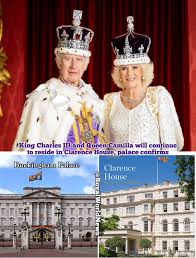
For nearly two centuries, Buckingham Palace has stood as the unmistakable symbol of the British monarchy. Its grand façade, ornate state rooms, and world-famous Changing of the Guard ceremony have attracted millions of visitors from around the world, making it one of London’s most recognizable landmarks. Yet in a decision that marks a significant break from royal tradition, King Charles III has confirmed that he and Queen Camilla will not take up permanent residence in Buckingham Palace once its extensive refurbishment project is completed.
The announcement has generated widespread interest among royal watchers, historians, and tourists alike.
Buckingham Palace has served as the principal London residence of British monarchs since the reign of Queen Victoria in 1837.
However, the King has chosen to remain at Clarence House, the royal residence he has occupied for decades, even after the palace’s £369 million renovation reaches completion.
Royal officials insist that Buckingham Palace will continue to function as the ceremonial and operational headquarters of the monarchy. State banquets, official receptions, diplomatic meetings, and royal ceremonies will still take place within its historic walls.
The difference is that the palace will no longer be the monarch’s primary home.
The decision comes after a decade-long modernization project aimed at addressing serious infrastructure problems within the palace.
Much of the building’s electrical wiring, plumbing, and heating systems dated back to the mid-20th century and required urgent replacement.
The massive refurbishment project, which began in 2017, was designed to preserve the iconic structure for future generations while improving safety and efficiency.
According to palace officials, one of the key reasons behind the King’s decision is his desire to make Buckingham Palace more accessible to the public. If the monarch were to live there full-time, security requirements would inevitably restrict access to large sections of the building.
By keeping the palace primarily as a working and ceremonial venue, more rooms, exhibitions, and guided tours can be opened to visitors throughout the year.
This move is expected to delight tourists, for whom Buckingham Palace remains a must-see destination. Every year, hundreds of thousands of people travel to London specifically to view the palace, witness the famous guard-changing ceremony, or tour its magnificent interiors.

Recent figures show visitor numbers reaching record levels, underscoring the enduring fascination with Britain’s royal heritage.
For many visitors, Buckingham Palace represents more than a building. It is a living symbol of British history, tradition, and national identity. From royal weddings and jubilees to wartime addresses and state occasions, the palace has served as the backdrop to countless historic moments.
The King’s decision suggests that he views the palace as a national asset that should be shared more extensively with the public rather than reserved primarily as a private residence.
The choice also reflects King Charles III’s broader efforts to modernize the monarchy. Since ascending the throne following the death of Queen Elizabeth II, Charles has emphasized transparency, efficiency, and public engagement.
Royal financial disclosures released alongside the announcement highlighted the King’s desire to present a more accountable and contemporary institution.
Observers note that personal factors may also have influenced the decision. Clarence House has long been the King’s preferred London residence, offering a more intimate and manageable living environment than the vast Buckingham Palace.
Remaining there allows Charles and Queen Camilla to continue living in familiar surroundings while carrying out their official duties nearby.
Despite concerns among some traditionalists that the move could weaken the symbolism of Buckingham Palace, royal officials have been quick to stress that the building’s importance remains unchanged.
The palace will continue to host visiting heads of state, diplomatic receptions, investiture ceremonies, and major royal celebrations. In practical terms, it will remain the center of royal operations even if the monarch sleeps elsewhere.
The decision marks the end of a royal tradition stretching back almost 190 years. Yet it also signals a new chapter in the story of one of Britain’s most treasured landmarks.
Rather than diminishing Buckingham Palace’s status, the change may actually strengthen its role as a cultural and tourist attraction by allowing greater public access than ever before.
For visitors arriving in London from every corner of the globe, Buckingham Palace will remain an essential stop on the tourist map.
The grand gates, historic balconies, lavish state rooms, and centuries of royal history will continue to captivate imaginations.
The only difference is that while the palace remains the crown jewel of the monarchy, King Charles III has chosen to make it less of a private home and more of a national showcase.
In doing so, the monarch has balanced tradition with modernization, preserving the palace’s historic significance while opening its doors wider to the public.
For tourists, historians, and royal enthusiasts, that may prove to be one of the most significant royal decisions of his reign.