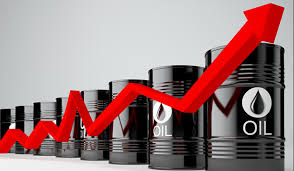
Oil prices and global markets struggled to find direction as conflicting messages from Iran and the United States kept investors uncertain about the prospects of de-escalation in the Iran war.
As the prospect of de-escalation remains unclear, oil prices have continued to rise, with the international benchmark Brent crude trading above $106 per barrel on Thursday morning. After a strong performance across European stock markets on Wednesday, where key indices gained between 1.3% and 1.6%, markets turned cautious on Thursday.
Leading European indices opened lower, falling between 0.4% and 0.8%, following a sell-off in Asian markets amid mixed signals from Tehran and Washington regarding diplomatic efforts to end the conflict. Analysts said investors had been hoping for a ceasefire but were left uncertain due to inconsistent statements from both sides, leaving markets in a wait-and-see mode.
US President Donald Trump said a deal to end the Iran war was near, despite Tehran rejecting his 15-point ceasefire proposal and as thousands of US troops were reportedly being deployed to the Middle East. Iran, meanwhile, presented its own proposals while continuing missile attacks on Israel.
Tehran has also effectively closed the crucial Strait of Hormuz and is seeking to formalise control over the waterway, including imposing fees on ships passing through it. European stock markets extended losses as trading continued, with London’s FTSE down 0.8%, Paris’ CAC 40 losing nearly 0.7%, and Frankfurt’s DAX falling about 1.2%.
Oil prices in limbo
Oil prices continued to climb, with Brent crude rising about 4% to trade above $106 per barrel, while US WTI crude increased around 4% to approximately $94 per barrel. The gains come as the Strait of Hormuz remains largely blocked by Iran, raising fears of supply disruptions.
Iranian media reported that Tehran is working on legislation to impose fees on ships using the strait, a move that could significantly impact global oil shipments. The Strait of Hormuz is considered an international waterway, and any attempt to impose transit fees would likely face strong opposition from Gulf Arab states, the United States and other global powers.
Meanwhile, reports indicated that the US administration is studying the potential impact of oil prices reaching $200 per barrel, modelling extreme economic scenarios.
Stock markets and currencies lose ground
Asian stock markets closed lower on Thursday, with Japan’s Nikkei 225 down 0.8%, South Korea’s Kospi losing 3.3%, and Hong Kong’s Hang Seng falling 1.9%.
Gold prices also declined again after heavy losses earlier in the week, while cryptocurrencies dropped between 1.3% and 4%. In currency markets, the US dollar strengthened against both the euro and the British pound, while the Japanese yen remained relatively stable against the dollar.
Overall, markets remain volatile as investors watch closely for any signs of a ceasefire or further escalation in the Middle East, particularly developments involving Iran and the Strait of Hormuz, a key route for global oil supplies.