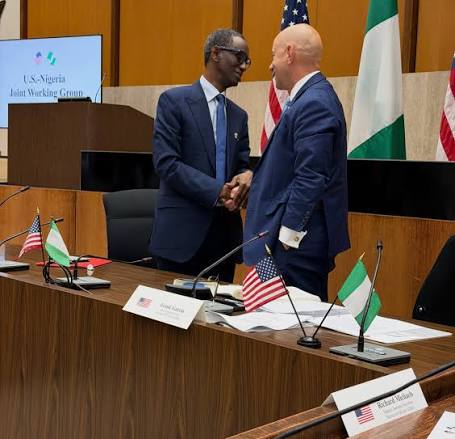
The United States and Nigeria are intensifying cooperation through their Joint Working Group (JWG), with the protection of Christian communities, accountability for perpetrators of violence and the strengthening of religious freedom emerging as key priorities in the bilateral security partnership.
The initiative follows the United States’ designation of Nigeria as a Country of Particular Concern (CPC) over religious-freedom concerns.
The Joint Working Group was created to provide a structured platform for Washington and Abuja to address violence against vulnerable communities, particularly Christians, while also tackling the wider security threats affecting Nigerians of different faiths.
At the group’s first formal session in Abuja in January 2026, both countries agreed that civilians must be protected and that perpetrators of attacks should be investigated and held accountable.
The discussions also covered counterterrorism cooperation, intelligence sharing, technology, anti-money-laundering measures, countering terrorist financing and strengthening Nigeria’s law-enforcement and investigative capabilities.
The American position has become more focused in recent months. During a July visit to Nigeria, U.S. Assistant Secretary of State for African Affairs Frank Garcia held meetings with senior Nigerian officials and urged the government to do more to protect Christians from attacks.
Garcia also called for greater efforts and resources to facilitate the safe return of internally displaced persons (IDPs) to their communities.
Discussions with Attorney-General and Minister of Justice Lateef Olasunkanmi Fagbemi included prosecutions linked to terrorism, criminal accountability and religious freedom.
The next meeting of the Joint Working Group was expected to take place in Washington, D.C.,
in August to assess progress on the commitments made by both governments.
The discussions are expected to examine whether measures already introduced by Nigeria are producing measurable improvements in civilian protection and accountability.
For Nigeria, the partnership comes amid persistent attacks by terrorist organisations, bandits, criminal militias and other armed groups in several parts of the country.
While Christian communities have been a major focus of American concern, Nigerian officials have consistently maintained that insecurity affects citizens regardless of religion.
National Security Adviser Nuhu Ribadu has stated that the protection of Christians, Muslims and people of other faiths is non-negotiable, describing violence carried out along religious lines as an attack on the Nigerian state itself.
The accountability component of the partnership is particularly significant.
Beyond preventing attacks, Washington wants perpetrators to face justice, while Nigeria is expected to strengthen investigations and prosecutions.
The broader objective is to ensure that security operations produce lasting results rather than merely responding to attacks after they occur.
The United States has also linked its assistance to measurable steps by Nigeria to prevent and respond to violence, protect victims and advance religious freedom. U.S. congressional measures have called for greater accountability and oversight of security assistance provided to Nigeria.
The evolving partnership marks a significant shift in relations between Washington and Abuja. In late 2025, President Donald Trump had sharply criticised Nigeria over violence against Christians and threatened tougher action.
By July 2026, however, Trump was praising President Bola Ahmed Tinubu’s efforts to address violence affecting Christian communities and expressing support for the fight against terrorists.
As the Joint Working Group continues its work, the central test will be whether diplomatic commitments translate into stronger protection for civilians, successful prosecutions and safer communities.
For both governments, the message is increasingly clear: protecting religious freedom requires not only statements of concern but concrete security measures, effective investigations and accountability for those responsible for violence.