The United States has paused military strikes against Iran for a second consecutive night, raising hopes that diplomatic efforts could help pull Washington and Tehran back from the brink of another major escalation.
The pause came after nearly two weeks of intense U.S. attacks on Iranian coastal areas and infrastructure.
While Iran had launched retaliatory attacks against American interests and allies in the region.
The latest lull has created a fragile window for diplomacy, with officials indicating that negotiations could receive more time to develop.
U.S. Ambassador to the United Nations Mike Waltz said President Donald Trump was giving diplomacy “a little bit of room”, suggesting that Washington was prepared to allow negotiations to progress before deciding whether to resume military operations.
Waltz also stressed that the pause should not be interpreted as the United States abandoning its military options.
Washington continues to maintain pressure on Tehran, while American military assets remain positioned in the region should the situation deteriorate.
The renewed diplomatic push has been closely linked to efforts by Oman to mediate between the two sides.
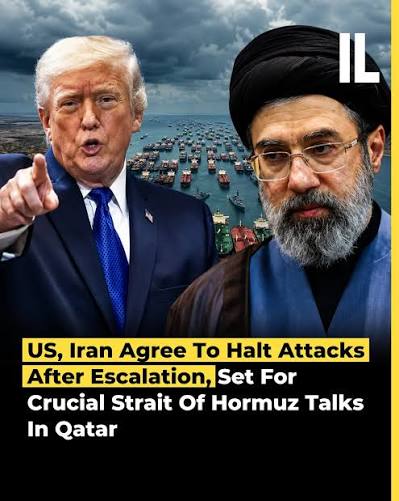
An Omani delegation travelled to Tehran as part of attempts to establish an arrangement concerning the Strait of Hormuz, one of the world’s most important shipping routes and the central flashpoint in the latest confrontation.
The Strait of Hormuz has become particularly important because disruptions there can affect global energy supplies and international shipping.
The escalation between Iran and the United States has already contributed to increased uncertainty in energy markets, with fears that prolonged fighting could threaten commercial vessels and push oil prices higher.
Iran has also indicated that it has stopped retaliatory attacks against the United States, further contributing to the relative calm.
Iranian officials, however, have warned that Tehran remains prepared to respond if Washington resumes its bombing campaign.
The current pause follows 13 consecutive nights of U.S. strikes aimed at weakening Iran’s ability to threaten commercial shipping through the Strait of Hormuz.
The American naval blockade of Iranian ports and shipping routes remains in place, meaning the military confrontation has not completely ended despite the absence of recent airstrikes.
The developments have also highlighted the delicate balance facing President Trump.
While he has repeatedly signaled a preference for a diplomatic solution, his administration has maintained that military action remains an option if Iran continues attacks against shipping or U.S. allies.
For Iran, the priority appears to be securing an arrangement that eases pressure on the country while protecting its interests around the Strait of Hormuz.
For Washington, the challenge is finding a diplomatic outcome that addresses concerns over Iranian attacks without appearing to retreat from its military objectives.
The pause has therefore been welcomed cautiously rather than celebrated as a definitive ceasefire.
Neither side has indicated that the wider conflict has been permanently resolved, and the possibility of renewed attacks remains.
Still, the absence of strikes for a second consecutive night represents a significant change after weeks of escalation.
The development gives mediators an opportunity to push for a broader agreement before the situation spirals again.
As diplomatic contacts continue, attention will now focus on whether Washington and Tehran can transform the temporary pause into a lasting ceasefire. For millions across the region and for global markets watching the Strait of Hormuz, the success or failure of those talks could determine whether the Middle East moves towards de-escalation or another dangerous phase of conflict.