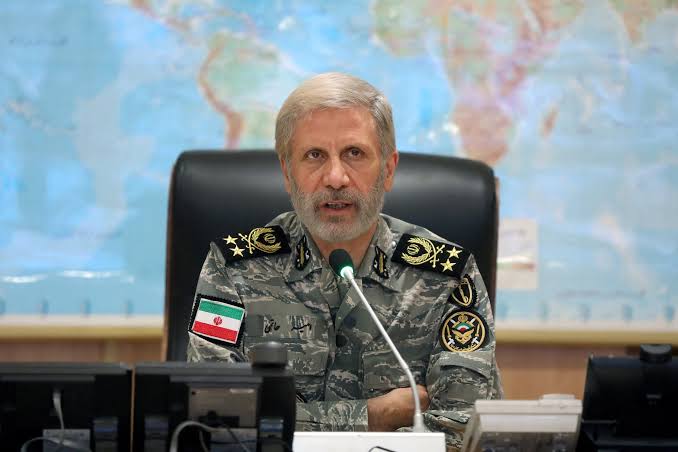
Iran’s Army Chief, Major General Amir Hatami, has warned the United States against launching another military offensive against the Islamic Republic, declaring that Tehran would deliver a more devastating response to any renewed aggression.
Hatami issued the warning on Wednesday, November 18, amid escalating military confrontations between Iran and the United States, with tensions spreading across the Middle East and raising concerns about a wider regional conflict.
According to Iranian media reports, the military chief said the country’s armed forces were closely monitoring the movements and preparations of their adversaries while continuously strengthening their combat readiness.
He warned that any further hostile action against Iran would attract a response significantly more forceful than previous military engagements.
“The enemy is preparing its forces, but the army and armed forces are monitoring their movements with vigilance and precision,” Hatami said.
He added that Iran’s response to any mistake by its enemies and their supporters would be “more crushing”, warning that any country threatening the Islamic Republic would face serious consequences.
The latest warning comes against the backdrop of renewed hostilities between Washington and Tehran following recent military exchanges involving American and Iranian forces.
The confrontation intensified after the United States reportedly struck an Iranian missile launch site on Qeshm Island, prompting Tehran to announce retaliatory attacks targeting American drone and missile installations at Kuwait’s Ali Al Salem airbase.
Kuwait subsequently reported responding to drone attacks, while Bahrain disclosed that its air defence systems had intercepted Iranian aerial attacks for the third time within a week.
The developments have heightened fears that the conflict could extend beyond the immediate territories of Iran and the United States, potentially drawing additional Gulf countries into the confrontation.
Iran has repeatedly maintained that American military installations and strategic interests in the region could become targets if Washington continues its military operations against the country.
The strategic Strait of Hormuz has also emerged as a major flashpoint in the crisis. The waterway, through which a substantial proportion of the world’s oil supplies passes, has experienced severe disruptions following Iran’s restrictions on shipping and the United States’ naval blockade of Iranian ports.
The disruption has contributed to rising energy prices and increased uncertainty in international oil markets, with shipping operators and governments closely monitoring developments.
Despite the military escalation, diplomatic efforts to prevent a wider war are continuing, with Qatar playing a mediation role and other regional governments urging both sides to exercise restraint.
Saudi Arabia has also called for an end to the hostilities and a negotiated resolution to the crisis.
Meanwhile, US Secretary of State Marco Rubio has maintained that Washington does not face an imminent threat from Iran, even as American military operations and regional security concerns continue.
Iranian officials, however, have insisted that the country’s military capabilities and operational preparedness have improved following previous confrontations.
Hatami’s latest remarks reinforce Tehran’s position that another American attack would not be treated as an isolated military incident but could trigger a broader retaliation against the United States and its regional allies.
With neither side showing clear signs of backing down, international observers fear that another round of military action could deepen instability across the Middle East, threaten global energy supplies and complicate efforts to restore diplomatic relations between Washington and Tehran.