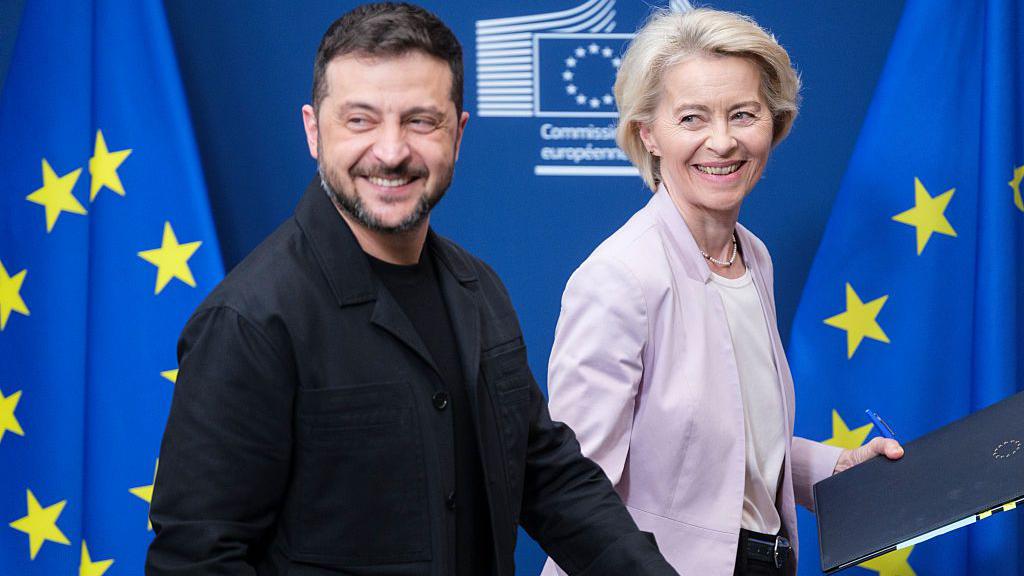
The European Union has proposed a €45 billion loan to Ukraine for 2027, with Brussels insisting that Russia should ultimately bear the financial responsibility through reparations for the destruction caused by its ongoing invasion.
European Commission President Ursula von der Leyen announced the proposal on Wednesday, November 18, describing the financial package as a crucial intervention to strengthen Ukraine’s position as the war with Russia continues.
According to Reuters, the proposed loan is expected to cover approximately two-thirds of Ukraine’s estimated €70 billion financing shortfall for next year.
Von der Leyen said Ukraine would only be required to repay the principal after Russia pays compensation for the damage inflicted on the country during the conflict.
“We think this is the best way to give Ukraine a strong hand at the negotiation table,” she told journalists in Brussels, adding that Kyiv should not shoulder the financial consequences of destruction caused by Moscow’s military aggression.
The proposed arrangement represents another significant attempt by European governments to sustain Ukraine’s economy and military capabilities while maintaining pressure on Russian President Vladimir Putin.
Under the arrangement, the European Commission would raise the money through borrowing backed by the European Union’s financial resources. Other international partners are also expected to contribute towards covering the remaining portion of Ukraine’s funding requirements.
A report by the Financial Times indicated that the broader financing strategy could also involve using proceeds generated by frozen Russian assets to support repayment obligations.
The proposal comes amid continuing disagreements among European governments over how best to utilise Russian sovereign assets immobilised following Moscow’s invasion of Ukraine in February 2022.
Brussels has previously faced resistance, particularly from Belgium, over proposals involving frozen Russian assets, partly because of concerns about legal and financial consequences.
Meanwhile, the European Commission is seeking to ensure that Ukraine receives predictable financial assistance to maintain essential public services, strengthen its defence industry and support economic recovery.
The latest proposal also builds on an earlier €90 billion Ukraine Support Loan agreed by EU leaders for 2026 and 2027.
The European Commission’s existing financial framework provides substantial assistance for defence capabilities, military procurement and general budgetary requirements.
However, the new €45 billion proposal will require approval from EU member states before implementation.
European officials are also expected to attach conditions to the funding, particularly regarding governance reforms, transparency, the rule of law and the fight against corruption.
Ukraine’s international partners are expected to play an important role in closing the remaining funding gap as Kyiv continues to confront the economic and humanitarian consequences of the war.
The financial initiative comes at a critical moment for Ukraine, which faces mounting pressure on its infrastructure, public finances and military resources following repeated Russian attacks.
For Brussels, the proposed loan is not merely an economic intervention but also a political statement that European support for Ukraine will continue despite the prolonged conflict.
By linking repayment to Russian reparations, the EU is seeking to establish a framework under which Moscow could eventually bear the financial cost of the devastation caused by its invasion.