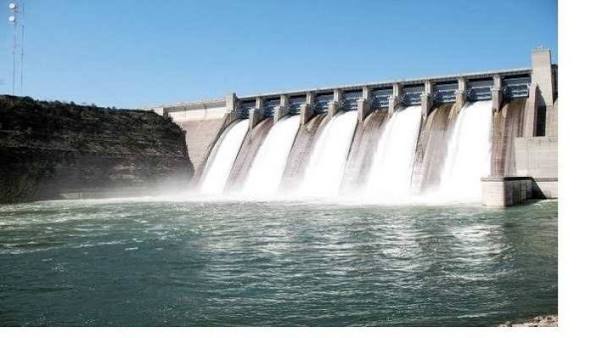
The Federal Government has intensified efforts to attract Chinese investment and financing for the long-delayed 3,000-megawatt Mambila Hydropower Project in Taraba State, as part of a broader strategy to tackle Nigeria’s persistent electricity crisis.
President Bola Tinubu has directed the Minister of Power, Joseph Tegbe, to engage northern state governments to secure their participation and ownership in the project, while pursuing discussions with Chinese companies that have expressed interest in supporting its development.
Tegbe disclosed this during a television interview, explaining that potential financing arrangements could involve China Exim Bank in partnership with Chinese engineering company, Sinohydro.
The proposed hydropower facility, one of Nigeria’s most ambitious electricity infrastructure projects, is expected to generate approximately 3,000 megawatts of electricity when completed.
The minister said the initiative forms part of the administration’s broader ambition to increase national electricity generation capacity and provide more reliable power to households, businesses and industries.
According to him, the Federal Government is moving beyond its longstanding 10,000MW generation target, with several projects in the pipeline capable of raising the country’s electricity generation capacity towards 20,000MW.
Tegbe expressed optimism that Nigerians could begin experiencing more stable electricity within the next three to five years, provided investments in generation, transmission and distribution infrastructure are sustained.
He also disclosed that the government was exploring additional hydropower opportunities across the country, including 21 dams identified along the proposed Sokoto-Badagry Superhighway for possible electricity generation.
The President has reportedly approved plans to develop the identified dams, while discussions with prospective investors are ongoing. A policy framework to guide the development of small hydropower projects is also nearing completion.
The minister further highlighted the Electricity Act 2023 as a significant opportunity for expanding investment in the power sector, noting that it allows state governments and private investors to establish independent electricity markets and develop projects suited to their respective locations.
He said states could invest in mini-grids, gas-fired power plants and other electricity infrastructure to complement the national grid.
The Mambila project has faced years of delays arising from contractual disagreements and legal disputes.
However, Nigeria’s recent victory in an international arbitration case involving Sunrise Power has opened opportunities for the government to pursue fresh implementation arrangements.
Tegbe said the administration was also prioritising the rehabilitation of existing electricity infrastructure and attracting private-sector participation in transmission and distribution.
He warned that Nigeria’s electricity demand would continue rising because of population growth, industrial expansion, artificial intelligence, data centres and increased digital economic activities.
The minister maintained that the government’s ultimate objective was not merely to increase generation figures but to establish a reliable electricity system capable of supporting economic growth and improving living standards.