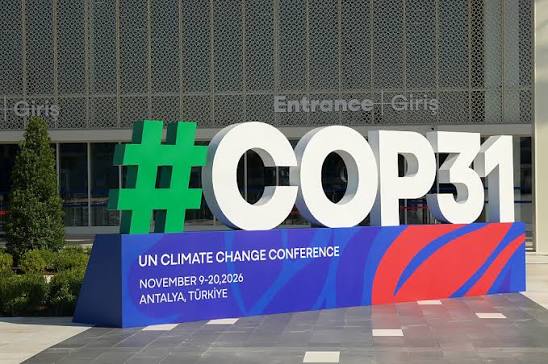
Scientists have warned that 2026 could become the hottest year in recorded history, as global warming continues to intensify and world leaders begin a fresh round of climate negotiations at the United Nations Climate Change Conference (COP31) in Antalya, Türkiye.
According to scientists at Berkeley Earth, an independent United States-based climate research organisation, there is a 95 per cent probability that 2026 will surpass the previous global temperature record set in 2024.
The warning comes as representatives from nearly 200 countries gather in Türkiye from November 9 to 20 to discuss strategies for reducing greenhouse gas emissions, strengthening climate resilience and accelerating the transition towards cleaner energy.
The scientists attribute the alarming temperature outlook to human-induced climate change, alongside the development of a powerful El Niño weather phenomenon, which typically raises global temperatures by releasing heat from the Pacific Ocean into the atmosphere.
Dr Robert Rohde of Berkeley Earth warned that the world was experiencing an extended period of exceptional temperatures, with the consequences becoming increasingly visible through devastating heatwaves, droughts, wildfires and other extreme weather events.
However, the World Meteorological Organisation (WMO), in its latest State of the Climate Update released on Monday, offered a more cautious assessment, projecting that 2026 would rank among the four warmest years ever recorded.
The report revealed that global average temperatures between January and September stood approximately 1.47 degrees Celsius above pre-industrial levels.
It also confirmed that the past 12 years, from 2015 to 2026, are on course to become the warmest 12-year period in recorded history.
The WMO further disclosed that global sea levels had reached unprecedented levels, while ocean heat content continued its record-breaking rise.
Meanwhile, the European Union’s Copernicus Climate Change Service predicted that 2026 was virtually certain to become the second calendar year to exceed 1.5 degrees Celsius above pre-industrial temperatures, following 2024.
The climate warnings have placed additional pressure on delegates attending COP31 to move beyond diplomatic promises and deliver practical solutions.
Among the major issues expected to dominate discussions are climate financing for developing countries, renewable energy investment, protection of vulnerable communities and measures to reduce dependence on fossil fuels.
Developing nations, particularly in Africa, have continued to demand greater financial assistance from industrialised countries to address climate-related disasters, despite contributing comparatively little to historical global emissions.
For Nigeria and other African countries, the consequences include worsening desertification, unpredictable rainfall, flooding, agricultural losses and threats to food security.
The emerging climate crisis has also renewed calls for governments to strengthen early-warning systems, invest in climate-resilient infrastructure and support sustainable agricultural practices.
With El Niño expected to intensify global temperatures into 2027, scientists insist that immediate and coordinated international action is necessary to prevent further environmental damage.
As COP31 progresses, the central challenge facing world leaders will be translating scientific warnings into concrete commitments capable of protecting the planet and future generations.