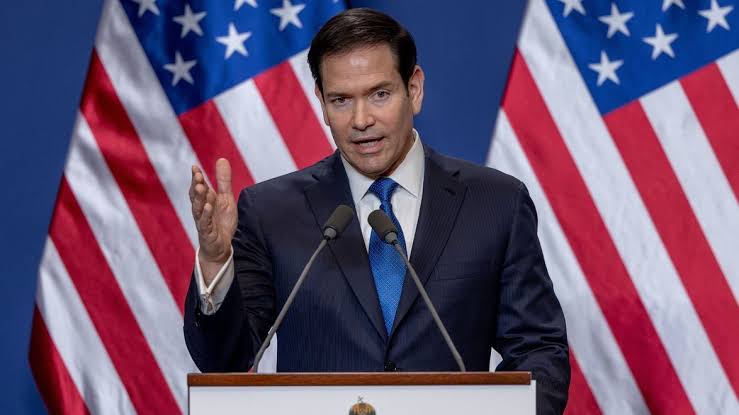
US Secretary of State Marco Rubio has signed documents authorising the expulsion of a Cuban diplomat accused of attempting to assault an American official during a heated confrontation at the United Nations General Assembly in New York.
US Ambassador to the UN Mike Waltz announced the decision, identifying the diplomat as Richard Tur de la Concepción, the first secretary of Cuba’s delegation to the international organisation.
Waltz said the Cuban official would be required to leave the United States within 24 hours, describing the alleged incident as unacceptable conduct towards American diplomatic personnel.
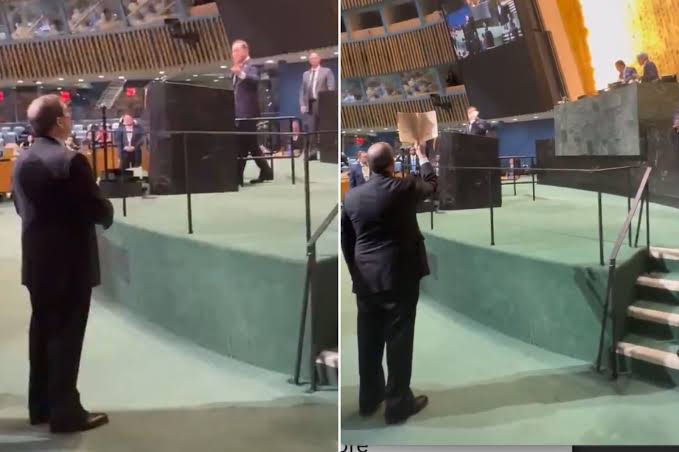
According to reports, Tur de la Concepción was accused of pushing and attempting to seize the phone of J.P. Freire, a spokesperson for the US mission to the UN, as Freire recorded the confrontation.
The expulsion announcement followed a dramatic exchange on Tuesday, October 27, between Waltz and Cuban Foreign Minister Bruno Rodríguez during a General Assembly debate on the longstanding US economic embargo against Cuba.
The confrontation began when Waltz addressed the assembly to defend Washington’s policy towards Cuba and urge member states to reject a resolution calling for an end to the embargo.
During his remarks, the US ambassador criticised Cuba’s communist government, accusing its leadership of corruption and highlighting alleged disparities between the living conditions of ordinary Cubans and those of senior officials.
Waltz reportedly displayed photographs of former Cuban leader Fidel Castro and current President Miguel Díaz-Canel wearing luxury watches as he argued that the country’s economic difficulties were linked to the priorities of its leadership.
Members of the Cuban delegation responded by shouting objections and banging on their table. Rodríguez subsequently approached the podium and accused Waltz of lying, triggering an angry exchange between the two officials.
Waltz repeatedly told the Cuban foreign minister to step back, insisting that he would not be intimidated on American soil.
The situation escalated when Tur de la Concepción allegedly moved towards Freire and attempted to take the phone he was using to record the incident. The Cuban diplomat was subsequently escorted away from the area.
Waltz later said the US government would not tolerate physical aggression against its diplomatic representatives. Rubio’s decision to authorise the expulsion marked a further escalation of the dispute.
Tensions over Cuba’s economic embargo
The diplomatic confrontation comes amid deteriorating relations between Washington and Havana, as President Donald Trump’s administration intensifies economic and political pressure on the Cuban government.
The United States has maintained a broad economic embargo against Cuba for more than six decades. Washington argues that sanctions are necessary to pressure the government over its political system and human rights record, while Havana maintains that the restrictions have contributed significantly to the country’s economic hardship.
The United Nations General Assembly has repeatedly called for the embargo to be lifted through annual resolutions. Although the resolutions are not legally binding, they provide an indication of international opinion on the dispute.
The latest confrontation has added to tensions surrounding the vote, with US officials seeking to persuade member states to oppose the resolution.
Cuba has faced severe economic difficulties, including fuel shortages, electricity blackouts and disruptions to essential services. Its government has repeatedly blamed US sanctions for worsening these problems, while Washington has challenged Havana’s explanation and criticised its domestic policies. The expulsion of Tur de la Concepción could further complicate diplomatic relations between the two countries, which have a long history of political hostility and disagreements over governance, trade and regional security.
As of Wednesday, October 28, the announcement of the expulsion had been reported, but an independent confirmation that the diplomat had departed the United States was not available in the cited reports.
The incident underscores how disputes at the United Nations can spill beyond diplomatic debate, potentially intensifying already strained relations between countries.