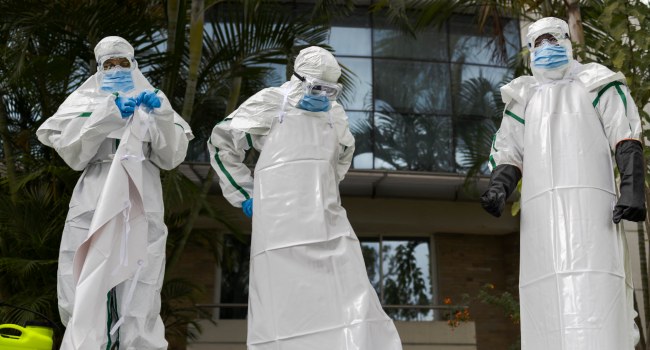
Nigeria must complete a mandatory 42-day monitoring period without new confirmed or probable Ebola cases before the outbreak can officially be declared over, the World Health Organisation (WHO) has clarified.
The clarification follows the medical evacuation of Nigeria’s confirmed Ebola patient to Switzerland on October 26, a development that left the country without a known active case but did not automatically end the outbreak.
The WHO stressed that the absence of confirmed cases within Nigeria does not amount to an official declaration that the country is Ebola-free. Public health authorities must first satisfy the required surveillance and outbreak-ending criteria.
The case involved a 42-year-old woman who travelled from Uganda to Nigeria and tested positive for the Bundibugyo strain of Ebola virus disease. Her infection was confirmed on October 20, prompting an intensified response by the Federal Ministry of Health and Social Welfare and the Nigeria Centre for Disease Control and Prevention (NCDC).
Following her evacuation, Nigerian authorities continued monitoring people who might have been exposed to the infection. Reports indicated that approximately 52 contacts remained under surveillance in Nigeria, while Swiss authorities assumed responsibility for monitoring the patient and her husband.
The monitoring exercise is designed to identify possible infections early and prevent further transmission. Health officials have urged identified contacts to cooperate with public health teams and comply with established monitoring procedures.
Under WHO criteria, the 42-day countdown is linked to the appropriate resolution of the last confirmed case, including the required negative test results or other applicable conditions. The period represents twice the maximum 21-day incubation period generally associated with Ebola.
Nigeria’s Coordinating Minister of Health and Social Welfare, Professor Muhammad Ali Pate, said the country could potentially declare the outbreak over by December 7, 2026, provided no additional confirmed or probable cases emerge.
However, the proposed date remains provisional and is subject to validation by the NCDC and WHO. Any additional case could require a fresh countdown, potentially delaying the declaration.
The Federal Government has maintained that surveillance, contact tracing, laboratory readiness and infection-prevention measures remain priorities. Health authorities are also strengthening preparedness in healthcare facilities to ensure that suspected cases are identified, isolated and investigated promptly.
The government has appealed to Nigerians to remain calm, avoid spreading unverified information and cooperate with health officials.
Although the patient’s evacuation represents an important development in Nigeria’s response, authorities have emphasised that sustained vigilance remains essential.
The coming weeks will therefore be critical in determining whether Nigeria meets the conditions for officially declaring the Ebola outbreak over.
Until the required monitoring period is completed and validated, the country cannot be formally declared Ebola-free.