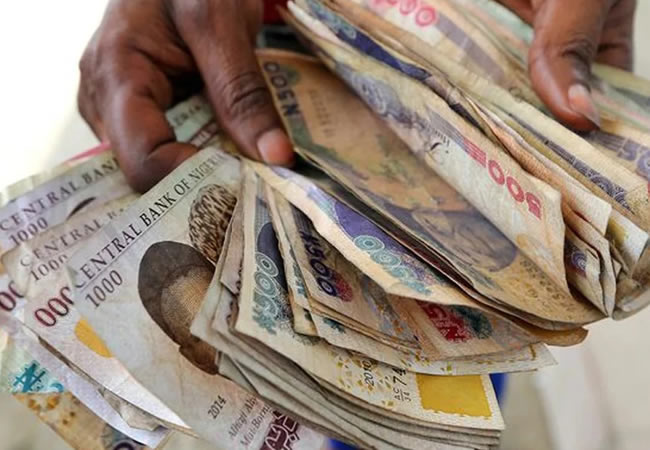
Nigeria’s money market is experiencing a fresh wave of liquidity as excess cash in the banking system climbed to N7.45 trillion, pushing several short-term interest rates lower and easing funding pressure on financial institutions.
Market data showed that system liquidity increased by 7.92 per cent from N6.91 trillion, marking the fourth consecutive weekly rise.
Since the beginning of the year, banking-system liquidity has increased by about 95.3 per cent, highlighting the sharp improvement in cash availability across the financial system.
The development followed the Central Bank of Nigeria’s recent decision to cut its benchmark Monetary Policy Rate from 26.5 per cent to 23 per cent, while adjusting the Standing Deposit Facility floor to 20 per cent.
The new policy corridor has already begun to influence money-market pricing. The overnight policy rate declined by 100 basis points to 21 per cent, while the overnight lending rate fell by 51 basis points to 21.76 per cent.
The Nigerian interbank overnight rate also declined, reflecting the stronger liquidity position of banks.
A major contributor to the liquidity build-up was the maturity of N2.27 trillion in Open Market Operation bills, which released funds back into the banking system. Banks also continued to place substantial amounts of surplus funds with the CBN through the Standing Deposit Facility, with deposits reaching about N7.34 trillion.
The increased liquidity has also affected the Treasury bills market. Average Treasury-bill yields declined to 18.38 per cent, with notable falls recorded across several maturities.
At the latest primary-market auction, investor subscriptions exceeded N4.2 trillion, while the amount allotted was below N500 billion.
The strong demand for government securities indicates that investors are actively repositioning portfolios as interest rates adjust following the CBN’s policy reset. Lower yields, however, could gradually affect returns available to investors in short-term fixed-income instruments.
Analysts expect short-term money-market rates to remain under downward pressure if the liquidity surplus persists.
AIICO Capital noted that overnight rates could move closer to the 20 per cent Standing Deposit Facility floor, although the direction will depend partly on how aggressively the CBN absorbs excess liquidity through future OMO operations.
For banks, the immediate effect is reduced pressure to secure short-term funding. For investors, borrowers and the broader financial system, the latest developments signal a significant shift from the tighter liquidity conditions that characterised earlier phases of monetary policy.
The key question now is whether the CBN allows the N7.45 trillion liquidity surplus to persist or deploys further market operations to moderate the excess cash.
The size and timing of future OMO auctions are therefore likely to remain central to the direction of Nigerian money-market rates in the coming weeks.