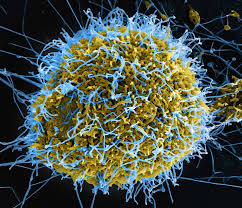
The European Union has stepped up support for the Democratic Republic of Congo as the country battles a rapidly spreading Ebola outbreak, with European epidemiologists deployed to the epicentre while Congolese authorities begin clinical research into the effectiveness of an existing Ebola vaccine against the strain driving the epidemic.
The European Centre for Disease Prevention and Control (ECDC) said it is sending two epidemiologists to the Democratic Republic of Congo to strengthen disease surveillance and the wider outbreak response, particularly in areas most severely affected by the epidemic.
The deployment comes as the outbreak, caused by the Bundibugyo strain of Ebola virus, continues to pose a major public-health challenge. More than 7,600 confirmed infections and over 3,670 deaths have been reported, with Ituri Province accounting for the largest share of infections, according to the latest health authority figures.
The ECDC has been supporting the response since the outbreak began, working with the Africa Centres for Disease Control and Prevention and other international partners.
Its experts have been involved in epidemiological surveillance, risk assessment and measures aimed at preventing further international spread.
ECDC Director Pamela Rendi-Wagner said the agency’s latest deployment was intended to reinforce surveillance and the overall response.
The agency has maintained that the risk to people in Europe remains very low because Ebola transmission generally requires direct contact with the blood or bodily fluids of infected people.
At the same time, Congo has moved ahead with a major vaccine research programme.
The World Health Organisation said 70,000 doses of Merck’s Ervebo vaccine have been allocated to the country, including 20,000 doses specifically for a Phase III clinical trial and 50,000 doses for frontline and health workers.
The research is significant because Ervebo is licensed against the Zaire species of Ebola, while the current epidemic is caused by the Bundibugyo virus.
There is currently no licensed vaccine specifically approved for Bundibugyo Ebola disease.
Although laboratory and animal evidence suggests Ervebo could provide some protection, its effectiveness in humans against the current strain remains uncertain.
The clinical trial is therefore expected to generate evidence that could guide future vaccination policies.
Health authorities have stressed the importance of informed consent and carefully designed research because the vaccine’s level of protection against Bundibugyo has not yet been established.
The outbreak has also triggered wider international scientific efforts. Candidate vaccines specifically targeting Bundibugyo are being developed, including vaccine programmes using adenovirus and mRNA technologies.
The University of Oxford has already launched a Phase I trial of a candidate Bundibugyo vaccine in healthy volunteers, while Moderna’s candidate has also received authorisation for early-stage clinical testing.
WHO declared the outbreak a Public Health Emergency of International Concern in May, citing its cross-border implications and the difficulties posed by insecurity, population movement and limited health infrastructure?
For Congo, the combination of international expertise, expanded surveillance, frontline vaccination and clinical research represents a coordinated effort to contain transmission while developing stronger tools against a strain for which medical countermeasures remain limited.