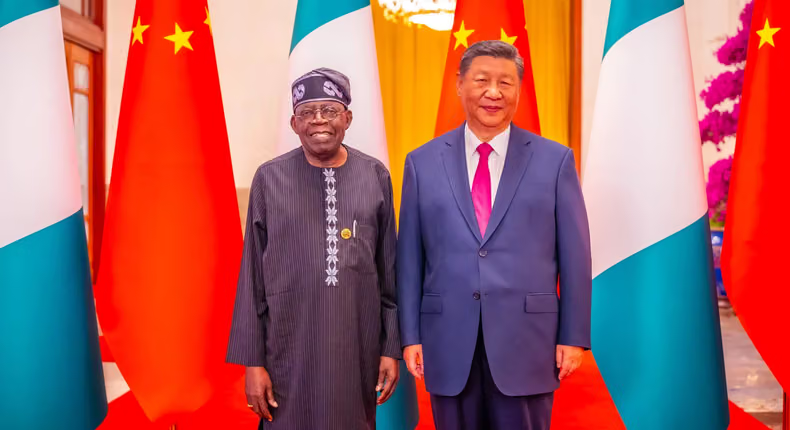
China has pledged a development grant valued at approximately ₦40 billion to support developmental projects in Nigeria, in what is expected to further deepen economic and infrastructural cooperation between the two countries.
The proposed assistance is expected to contribute to projects aimed at improving infrastructure, economic development and social welfare, while reinforcing China’s growing role as one of Nigeria’s major development partners.
The pledge comes against the backdrop of expanding bilateral relations between Nigeria and China, with both countries increasingly focusing on infrastructure, trade, agriculture, manufacturing, technology and human-capital development.
China and Nigeria upgraded their relationship to a Comprehensive Strategic Partnership in 2024, committing themselves to deeper cooperation in infrastructure connectivity, digital economy, agricultural modernisation, green development and industrialisation.
The Chinese government has also highlighted Nigeria’s importance as a major economic partner in Africa.
In February 2026, Chinese Ambassador to Nigeria Yu Dunhai said cooperation between both countries had produced major projects including the Lekki Deep Sea Port, Zungeru Hydropower Station, Abuja Water Supply Project, railway modernisation projects and the National ICT Infrastructure Backbone Project.
The latest grant pledge is therefore being viewed as part of a broader pattern of Chinese development assistance and economic engagement with Nigeria.
Analysts say properly targeted grants could provide significant benefits for communities if they are directed towards projects with measurable economic and social impact.
Priority areas could include transportation, healthcare, education, water supply, agriculture, renewable energy and small-business development.
Unlike commercial loans, grants generally do not require repayment, making them particularly valuable to a country seeking to expand infrastructure while managing fiscal pressures and debt obligations.
However, experts stress that transparency, accountability and effective project monitoring will be essential to ensuring that the funds produce tangible benefits for Nigerians.
China’s involvement in Nigeria’s infrastructure development has grown considerably over the years. Chinese companies have participated in major projects ranging from rail transportation to ports, power and telecommunications.
The Chinese government has repeatedly described such cooperation as mutually beneficial and focused on supporting Nigeria’s development ambitions.
In March 2026, China and Nigeria also signed a Framework Agreement on Economic Partnership for Shared Development, covering areas including manufacturing, agricultural transformation, green development, investment and digital trade.
The agreement is intended to provide a longer-term framework for economic cooperation between the two countries.
The ₦40 billion pledge could therefore strengthen ongoing efforts by the Nigerian government to attract development financing and technical assistance as it pursues economic diversification.
For Nigeria, the key challenge will be translating the pledged support into completed projects that directly improve citizens’ lives.
Clear implementation timelines, public reporting and strong oversight could help ensure that the assistance achieves its intended developmental objectives.
As Abuja and Beijing continue to deepen their strategic partnership, the new grant pledge signals China’s continuing willingness to support Nigeria’s development agenda while expanding cooperation between Africa’s largest economy and the world’s second-largest economy.