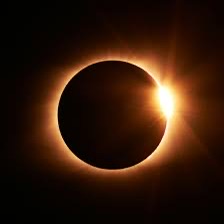
A major global eclipse is taking center stage, capturing the attention of astronomers, scientists and skywatchers preparing for one of nature’s most spectacular celestial displays.
The event is expected to generate widespread interest as people in different parts of the world turn their eyes toward the sky to witness the Moon, Earth and Sun align in a rare astronomical phenomenon.
For scientists, eclipses provide valuable opportunities to study the interaction between celestial bodies and gather information about the Sun and its surrounding atmosphere.
Across countries where the eclipse will be visible, astronomy groups and educational institutions are expected to organise viewing activities, while millions of people are likely to follow the event through television, online platforms and live broadcasts.
Eclipses have fascinated humanity for thousands of years.
Ancient civilisations often regarded them with fear and mystery, interpreting the sudden darkening of the sky as an omen or supernatural warning.
Modern science, however, has transformed the understanding of eclipses, explaining them as predictable events caused by the precise movements of celestial bodies.
During a solar eclipse, the Moon passes between the Earth and the Sun, temporarily blocking some or all of the Sun’s light from reaching parts of the Earth. Depending on the alignment and the location of observers, the eclipse may appear total, partial or annular.
A total solar eclipse is particularly dramatic because the Moon can completely cover the visible surface of the Sun, briefly revealing the Sun’s outer atmosphere, known as the corona.
The sky can darken noticeably, temperatures may fall and some animals may respond to the unusual change in daylight.
Scientists also regard eclipses as important research opportunities.
Observations made during these events can help researchers study the Sun’s corona, solar activity and other phenomena that are difficult to observe under ordinary conditions.
The global attention surrounding the eclipse also highlights the growing public interest in astronomy.
Social media platforms are expected to be filled with photographs, videos and personal accounts from people watching the phenomenon from different locations.
Astronomers, however, continue to warn the public about the importance of eye safety.
Looking directly at the Sun without appropriate certified eclipse-viewing protection can cause permanent eye damage. Ordinary sunglasses are not sufficient for safely viewing a solar eclipse.
For many observers, the event will be more than an astronomical occurrence. It will provide an opportunity for families, students, scientists and communities to share a rare moment while witnessing the extraordinary movements of the universe.
As the eclipse unfolds, attention will remain fixed on the skies, with millions around the world waiting for the moment when daylight gives way to one of nature’s most remarkable spectacles.