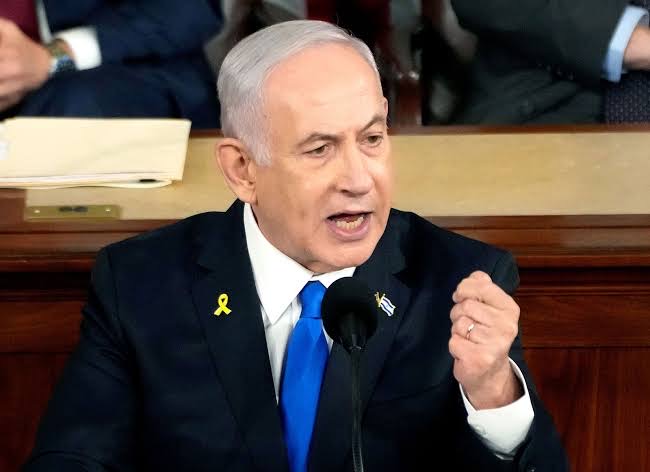
Israeli Prime Minister Benjamin Netanyahu has rejected the latest Gaza peace proposal backed by US President Donald Trump, creating a fresh obstacle to Washington’s efforts to end the conflict and establish a new political and security arrangement in the Palestinian territory.
Netanyahu said Israel would not accept the 15-point document and that there would be no Israeli military withdrawal from Gaza until Hamas had surrendered its weapons.
He stressed that disarmament must be genuine and comprehensive, rather than limited to heavy weapons or symbolic measures.
The Israeli leader’s position represents a significant disagreement with Washington at a sensitive stage of negotiations.
The plan, developed through President Donald Trump’s Board of Peace, was designed to provide a framework for ending the Gaza conflict, removing Hamas from military control and eventually transferring administration of the territory to an independent Palestinian body.
Under the proposal, Hamas would be required to disarm, while Israel would undertake a phased military withdrawal from Gaza.
The plan also envisages a new civilian administration and reconstruction arrangements for the devastated territory..
Netanyahu, however, has made clear that Israel will not accept a withdrawal arrangement that could leave Hamas capable of rebuilding its military infrastructure.
He has argued that Israel’s security requires Hamas to surrender not only heavy weapons but also smaller arms and other military capabilities.
The Israeli government has previously accused Hamas of attempting to retain military influence while transferring civilian responsibilities to technocrats.
In July, Hamas announced that it was prepared to dissolve its de facto Gaza government and hand administrative responsibilities to Palestinian technocrats, but Israel dismissed the move as insufficient because Hamas had not agreed to fully disarm.
Hamas, meanwhile, has maintained its commitment to the broader US-backed roadmap and has called on mediators and Washington to pressure Israel not to block implementation.
The group has argued that Israeli withdrawal and an end to attacks are essential elements of any credible political process.
The disagreement has therefore exposed a fundamental dispute over the sequence of events.
Israel wants Hamas disarmed before withdrawing its forces, while Hamas has resisted surrendering its weapons without guarantees concerning Israel’s military presence and the future of Gaza.
Netanyahu has also taken a hard line on Palestinian statehood, saying that as long as he remains prime minister, Israel will not permit the establishment of a Palestinian state in Gaza or the West Bank.
His position is likely to deepen tensions with Palestinians and some international partners seeking a two-state political settlement.
The rejection now places additional pressure on Trump’s diplomatic initiative.
Washington faces the challenge of reconciling Israel’s demand for complete Hamas disarmament with the need to secure Palestinian cooperation and achieve an Israeli withdrawal.
With the Gaza conflict already having caused extensive destruction and displacement, the failure to bridge the differences could prolong uncertainty over the territory’s future.
For now, Netanyahu’s message is unequivocal: Israel will not pull out until Hamas gives up its weapons completely.