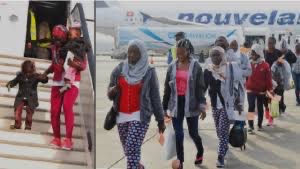
Germany has deported at least 137 Nigerian citizens in five documented chartered operations between February and June 2026, according to reports, highlighting the continuing enforcement of German immigration decisions against Nigerians whose applications to remain in the country were unsuccessful.
The deportations, which were carried out through charter flights from Germany to Nigeria, form part of a broader European effort to return migrants who no longer have legal grounds to remain in the bloc.
The operations also underscore the increasing attention being paid by European authorities to migration management and the enforcement of removal orders.
Reports monitored on the deportation operations indicate that the affected.
Nigerians were returned after German authorities concluded their immigration cases.
In some instances, deportation flights are coordinated with other European countries through wider European Union and Frontex arrangements, allowing several countries to use the same charter operation.
Germany’s deportation programme involving Nigerians is not new.
Data from migration-support organisations show that Germany has conducted several chartered deportation flights to Nigeria in recent years.
In 2025, for example, at least 10 chartered deportation flights were recorded from Germany to Nigeria, with some operations involving other European countries.
The figures have generated renewed concern among migration advocates, particularly over the circumstances surrounding some deportations.
Refugees4Refugees, an organisation that monitors deportation flights and supports returnees, has documented cases in which Nigerians arrived in Lagos after being removed from Germany.
One such operation occurred in April 2026, when 24 Nigerians were deported from Germany to Lagos aboard a charter aircraft. The group reportedly included 21 men, two women and a 10-year-old child.
Another deportation flight reported in June brought 26 Nigerians into Lagos.
The Nation reported that the group consisted of 25 adult men and one elderly woman.
The latest figure of 137 deportees across five flights therefore adds to an ongoing pattern of forced returns involving Nigerian nationals in Germany.
Migration advocates have also raised concerns about the welfare of deportees immediately after their arrival in Nigeria.
Unlike voluntary return programmes, deportees may arrive unexpectedly and without the financial or social support available to people who voluntarily organise their return.
The contrast was evident in Nigeria’s handling of voluntary returnees from South Africa in 2026.
The Federal Government, through agencies including the National Emergency Management Agency (NEMA), the Nigerians in Diaspora Commission and the Nigeria.
Immigration Service, coordinated reception, registration, identity verification, health screening and transportation for thousands of Nigerians voluntarily returning from South Africa.
The deportations from Germany are likely to keep migration and reintegration at the centre of discussions between Abuja and European governments.
For Nigeria, the challenge extends beyond receiving deportees at the airport to ensuring that those returning are able to rebuild their lives and avoid becoming vulnerable to further irregular migration.
The development also serves as a warning to Nigerians seeking opportunities in Europe that immigration rules must be followed and that unsuccessful asylum or residence applications can ultimately result in removal.
With Germany continuing to enforce deportation orders, migration experts are expected to maintain calls for stronger cooperation between Nigerian and European authorities, particularly on legal migration pathways, documentation, reintegration and the protection of vulnerable returnees.