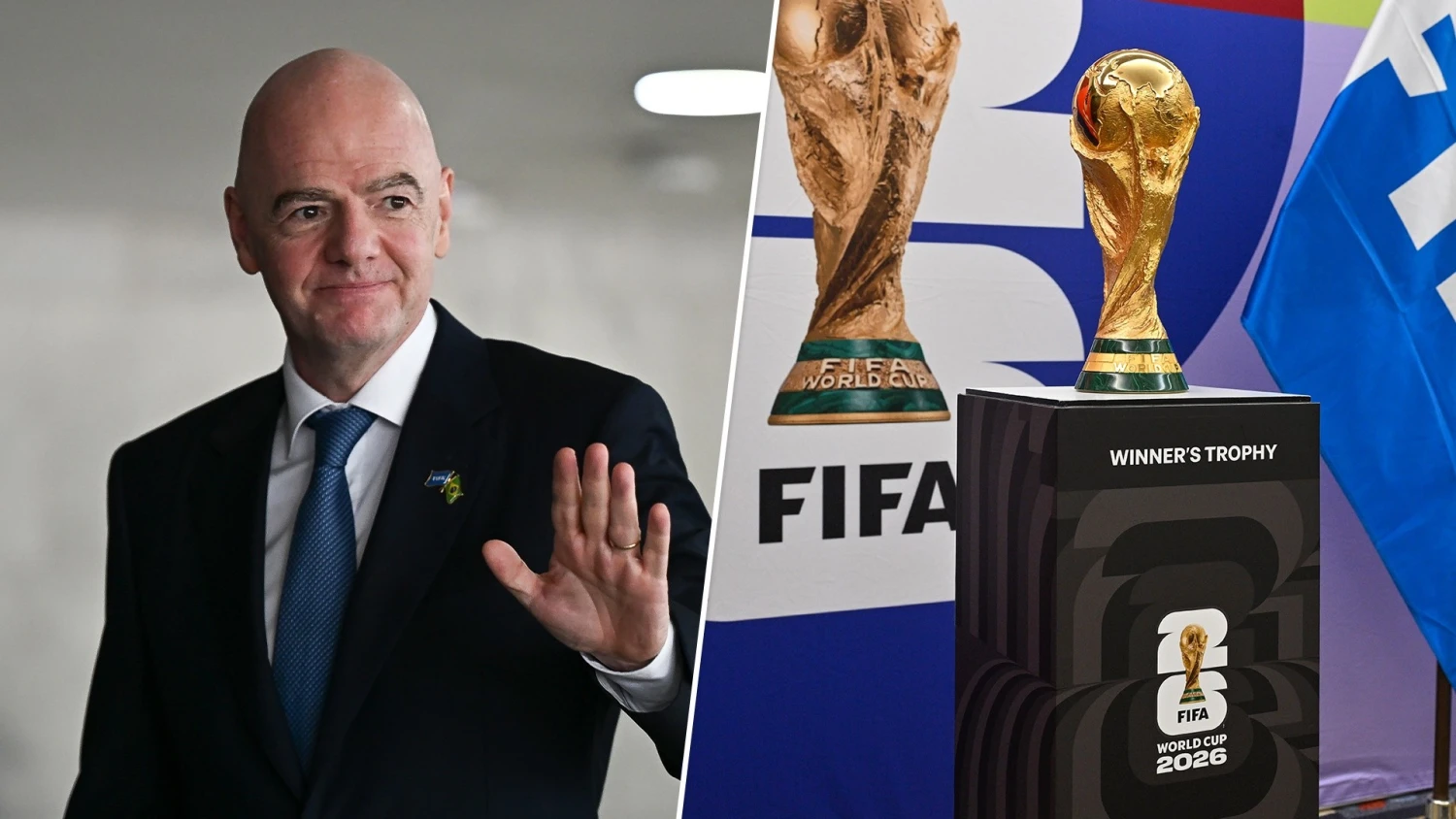
The global backlash against FIFA President Gianni Infantino’s controversial proposal to open the commercial interests of the FIFA World Cup to private investors has intensified, with the Confederation of North, Central America and Caribbean Association Football (CONCACAF) becoming the latest football authority to reject the plan.
Representing 41 Member Associations, CONCACAF announced that it had unanimously rejected FIFA’s proposed investment structure, citing serious concerns over governance, transparency and the speed with which the proposal is being pushed through the organization’s decision-making process.
The decision comes only hours after UEFA’s 55 member associations threatened to boycott future FIFA competitions, including both the men’s and women’s FIFA World Cups, unless the proposal is withdrawn.
At the centre of the controversy is a proposed investment vehicle known as FIFA Forward Enterprise (FFE), a commercial subsidiary designed to oversee FIFA’s major competitions.
Under the proposal, FIFA would sell a minority stake in the enterprise to a consortium of long-term investors reportedly led by Joshua Kushner, founder of Thrive Capital and brother of Jared Kushner, the son-in-law of United States President Donald Trump.
FIFA says the initiative could generate billions of dollars for football development while maintaining full control over sporting decisions.
However, critics argue that the proposal represents an unprecedented attempt to commercialize football’s greatest competitions without adequate consultation.
In a strongly worded statement, CONCACAF said its members expressed “deep concerns” regarding the absence of due process, describing the consultation period as “artificially short” and questioning why FIFA’s established governance bodies had not been allowed to review or approve the proposal before it was presented to Member Associations.
The confederation also challenged the financial justification behind the initiative, pointing out that FIFA recently recorded what has been described as the most profitable World Cup in its history.
If FIFA is already generating record revenues, CONCACAF argued, there appears to be little justification for inviting private equity investors into one of football’s most valuable commercial assets.
UEFA’s response has been even more uncompromising.
Europe’s governing body declared that “the World Cup is not for sale,” warning that football’s heritage cannot be treated as an investment product.
UEFA further accused FIFA of conceiving the proposal in secrecy and bypassing meaningful consultation with the organizations responsible for safeguarding the game’s future.
The confederation warned that unless the proposal is abandoned and stronger governance guarantees are introduced, European national teams will refuse to participate in FIFA competitions.
The growing opposition bears similarities to the failed European Super League proposal of 2021, when football authorities, clubs, players and supporters united to defend what they considered the integrity of the sport.
Then, as now, critics argued that commercial interests were being placed above the traditions and competitive structure of world football.
The latest controversy has also attracted political attention.
Reports indicate that lawmakers in the United States are closely monitoring the proposal because of its political connections and the involvement of Kushner-linked investment interests.
Some U.S. politicians have even suggested that the proposal could face congressional scrutiny if concerns over governance and transparency remain unresolved.
Meanwhile, football administrators across Asia have begun expressing similar reservations.
The Asian Football Confederation (AFC) has publicly aligned itself with the concerns raised by UEFA and CONCACAF, warning that football should never be placed in a position where the possibility of a World Cup boycott becomes a realistic scenario.
The AFC said the unprecedented divisions emerging across global football demonstrate that the proposal lacks the broad consensus required for such a fundamental transformation of FIFA’s commercial structure.
Industry observers note that FIFA insists no investor would exercise influence over sporting decisions, with all governance remaining under FIFA’s control.
The organization argues that the investment would create long-term financial sustainability and significantly increase funding available for football development across its 211 Member Associations.
Nevertheless, critics remain unconvinced.
Many believe the proposal crosses an important ethical line by allowing private investors to acquire financial interests in competitions that have historically been regarded as belonging to the global football community rather than commercial shareholders.
The widening resistance now places FIFA President Gianni Infantino under increasing pressure. With UEFA, CONCACAF and growing voices across Asia questioning the proposal, analysts believe the governing body faces one of its most significant governance crises in recent years.
Whether FIFA proceeds with the investment plan or returns to the negotiating table, one reality is becoming increasingly clear: football’s stakeholders are demanding greater transparency, broader consultation and stronger safeguards before any commercial restructuring of the World Cup can move forward.
For millions of supporters worldwide, the debate is no longer simply about finance.
It has become a defining battle over who truly owns the world’s most celebrated football tournament and whether the FIFA World Cup should ever become an investment asset.