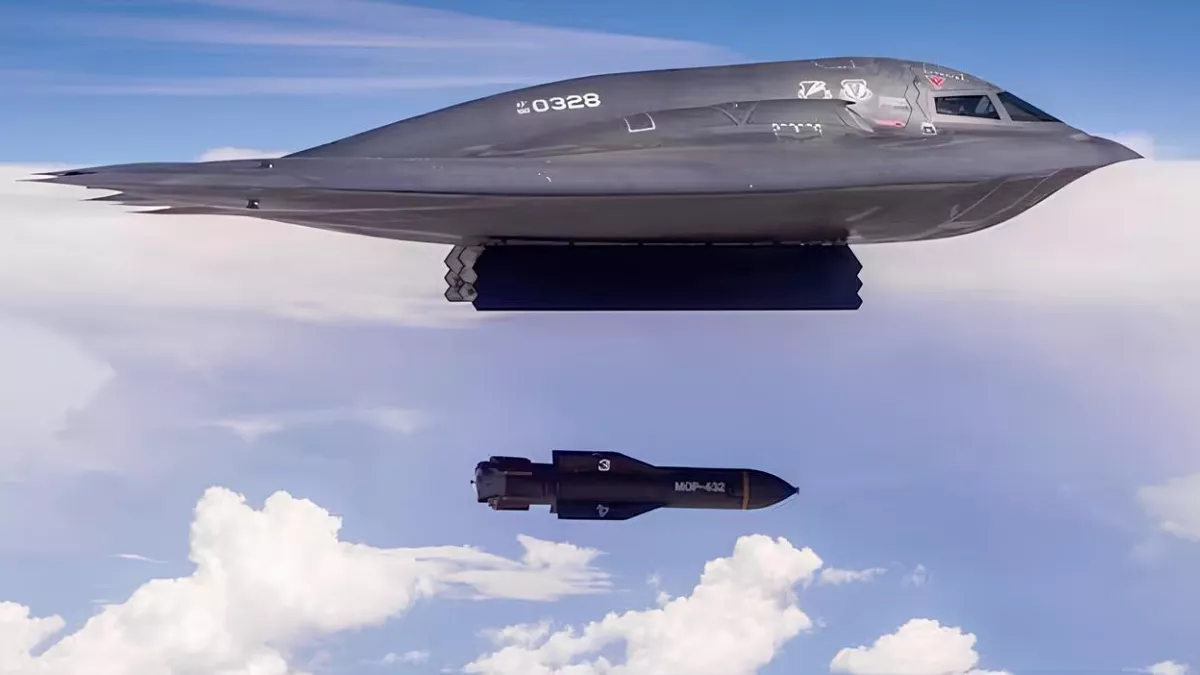
The United States has carried out a ninth consecutive night of airstrikes against Iran, deepening one of the most dangerous confrontations in the Middle East in years as tensions surrounding the strategic Strait of Hormuz continue to rattle global energy markets and raise fears of a wider regional conflict.
According to the U.S. Central Command (CENTCOM), the latest wave of strikes targeted Iranian military command centres, air defence systems, missile and drone launch sites, coastal surveillance facilities and communications infrastructure.
Washington said the attacks are aimed at degrading Iran’s ability to threaten commercial shipping and military assets operating around the Strait of Hormuz.

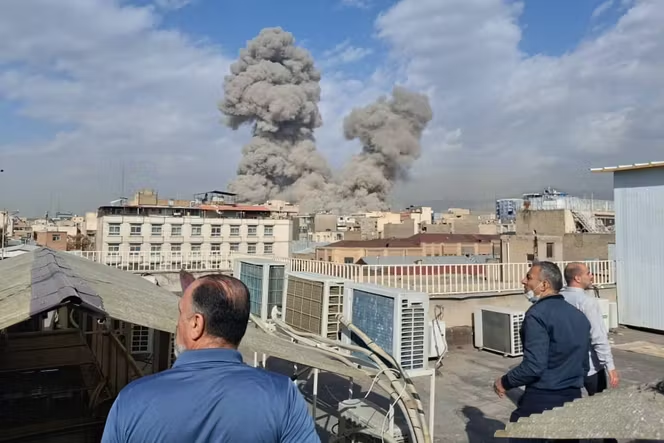
Iranian state media reported explosions in several locations, including the southern coastal areas of Sirik, Jask, Mahshahr and Imam Khomeini, while air defence systems were activated near Tabriz and Chabahar as Iranian forces attempted to repel the attacks.
Authorities in Tehran have yet to release an official casualty count but condemned the strikes as a violation of international law.
The latest bombardment comes amid an escalating dispute over the Strait of Hormuz, the narrow waterway through which roughly one-fifth of the world’s seaborne oil supply normally passes.
Commercial shipping through the channel has slowed sharply after repeated attacks on vessels and growing security concerns, prompting renewed volatility in global oil markets.
Oil prices briefly climbed to their highest levels in weeks before easing slightly as reports emerged that international mediators were pushing for renewed ceasefire negotiations.
Qatar is among the countries seeking a temporary truce, although Tehran has reportedly dismissed several proposals while insisting that its maritime rights in the Strait of Hormuz remain non-negotiable.
The conflict has widened beyond Iran and the United States. Gulf nations have reported missile and drone attacks on military and civilian infrastructure, while authorities in Bahrain, Kuwait and Jordan have activated air defence systems in response to incoming threats.
The Houthi movement in Yemen has also declared a maritime blockade targeting Saudi Arabia, further complicating regional shipping routes.
President Donald Trump’s administration has defended the continuing military campaign, arguing that sustained pressure is necessary following attacks that killed American service members in the region.
U.S. officials maintain that diplomacy remains an option but insist Iran must halt attacks on shipping lanes and regional allies before meaningful negotiations can proceed.
Analysts warn that unless a diplomatic breakthrough is achieved soon, the conflict risks evolving into a prolonged regional war with serious consequences for global energy supplies, international trade and financial markets. With military operations continuing nightly and both sides showing little sign of backing down, the Strait of Hormuz remains one of the world’s most dangerous geopolitical flashpoints.