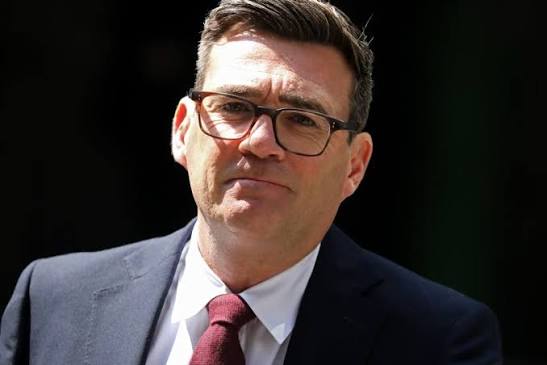
Britain has entered a new political chapter with Andy Burnham officially taking office as the country’s new Prime Minister, succeeding Keir Starmer after the latter’s resignation.
In his first address from 10 Downing Street, Burnham acknowledged the challenges facing the United Kingdom and pledged to pursue a bold 10-year strategy aimed at restoring political stability, reviving economic growth, and rebuilding public confidence in government.
Burnham, who rose to national prominence during his decade as Mayor of Greater Manchester, assumed office after winning the Labour Party leadership following a special leadership contest.
His appointment marks another significant leadership transition in British politics, making him the latest in a succession of prime ministers during a period marked by economic uncertainty, rising living costs, and growing voter frustration.
Standing outside Number 10 shortly after being invited by King Charles III to form a government, Burnham admitted that many Britons had lost faith in politics.

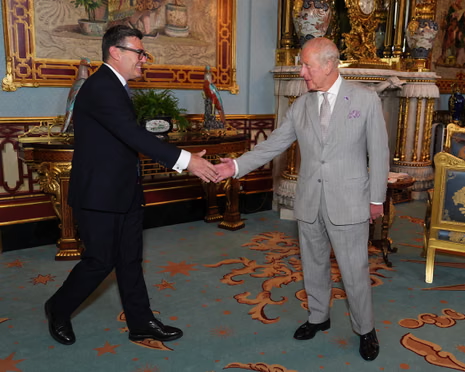
He described the moment as an opportunity to reset the country’s direction and promised to make government work more effectively for ordinary people.
“We have not been good enough,” Burnham said, stressing that Britain needed “a new political model and a new economic model” capable of delivering lasting prosperity rather than short-term fixes.
At the centre of Burnham’s agenda is a comprehensive 10-year national plan designed to address what he described as structural problems that have held the country back for years.
Rather than focusing solely on immediate political gains, the new prime minister argued that Britain requires a long-term vision to reverse regional inequalities, modernise public services, and stimulate sustainable economic growth.
While promising sweeping reforms over the coming decade, Burnham also pledged immediate action to ease the pressure on households grappling with the high cost of living.
His government plans to introduce measures intended to give families “breathing space now” while broader reforms are developed later this year.
Among the long-term priorities outlined in his speech are major investments in education, expanded mental health services, and a large-scale programme to build council housing.
Burnham argued that these investments would reduce long-term welfare costs while creating stronger communities and improving opportunities for younger generations.
Economic policy is also expected to undergo significant changes.
Burnham has indicated he wants to decentralise power away from Westminster, giving more authority to Britain’s regions while pursuing a pro-business agenda that encourages investment and innovation.
His administration is also expected to review government structures, including changes to Whitehall departments, as part of broader efforts to improve efficiency.
Housing and infrastructure feature prominently in the new government’s programme.
Burnham has pledged to accelerate council house construction to address Britain’s housing shortage and help reduce soaring rents.
He has also signaled support for reforms to social care funding and continued investment in critical infrastructure projects.
On foreign policy, the new prime minister reaffirmed Britain’s support for Ukraine and its commitment to existing defence obligations.
He also pledged to maintain fiscal discipline despite the ambitious scale of his domestic agenda, insisting that economic responsibility would remain central to his government’s approach.
Political analysts say Burnham’s biggest challenge will be turning his ambitious vision into tangible results.
Britain continues to face sluggish economic growth, strained public services, and widespread public skepticism following years of political upheaval. Delivering meaningful improvements while maintaining financial credibility will test the new administration from its earliest days.
Nevertheless, Burnham’s opening message sought to strike an optimistic tone. Calling his premiership a “circuit breaker” for Britain, he urged the country to look beyond short-term politics and unite behind a shared national mission.
Whether his promised decade-long programme succeeds may ultimately determine not only the future of his government but also whether Britain can emerge from years of political turbulence with renewed confidence and stability.