The knockout phase of the FIFA World Cup 2026 has officially begun, and with it comes the harsh reality that every defeat now means an immediate flight home. After an entertaining group stage that featured 48 nations, the Round of 32 has ushered in the business end of the tournament, where dreams of global glory can disappear in a single match.
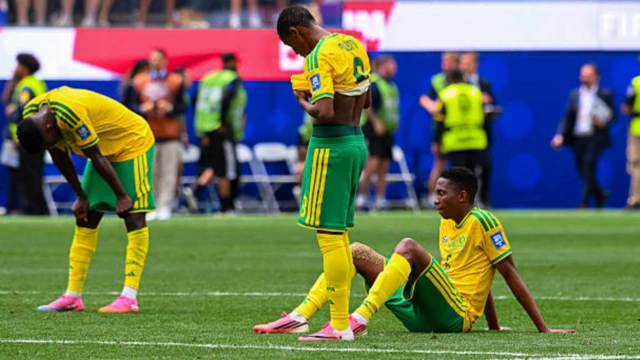
As of June 29, only one team has officially been eliminated from the Round of 32 South Africa following a heartbreaking defeat to Canada in the tournament’s first knockout fixture.
The result marked the beginning of what promises to be a dramatic elimination phase as 32 teams battle for a place in the last 16.
For South Africa, the defeat brought an end to one of the nation’s most memorable World Cup campaigns.
Bafana Bafana had already exceeded expectations by reaching the knockout stage, becoming one of the surprise stories of the competition.
Their performances in the group stage captured the imagination of football fans around the world and inspired supporters across the African continent.
However, football can be cruel.
Against Canada at SoFi Stadium in California, South Africa appeared destined to force extra time after producing a disciplined defensive display.
But in stoppage time, Canadian captain Stephen Eustáquio struck a dramatic winner, firing his nation into the Round of 16 and sending South Africa out of the competition. The goal arrived in the 92nd minute and instantly became one of the defining moments of the tournament so far.


The 1-0 defeat was particularly painful because South Africa had entered the match full of confidence after navigating a difficult group that included Mexico and South Korea.
Few pundits had predicted that they would even reach the knockout phase, making their eventual elimination all the more bittersweet.
Yet their campaign should still be viewed as a success.
The South Africans demonstrated resilience, tactical discipline and an ability to compete with nations traditionally considered stronger.
Their performances highlighted the continued growth of African football and showed that the continent’s representatives are increasingly capable of challenging the established powers.
Canada, meanwhile, celebrated a historic milestone. The victory was the country’s first-ever World Cup knockout win and secured a place in the Round of 16, where they will face either the Netherlands or Morocco.
Canadian coach Jesse Marsch praised his players after the match, describing the achievement as one of the greatest moments in the history of Canadian football.
While South Africa became the first Round of 32 casualty, several other nations had already seen their World Cup dreams end during the group stage.
Among the most notable exits were Haiti, Türkiye, Tunisia, Jordan, Uruguay, South Korea, Qatar, Curacao, New Zealand, Saudi Arabia, Iraq and Panama.
These teams failed to secure enough points to advance from their respective groups and watched the knockout rounds from the sidelines.
South Korea’s elimination was especially surprising. The Asian giants entered the tournament with high expectations and experienced stars, yet failed to progress from Group A after suffering crucial defeats against Mexico and South Africa.
The disappointment sparked widespread criticism at home and renewed debate about the future direction of the national team.
Uruguay’s early exit was another shock. Traditionally regarded as one of football’s strongest tournament nations, the South Americans were unable to find consistency and were eliminated before the knockout rounds began. Their departure served as another reminder that reputations count for little in a World Cup where every mistake is punished.
The expanded 48-team format has contributed significantly to the unpredictability of this year’s tournament. FIFA’s decision to increase participation created opportunities for emerging football nations while also introducing a new Round of 32 phase before the traditional last-16 stage.
The result has been a competition filled with fresh storylines, surprise qualifiers and unexpected eliminations.
Several underdog nations seized their chance to shine. Cape Verde reached the knockout stage for the first time in history, while Bosnia and Herzegovina, Norway and DR Congo also earned places among the final 32 teams. Their success demonstrated the narrowing gap between football’s elite and its rising challengers.
The Round of 32 schedule now features a series of blockbuster encounters. Heavyweights including Brazil, Germany, France, Argentina, England, Spain and Portugal remain in contention and will begin their knockout campaigns over the coming days. Every match carries enormous significance because one poor performance can bring four years of preparation to an abrupt end.
For the teams still alive, the path to the final remains long and demanding. For South Africa, however, the journey is over.
Their exit may have come in heartbreaking fashion, but Bafana Bafana leave the tournament with their heads held high.
They proved capable of competing on football’s biggest stage, inspired a generation of supporters and delivered one of Africa’s most memorable World Cup stories in recent years.
As the World Cup enters its decisive phase, more teams will inevitably join the list of those heading home.
The beauty and cruelty of knockout football lie in its simplicity: win and continue dreaming, lose and your World Cup is over. South Africa have become the first victim of that reality in the Round of 32. They certainly will not be the last.