
Spain has recorded at least 327 heat-related deaths since June 21 as an unprecedented early-summer heatwave continues to grip much of Europe, breaking temperature records, straining health services and prompting fresh warnings from international climate and health agencies.
The figures, released by Spain’s Carlos III Health Institute, underscore the growing human cost of a heatwave that has pushed temperatures above 40 degrees Celsius in several regions and turned June 2026 into one of the hottest months ever recorded across large parts of the continent.
Spanish authorities said that since the country’s annual heat surveillance programme began in mid-May, a total of 611 deaths have been linked to extreme temperatures.
More than half of those fatalities occurred during the past week alone, highlighting the severity of the latest weather event.
According to Spain’s national meteorological agency, AEMET, the official heatwave ended on Thursday.
However, the agency noted that temperatures remain significantly above seasonal averages in many areas.
Weather records show that June 23 became the hottest June day ever recorded in Spain since national records began in 1950, while June 22 ranked as the second hottest.
Northern regions experienced some of the most exceptional conditions. Bilbao Airport set new records for both daytime highs and overnight minimum temperatures, illustrating a trend that health experts say is especially dangerous.
Unlike daytime heat, elevated night-time temperatures prevent the human body from recovering from prolonged exposure.
Health specialists warn that consecutive hot nights dramatically increase the risk of heat exhaustion, dehydration and cardiovascular complications, particularly among elderly people.
The scorching conditions are not confined to Spain. Large parts of Western, Central and Southern Europe remain under heat alerts, with the World Meteorological Organization (WMO) warning that the continent could face another two weeks of unusually high temperatures.
Forecast models indicate that the centre of the heat is likely to shift eastward toward the Balkans in the coming days.
Lachlan McIver, a health adviser with the WHO-WMO Climate and Health Joint Office, warned that prolonged exposure to high temperatures can place enormous stress on the human body.
“Prolonged exposure over several days, particularly when temperatures remain high at night, means the body enters each new day already stressed,” he said.
Older adults, infants, pregnant women, outdoor workers and individuals suffering from chronic illnesses remain among the most vulnerable groups.
However, health officials stress that prolonged extreme heat can affect anyone regardless of age or health status.
Across Europe, authorities are grappling with the consequences of the intense weather.
France has experienced some of the most dramatic conditions. The country registered its hottest day since records began, with the national average temperature reaching 30 degrees Celsius.
Temperatures climbed to 43.8 degrees Celsius in the western town of Palluau, while dozens of regions were placed under the highest-level red heat alert.
French authorities have also reported at least 40 drowning deaths during the past week as residents sought relief from the heat in rivers, lakes and coastal waters. Major tourist attractions, including the Eiffel Tower and the Louvre Museum, adjusted operating schedules because of the extreme conditions.

In Belgium, the Royal Meteorological Institute issued nationwide heat alerts, warning residents to prepare for intensifying temperatures.
Germany’s national weather service placed major cities, including Berlin, Frankfurt, Bonn and Cologne, under widespread red alerts.
Switzerland also shattered records, with Basel reaching 38 degrees Celsius, the highest June temperature ever recorded in the country. Authorities warned of growing pressure on infrastructure and public health systems as the heatwave intensified.
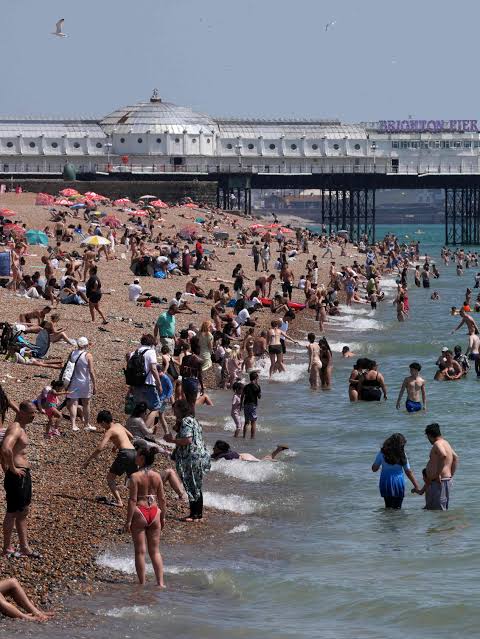
The United Kingdom was not spared. The country recorded its hottest June day on record, with temperatures exceeding 36 degrees Celsius.
Red health alerts were issued across parts of England and Wales, while schools, transport operators and emergency services implemented contingency measures to cope with the unusual heat.
Scientists say the current heatwave is another stark example of how climate change is amplifying extreme weather events.
Research released this week by the World Weather Attribution group concluded that the current Western European heatwave would have been “virtually impossible” without human-induced climate change.
The study found that extreme night-time temperatures are now around 100 times more likely than they were just two decades ago because of global warming.
Climate experts note that Europe is warming faster than any other continent, making it increasingly vulnerable to severe heatwaves, droughts and wildfires. Nearly half of the continent’s major cities are experiencing record levels of heat stress, a combination of temperature and humidity that limits the body’s ability to cool itself effectively.
The heatwave has also affected agriculture, transportation and energy infrastructure.
Authorities in several countries have warned of elevated wildfire risks, while rail operators and utility companies have implemented emergency measures to manage the impact of the extreme temperatures.
As Europe enters the peak summer season, meteorologists caution that relief may be temporary. With forecasts indicating further periods of extreme heat in the coming weeks, governments and health agencies are urging residents to remain vigilant, stay hydrated, avoid unnecessary outdoor activity during the hottest hours of the day and check regularly on elderly relatives and neighbors.
For many Europeans, the summer of 2026 is already becoming a grim reminder that extreme heat is no longer an occasional anomaly but an increasingly deadly reality.