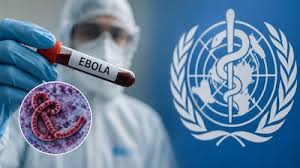
France has confirmed its first case of Ebola detected on its soil, marking the first time during the current outbreak that the deadly virus has been identified outside the African continent.
French health authorities announced on Wednesday that a doctor who recently returned from the Democratic Republic of Congo (DRC) tested positive for Ebola after arriving in Paris on a commercial flight from Kinshasa.
The patient, who reportedly worked with a humanitarian medical organization in the outbreak-hit region, was immediately isolated and transferred to a specialized treatment facility upon landing.
The development has drawn international attention as health officials’ work swiftly to trace contacts and prevent any possibility of further transmission.
According to France’s Health Ministry, the doctor showed only mild symptoms before boarding the flight, primarily headaches.
However, officials said the patient’s condition deteriorated slightly during the journey. Upon arrival, medical teams acted quickly, placing the individual under observation even before laboratory tests confirmed Ebola infection.
“The patient remains in stable condition and is receiving appropriate medical care,” the ministry said in a statement, adding that the individual’s viral load is currently very low.
Authorities stressed that the risk to the French public remains limited and that all established public health protocols have been activated.
The patient has been identified as a physician working for ALIMA, the Alliance for International Medical Action, a humanitarian organization heavily involved in responding to disease outbreaks and medical emergencies across Africa.
France’s Prime Minister, Sebastien Lecornu, is reportedly monitoring the situation closely, while health officials continue investigations to identify fellow passengers, healthcare workers, and other individuals who may have come into contact with the infected doctor.
The case is particularly significant because it represents the first known Ebola infection linked to the current Central African outbreak to be detected outside Africa.
The latest Ebola outbreak in the Democratic Republic of Congo was officially declared on May 15 following a series of unexplained deaths in the country’s conflict-ridden Ituri Province.
The region has long struggled with insecurity caused by armed groups, making disease surveillance and response efforts especially difficult.
Since the outbreak began, Congolese health authorities have reported more than 1,000 confirmed cases and at least 267 deaths.
The fatality rate currently stands at approximately 25 percent, though experts warn that the true scale of the outbreak may be significantly higher due to underreporting in remote and inaccessible communities.
Ebola is a severe viral hemorrhagic fever that spreads through direct contact with bodily fluids of infected individuals.
Symptoms often begin with fever, headaches, muscle pain, and fatigue before progressing to more serious complications, including internal bleeding and organ failure.
Although Ebola is among the world’s deadliest infectious diseases, experts note that it is less contagious than respiratory illnesses such as COVID-19 because transmission requires close physical contact.
Nevertheless, the appearance of the virus in Europe has reignited memories of the devastating West African Ebola epidemic between 2014 and 2016, which claimed more than 11,000 lives across Guinea, Liberia, and Sierra Leone.
During that crisis, France treated two Ebola patients who had been diagnosed abroad and medically evacuated to French hospitals.
However, no Ebola infection had ever been detected directly within France until now.
Complicating the response to the current outbreak is the strain of the virus involved. Scientists have identified it as the Bundibugyo strain, a less common variant for which there is currently no approved vaccine or specific treatment.
Existing Ebola vaccines developed between 2018 and 2019 primarily target the Zaire strain of the virus, which was responsible for several previous outbreaks in Central and West Africa.
Researchers and pharmaceutical companies are now racing to evaluate experimental treatments and potential vaccine candidates that could help contain the spread of the Bundibugyo variant.
The French case comes just weeks after another international medical evacuation linked to the outbreak.
In May, American surgeon Peter Stafford, a missionary doctor working in the DRC, contracted Ebola and was flown to Germany for treatment.
After receiving intensive medical care and experimental therapies at a Berlin hospital, Stafford recovered and was discharged earlier this month, offering hope that early diagnosis and advanced treatment can improve survival rates.
Global health agencies continue to monitor the situation closely.
The World Health Organization and European health authorities have maintained that the overall risk of international spread remains low.
French officials emphasized that extensive screening measures, rapid isolation procedures, and modern disease surveillance systems significantly reduce the likelihood of sustained transmission in Europe.
“The European Centre for Disease Prevention and Control considers the risk of infection to be low for European residents and travelers visiting affected regions, and very low for the general European population,” the French Health Ministry stated.
Still, the arrival of Ebola in France serves as a reminder of how interconnected the modern world has become.
As health workers battle the disease in remote regions of Central Africa, infections can cross continents within hours through international travel.
For now, authorities remain confident that the situation is under control. But with no approved vaccine available for the strain behind the outbreak and hundreds of lives already lost in Congo, the case underscores the continuing global challenge posed by emerging infectious diseases.
The coming weeks will be crucial as French health officials monitor contacts, track possible exposures, and work alongside international partners to ensure the virus remains contained.
While public health experts insist there is no cause for panic, the first Ebola case detected in France is a stark reminder that outbreaks occurring thousands of miles away can quickly become matters of global concern.