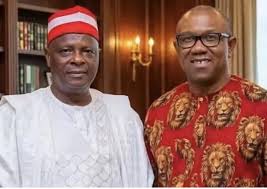
The exit of Peter Obi and Rabiu Kwankwaso, two prominent opposition figures, has dealt a significant blow to the African Democratic Congress (ADC) across both chambers of the National Assembly in Nigeria
The National Democratic Congress (NDC), which welcomed Obi and Kwankwaso on Sunday, recorded major gains on Tuesday with the addition of 17 House of Representatives members and one senator. Weeks earlier, its ranks had expanded when Seriake Dickson, representing Bayelsa West, defected from the Peoples Democratic Party (PDP) to join the party.
The development comes just days after several opposition parties resolved to present a single presidential candidate against President Bola Tinubu in the 2027 elections.
The wave of defections followed closely after Obi and Kwankwaso formally exited the ADC, significantly reshaping the opposition landscape ahead of the polls. Lawmakers from Kano, Anambra, Lagos, Edo, Rivers, and Kogi States cited internal disarray within the ADC as a key reason for their decision.
While reading their letters on the floor of the House, Deputy Speaker Benjamin Kalu said the lawmakers blamed unresolved crises within the party, noting instability from the ward to the national level.
Among those who defected to the NDC are Yusuf Datti, Sani Adamu, Zakari Mukhtari, Kamilu Ado, Harris Okonkwo, George Ozodinobi, Lilian Orogbu, Peter Anekwe, Emeka Idu, Ifeanyi Uzokwe, and Afam Ogene. Others include Lagos lawmakers Thaddeus Attah, Oluwaseyi Sowunmi, George Olwande, and Jese Onuakalusi, alongside Murphy Omroruyi from Edo and Umezuruike Manuchim from Rivers State.
In a separate move, Kogi lawmaker Leke Abejide defected from the ADC to the ruling All Progressives Congress (APC).
The coordinated defections are widely seen as a show of loyalty to Obi and Kwankwaso, both influential figures with strong regional support bases Obi in the South-East and Kwankwaso in the North-West. Their departure appears to have triggered a ripple effect among aligned lawmakers.
The ADC’s internal crisis has been building for months, fueled by leadership struggles, strategic disagreements, and competing ambitions among top figures. Tensions worsened amid reported differences between Obi, Kwankwaso, and former Vice President Atiku Abubakar during opposition coalition talks.
Efforts to form a united front ahead of 2027 reportedly collapsed over mistrust, zoning disputes, and control of party structures.
Their eventual defection to the NDC marked a turning point, positioning the party as an emerging platform for opposition consolidation.
With key figures gone and legislative strength declining, the ADC now faces an uphill battle to remain politically relevant. Its representation in the House of Representatives has dropped sharply from 24 members to just six.
The Peoples Democratic Party (PDP) has also seen a decline, now holding 29 seats in the House down from 116 at the inauguration of the 10th National Assembly in June 2023.
Meanwhile, Senate President Godswill Akpabio openly mocked the ADC during plenary, declaring the party “dead” following the latest defections. His remarks came after the Senate announced further defections, including that of Victor Umeh, who joined the NDC citing internal crises and ongoing litigation within the ADC.
Akpabio also joked about the frequency of defections, suggesting lawmakers should submit their movements collectively instead of making repeated announcements.
During the session, he read a letter from Enyinnaya Abaribe, highlighting his movement across multiple parties in recent years.
In his resignation letter, Umeh attributed his decision to “lingering divisions in the leadership and unending litigation” within the ADC, stating that the situation made continued membership untenable. He affirmed his commitment to national development under the NDC platform.
The NDC’s National Secretary, Ikenna Enekweizu, said the party has yet to decide on automatic tickets for current officeholders, noting that its immediate focus is on building a strong national platform.
Meanwhile, members of the Kwankwasiyya movement have begun exiting the ADC. A spokesperson, Mansur Kurugu, confirmed that several loyalists of Kwankwaso had already defected, with more expected to follow.
In Kano, efforts to resolve internal tensions within the NDC saw Kwankwaso meet with state party leaders, leading to a reconciliation and renewed support for his leadership.
In Anambra State, more than 23 aspirants have reportedly left the ADC due to the prolonged leadership crisis, with many aligning with Obi in the NDC or moving to other parties.
Despite the wave of defections, ADC officials insist the party remains strong. National Publicity Secretary Bolaji Abdullahi stated that its credibility does not depend on the number of lawmakers, while the Rivers State chapter maintained that its grassroots structures remain intact across all 23 local government areas.