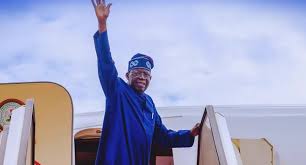
Naira-for-Crude Policy Protecting Nigeria from Middle East Fuel Crisis — Presidency
President Bola Tinubu’s naira-for-crude initiative has shielded Nigeria from the severe fuel scarcity affecting major economies worldwide amid the ongoing Iran-Israel-US conflict in the Middle East, the Presidency said on Wednesday.
According to the Senior Special Assistant to the President on Media and Publicity, Temitope Ajayi, the policy, approved in July 2024 and launched on October 1, 2024, has ensured uninterrupted petroleum product supply in Nigeria while countries across Europe, Asia and Africa face acute shortages and long fuel queues.
In an article titled “Middle-East Crisis: How Tinubu’s Policy of Naira-for-Crude Guarantees Supply Security in Nigeria,” released by the State House on Wednesday, Ajayi said the six-week-old conflict, worsened by Iran’s closure of the Strait of Hormuz, has triggered global economic disruption.
The Strait of Hormuz, a critical maritime corridor between the Persian Gulf and the Gulf of Oman, accounts for over 20 per cent of global oil and gas flows.
“While the cost of PMS and other petroleum products has also gone up in Nigeria, as in other countries, the global energy crisis has not led to a domestic scarcity of petroleum products, unlike in major countries where people are standing in long queues for days at gas stations,” Ajayi said.
He cited examples of countries implementing emergency measures in response to the crisis. Vietnam is encouraging remote work to reduce transportation costs, Bangladesh has imposed daily limits on fuel sales and is closing universities early, Pakistan is implementing a four-day government work week and temporary school closures, while Egypt has mandated shops and restaurants to close by 9 p.m. daily.
“In the Philippines, the government has declared a national energy emergency. In parts of the United States, Americans are joining long queues to buy fuel,” he added.
The naira-for-crude initiative, managed by a technical committee chaired by the Minister of Finance and Coordinating Minister of the Economy, Wale Edun, and including the Executive Chairman of the Nigerian Revenue Service, Zacch Adedeji, has developed a framework aimed at ensuring supply security and economic stability.
Ajayi said the Dangote Refinery in Lekki, Lagos, has been central to the policy’s success, scaling up production at a critical time and prioritizing Nigeria’s energy security over more attractive export options.
“Petrol queues, even during festive seasons, have disappeared since the refinery commenced PMS production in October 2024,” he noted.
Despite a 10 per cent increase in crude oil prices, Ajayi said the refinery recently reduced petrol prices by N75 per litre, even while paying an additional premium of up to $18 per barrel for Nigerian crude oil cargoes, demonstrating the benefits of local refining.
He added that the ongoing crisis has also positioned Nigeria as a strategic exporter to Africa.
In March 2026 alone, the Dangote Refinery exported close to 500,000 tonnes of refined products to various African countries, generating significant export earnings.
“Many countries in Europe, Asia, and major African countries, such as South Africa and Kenya, now rely on supplies from Nigeria through the Dangote Refinery,” Ajayi said.
He also noted that the refinery has eliminated the huge demurrage bill previously incurred by the Nigerian National Petroleum Company in maintaining safety stock on several floating vessels.
Ajayi said the Dangote Refinery is transforming Nigeria into a more resilient and energy-independent nation, providing year-round availability of petroleum products and enabling the country to better withstand external shocks.
The naira-for-crude policy allows the NNPC to pay for crude oil supplied to the Dangote Refinery in naira rather than dollars, reducing pressure on foreign exchange reserves while ensuring stable domestic fuel supply.