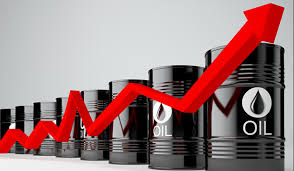
Escalating tensions in the Middle East could produce mixed consequences for Nigeria’s economy, with higher oil prices likely to boost government earnings while simultaneously intensifying inflationary pressure.
Recent macroeconomic analyses by investment firms indicate that Nigeria’s financial markets could experience both opportunities and risks if the regional crisis expands into a wider conflict. The main transmission channel for the impact would be global crude oil prices.
According to a report by Comercio Partners titled “Hormuz Shock, Nigerian Oil: Price Spike Offers Limited Upside,” the economic implications for Nigeria would largely affect government revenue, exchange rate liquidity, inflation levels, and capital flows.
Nigeria currently produces between 1.3 million and 1.5 million barrels of crude oil and condensates per day. The country’s 2026 federal budget was benchmarked at $65 per barrel, meaning any significant increase in global oil prices would immediately improve fiscal revenues.
Analysts explained that if Brent crude rises to between $80 and $100 per barrel because of disruption in the Strait of Hormuz, Nigeria’s oil income would increase significantly. At an estimated production of 1.4 million barrels daily, every $10 increase in oil prices could generate roughly $14 million in additional daily revenue, equivalent to more than $5 billion annually before operational costs.
Higher crude prices could provide short-term fiscal relief by strengthening federally collected revenue and improving allocations from the Federation Account Allocation Committee. Increased foreign exchange inflows from oil exports could also help support the naira and boost external reserves.
However, analysts caution that Nigeria may not fully benefit from a price surge because of persistent production challenges such as oil theft, pipeline disruptions, and underinvestment in the sector.
Nigeria’s location also means it is not directly exposed to shipping disruptions in the Strait of Hormuz, a critical global oil route. Nigerian crude is exported through Atlantic terminals such as Bonny, Forcados, and Qua Iboe to markets in Europe, India, and the United States. Nonetheless, because oil prices are determined globally, any supply shock affecting Gulf exports would still influence Nigerian crude prices.
Arthur Steven Asset Management noted that higher global oil prices could increase export earnings and strengthen Nigeria’s foreign reserves. Yet the country’s dependence on imported refined petroleum products creates another challenge.
Rising crude prices would likely push up domestic fuel costs, which could spread across transportation, food distribution, and manufacturing, thereby increasing inflation and reducing household purchasing power.
Higher inflation could also compel the Central Bank of Nigeria to maintain tighter monetary policies. Increased interest rates may stabilize the currency but would raise borrowing costs for businesses and consumers, potentially slowing economic growth.
While oil and energy-related stocks might benefit from stronger revenue expectations, global uncertainty could also discourage foreign investment in Nigeria’s financial markets.
CardinalStone Research estimates that Nigerian oil producers could see revenue growth ranging from 12.5 percent to 57.2 percent in 2026 if crude prices remain between $70 and $100 per barrel.
However, higher crude prices may raise costs for refineries and compress margins in the downstream sector.
For the banking sector, elevated oil prices could strengthen foreign exchange inflows and improve liquidity across the financial system, particularly for banks with strong exposure to the upstream oil industry.
Despite the potential benefits, analysts warn that prolonged geopolitical instability could create a complex economic environment for Nigeria, combining higher government revenues with rising inflation and slower growth in non-oil sectors.