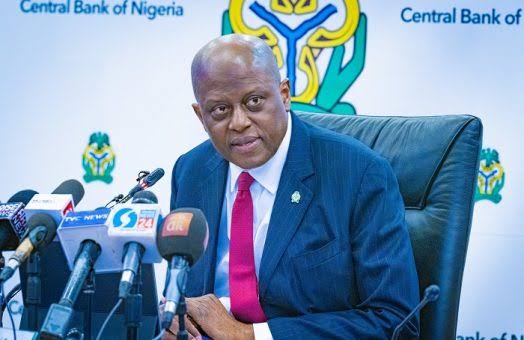
The Central Bank of Nigeria (CBN) has retained its benchmark interest rate at 23 per cent, warning that increased spending associated with the forthcoming elections and end-of-year festivities could trigger fresh inflationary pressures.
The decision was announced by CBN Governor, Olayemi Cardoso, on Tuesday, following the conclusion of the 308th meeting of the Monetary Policy Committee (MPC), held on November 23 and 24, 2026, in Abuja.
The committee said maintaining the Monetary Policy Rate (MPR) at its current level was necessary to consolidate recent improvements in inflation and sustain economic stability.
The MPC also retained the Standing Facilities Corridor at +50 and -300 basis points around the benchmark rate.
Similarly, the Cash Reserve Requirement (CRR) for deposit money banks remained at 45 per cent, while merchant banks will continue to maintain 16 per cent. The requirement for non-Treasury Single Account public sector deposits was also retained at 75 per cent.
According to the committee, Nigeria has recorded five consecutive months of declining headline inflation, supported by relative stability in the foreign exchange market and improved transmission of monetary policy measures.
However, it identified increased government and private-sector spending during the festive season, alongside election-related activities, as potential threats to the progress recorded in controlling inflation.
The governor explained that such expenditure could increase aggregate demand and consequently place additional pressure on the prices of goods and services.
The CBN also expressed concern over the ongoing conflict in the Middle East, which could disrupt global energy supplies and sustain pressure on international oil and energy prices.
Data released by the National Bureau of Statistics showed that Nigeria’s headline inflation declined to 14.06 per cent in October 2026, compared with 14.63 per cent recorded in September.
Core inflation also dropped from 12.95 per cent to 10.78 per cent, while food inflation moderated to 19.13 per cent from 19.59 per cent.
Despite these improvements, the apex bank maintained that monetary policy must remain sufficiently restrictive to prevent a reversal of the disinflationary trend.
Nigeria’s gross external reserves stood at $54.02bn as of November 17, providing approximately 10.26 months of import cover.
Cardoso expressed confidence in the country’s external position, attributing recent foreign exchange fluctuations largely to seasonal adjustments by foreign investors and increased demand for foreign currency by domestic businesses.
He also disclosed that diaspora remittances exceeded $900m in the preceding month, providing additional support for foreign exchange liquidity.
The governor reaffirmed the CBN’s commitment to bringing inflation down to single digits, assuring investors and businesses that policy consistency would remain central to the bank’s economic management strategy.
The MPC is expected to hold its next meeting on February 22 and 23, 2027, when it will reassess prevailing economic conditions and determine the appropriate direction of monetary policy.