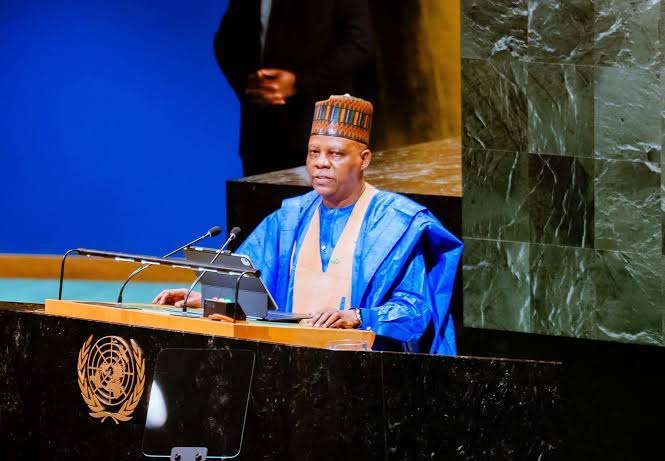
Nigeria has taken its diplomatic campaign for a more representative international system to the ongoing 81st Session of the United Nations General Assembly in New York, with Vice-President Kashim Shettima leading the country’s delegation on behalf of President Bola Ahmed Tinubu.
The high-level week, which began on September 22 and runs through September 28, is being held under the theme, “Restoring Trust, Managing Transformation: A United Nations That Delivers for All.”
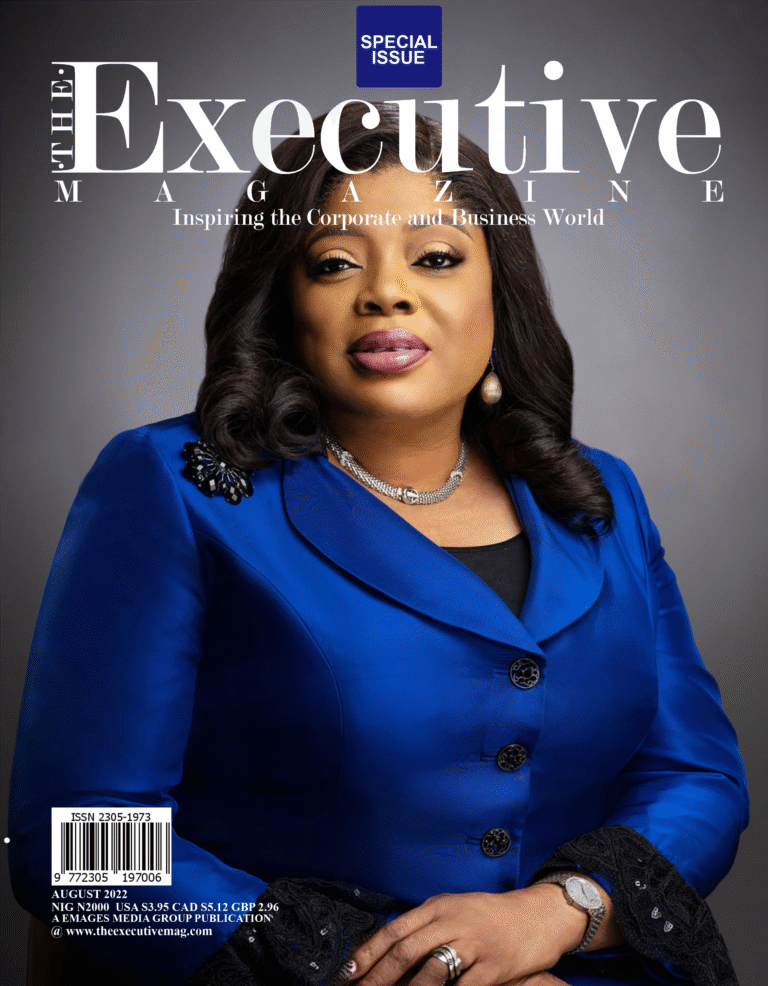
Shettima arrived in New York earlier in the week with a high-level Nigerian delegation comprising governors, ministers and senior government officials. Among those participating are Rivers State Governor Siminalayi Fubara, Zamfara State Governor Dauda Lawal, Foreign Affairs Minister Bianca Odumegwu-Ojukwu and Nigeria’s Permanent Representative to the United Nations, Ambassador Jimoh Ibrahim.
President Tinubu is not attending the gathering in person and has mandated Shettima to represent him and lead the Nigerian delegation. The Federal Government said the Vice-President carries the President’s full mandate and will deliver Nigeria’s national statement as well as participate in high-level meetings and bilateral engagements.
Nigeria’s participation is centred on a number of diplomatic and economic priorities.
At the heart of Abuja’s position is the call for reform of global institutions, particularly the United Nations system, so that developing countries and Africa have a stronger voice in international decision-making.
The Tinubu administration has maintained that the structures governing the international system should reflect contemporary demographic, economic and geopolitical realities.
Shettima said Nigeria’s engagement would be guided by national interest, multilateralism and the administration’s advocacy for a more representative global order.
One of the most prominent issues is Nigeria’s renewed campaign for permanent African representation on the United Nations Security Council.
Nigeria has consistently argued that Africa’s absence from the permanent membership of the Security Council is a major gap in the current international governance structure.
The Council has 15 members, including five permanent members China, France, Russia, the United Kingdom and the United States all of which possess veto powers.
Nigeria is also using the UNGA platform to promote reforms to the global financial architecture, particularly issues affecting developing economies.
Abuja is expected to advocate greater access to development financing, increased investment flows and international economic arrangements that can support sustainable growth in countries such as Nigeria.
Climate change and climate finance also feature prominently in Nigeria’s agenda. The country is seeking stronger international cooperation and financing mechanisms that can help developing countries address climate-related challenges while pursuing economic development.
The issue has particular significance during this year’s General Assembly because the UN programme includes a high-level meeting on climate action and the just transition, as well as a separate meeting addressing the existential threats posed by sea-level rise.
Nigeria is equally placing emphasis on sustainable development, peace and security, technology access and international cooperation.
The government says its diplomatic engagements are intended to strengthen partnerships with governments, international organisations and development institutions while attracting investment and advancing Nigeria’s economic interests.
Another issue emerging from Nigeria’s participation is the country’s approach to humanitarian assistance and development. Reports from the UNGA sidelines indicate that Nigeria is seeking a shift from dependence on recurrent humanitarian assistance towards stronger national systems for poverty reduction, resilience and protection.
This position comes amid continuing challenges involving poverty, hunger, displacement and humanitarian needs.
Shettima is scheduled to deliver Nigeria’s national statement on Thursday, September 24, when he will formally present the country’s position before the General Assembly.
His speech is expected to set out Nigeria’s views on global governance, economic development, peace and security, climate action and international cooperation.
The Nigerian delegation is also expected to use the UNGA sidelines for bilateral meetings with world leaders, development partners and international organisations.
Such engagements provide an avenue for Nigeria to pursue economic diplomacy, deepen strategic partnerships and promote investment opportunities.
Nigeria’s participation comes at a time when the UN itself is seeking to address declining trust in multilateral institutions. UN General Assembly President Khalilur Rahman has placed restoring trust and improving the effectiveness of the organisation at the centre of the 81st session.
For Nigeria, therefore, the New York gathering represents both a diplomatic platform and an opportunity to articulate its interests on the global stage.
Abuja’s message is that Africa and other developing regions should have a greater role in shaping the institutions and decisions that affect the international community. As the General Debate continues, attention will now turn to Shettima’s national address and the outcome of Nigeria’s bilateral engagements, particularly on Security Council reform, economic cooperation, climate finance, development and Africa’s representation in global decision-making.