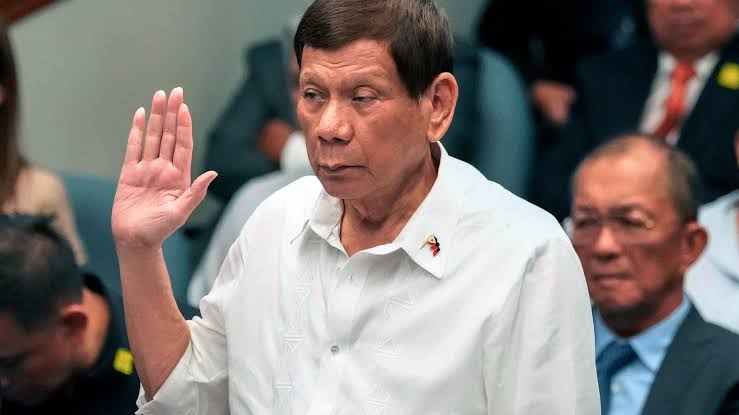
Former Philippine President Rodrigo Duterte appeared in person at the International Criminal Court (ICC) in The Hague on Wednesday, September 16, marking his first public appearance before the tribunal since he was transferred there about 18 months ago.
The 81-year-old former president attended a hearing concerning his health and his ability to participate in proceedings ahead of his scheduled trial over alleged crimes against humanity linked to his administration’s controversial “war on drugs.” Duterte, dressed in a black suit and white shirt, did not speak during the proceedings.
The hearing comes as the ICC prepares for the substantive trial, which is scheduled to open on November 30, 2026.
The court confirmed in April that Duterte would stand trial after judges unanimously determined that the prosecution had presented substantial grounds concerning three counts of crimes against humanity.
The case focuses on alleged killings and attempted killings committed in the Philippines between November 2011 and March 2019 in the context of the anti-drug campaign.
The period includes part of Duterte’s tenure as mayor of Davao City and his later presidency from 2016 to 2022.
ICC prosecutors allege that the killings formed part of a widespread and systematic attack against a civilian population. Estimates of the number of people killed during the drug war vary significantly.
Philippine police have recorded thousands of deaths in official anti-drug operations, while human rights organizations and other investigators have cited substantially higher figures.
Duterte’s legal team has challenged the case and has raised concerns about his health, arguing that cognitive decline could affect his ability to understand and participate effectively in the proceedings.
Earlier this year, however, ICC judges rejected a request for an indefinite postponement after considering assessments by three independent medical experts and concluded that Duterte was fit to participate in the pre-trial proceedings.
His confirmation-of-charges hearing was held in February without Duterte physically attending, after he was granted permission to waive his right to be present. On April 23, judges confirmed the charges and committed him to trial before an ICC Trial Chamber.
The former president was arrested in Manila in March 2025 following an ICC warrant and was subsequently transferred to The Hague.
His detention and prosecution have remained politically sensitive in the Philippines, where Duterte retains a significant political following while families of alleged drug-war victims have continued to seek accountability.
The ICC case also raises questions about the court’s jurisdiction because the Philippines withdrew from the Rome Statute in 2019.
The court has maintained that it retains jurisdiction over alleged crimes committed while the Philippines was still a member.
Wednesday’s appearance therefore represents an important stage in a case that has drawn international attention to accountability for alleged abuses committed during Duterte’s anti-drug campaign.
With the trial scheduled to begin in November, the proceedings are expected to place renewed focus on the evidence, the alleged chain of responsibility and the rights of victims, while Duterte’s defence will have the opportunity to challenge the prosecution’s case.
The forthcoming trial will ultimately determine whether the allegations against the former Philippine president are proven to the required legal standard.