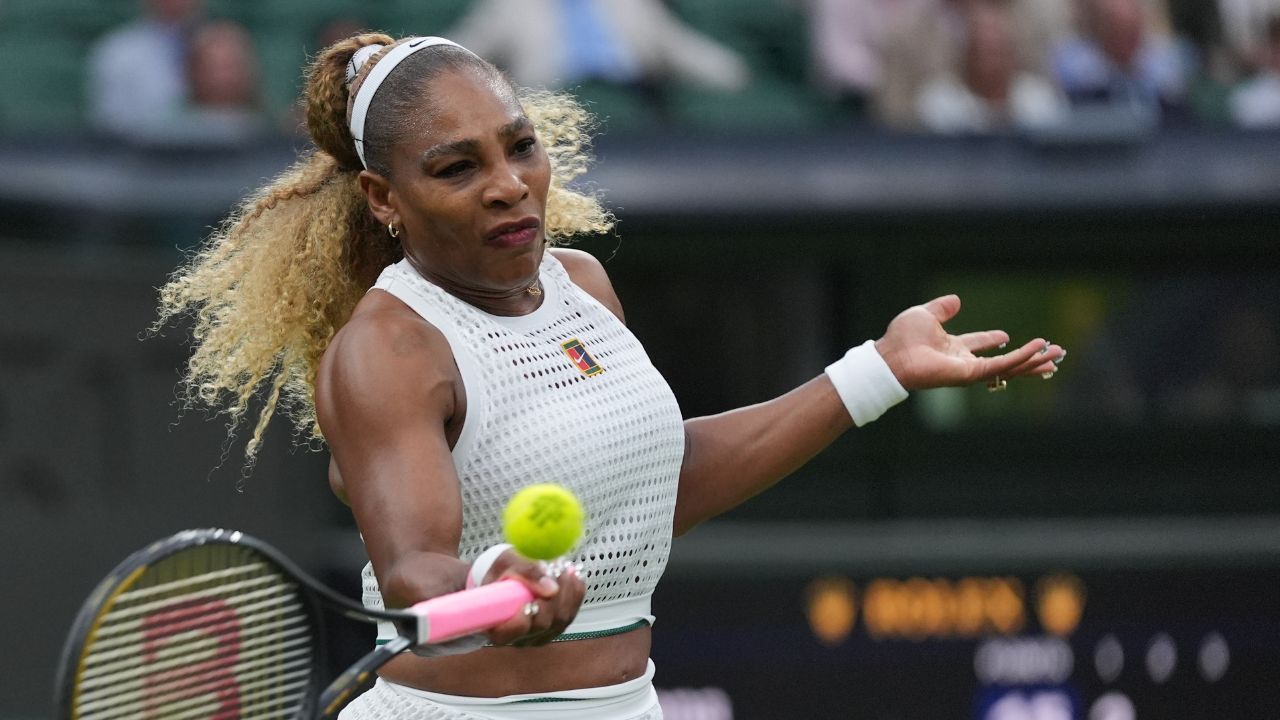
Nearly four years after stepping away from professional tennis, Serena Williams made an emotional and highly anticipated return to Wimbledon, reminding the sporting world why she remains one of the greatest athletes in history.
At 44 years old and with her two children watching from the stands, Williams walked down the famous staircase of the All England Club and onto Centre Court, the stage where she built much of her legendary career. Wearing her trademark focus and determination, she looked every bit the champion who once dominated the sport, despite years away from competitive singles tennis.
For tennis fans packed inside Centre Court and millions watching around the world, it felt like a journey back in time.
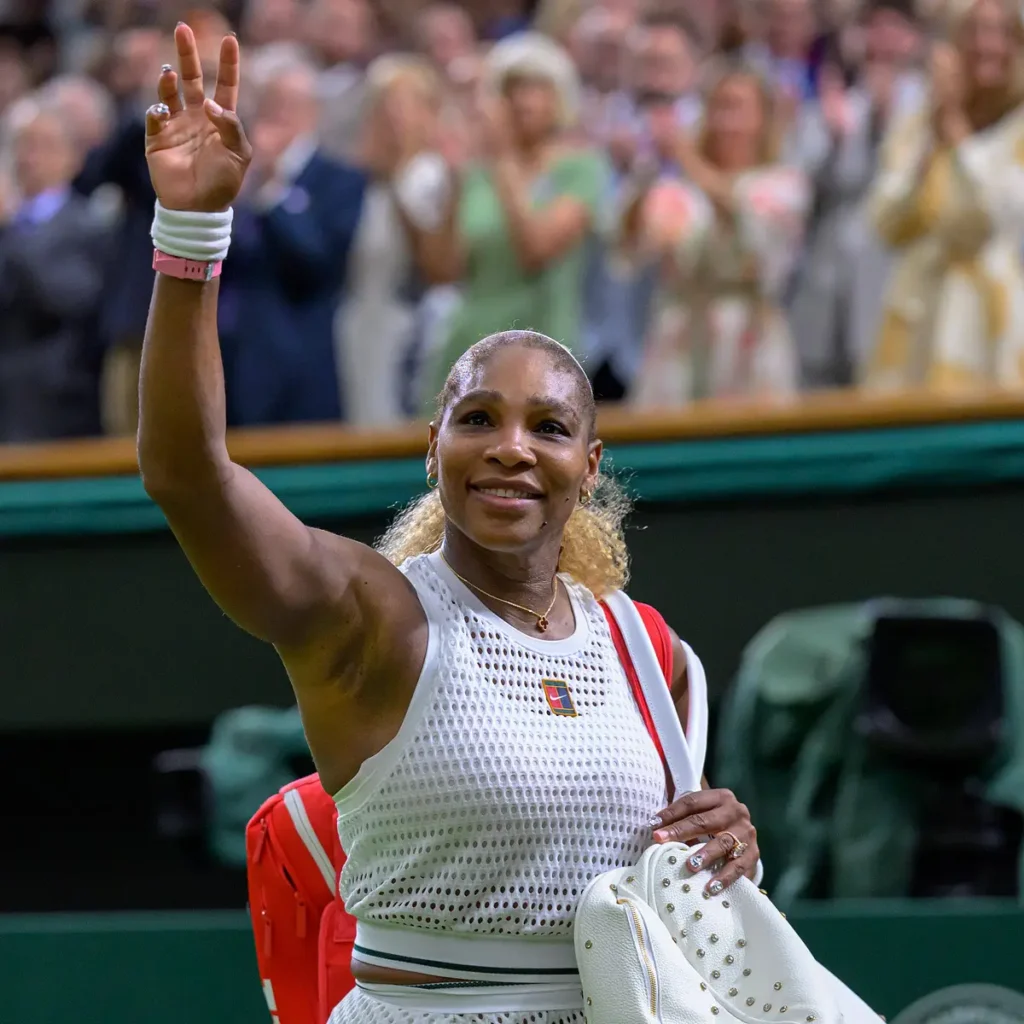
The atmosphere carried echoes of her seven Wimbledon title victories and countless memorable performances.
Yet this comeback carried a different significance. Williams was not chasing another chapter of dominance; she was testing the limits of what was possible.
Her opponent, 20-year-old Australian Maya Joint, belongs to a generation that grew up watching Serena rewrite tennis history. Joint was not even born when Williams claimed her first Wimbledon titles, highlighting the remarkable gap between the two competitors.
What followed was a gripping contest that lasted more than two hours and showcased both the brilliance that made Williams a global icon and the physical challenges that accompany a return at this stage of her life.
Joint eventually secured a hard-fought 6-3, 6-7, 6-3 victory, but the scoreline tells only part of the story.
Williams produced moments that reminded spectators of her extraordinary talent.
Her powerful serve remained a weapon, her groundstrokes still carried immense force, and her competitive spirit never wavered.
Several times throughout the match, she demonstrated the shot-making ability that helped her win 23 Grand Slam singles titles and redefine women’s tennis.
The crowd responded with deafening support, willing her toward what would have been one of the most remarkable victories of her career.
After dropping the opening set, Williams fought back courageously to claim the second-set tiebreak.
The roar that followed echoed around Centre Court as fans sensed the possibility of an upset. For a brief period, it seemed as though the impossible might become reality.
When she broke Joint’s serve early in the deciding set to take a 2-1 lead, belief surged through the crowd. The momentum appeared to be shifting toward the veteran champion.
However, tennis remains one of the most physically demanding sports, and the passage of time eventually became impossible to ignore.
While Williams could still produce moments of brilliance, sustaining that level across a long three-set battle proved far more difficult.
Her movement, once among the most explosive on tour, showed signs of strain. Long rallies increasingly favored the younger player, whose speed and endurance gradually tilted the match in her favor.
As fatigue set in, Williams began making uncharacteristic errors. A crucial service game midway through the third set slipped away, and Joint seized the opportunity to regain control.
The young Australian displayed composure under immense pressure, particularly as the Centre Court crowd rallied behind Williams at every opportunity.
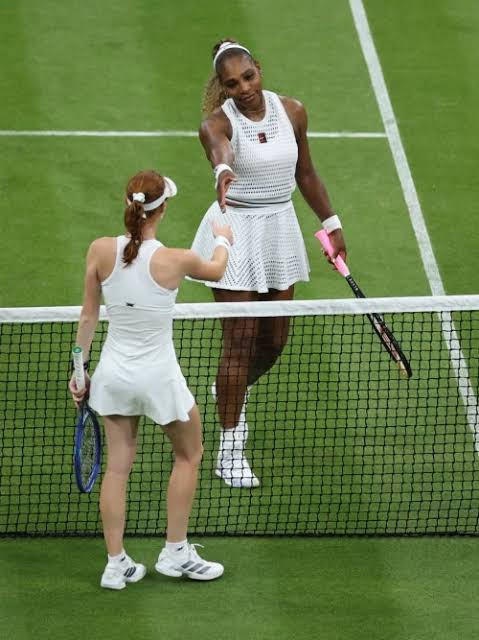
Joint herself appeared affected by the occasion. Holding a match point in the second set, she could not close out the contest and briefly looked overwhelmed by the magnitude of the moment. Yet she recovered impressively, demonstrating maturity beyond her years to eventually secure the biggest victory of her career.
For Williams, the defeat raises questions about what comes next.
The performance showed that she remains capable of competing at a respectable level, but it also highlighted the challenges of returning to elite tennis after a lengthy absence.
Match fitness, movement, and recovery are difficult to replicate outside competition, and those factors become even more significant with age.
Many observers will wonder whether more tournament appearances could help Williams regain additional sharpness.
There were flashes during the match suggesting that with more competitive tennis, she could improve significantly.
Yet there is also a practical reality.
Returning to the full-time demands of the professional tour would require a major commitment.
Extensive travel, rigorous training schedules, and the physical toll of repeated competition present challenges for any athlete, particularly one balancing family life and business interests beyond the sport.
Even if Williams were to improve with additional matches, the path back to Grand Slam contention remains daunting.
The modern women’s game is deeper and faster than ever, filled with younger players in their physical prime.
Still, the result may ultimately matter less than the spectacle itself.
For one unforgettable afternoon at Wimbledon, Serena Williams reminded the world of her enduring appeal and competitive spirit. She transformed a first-round match into a global event, drawing attention and excitement rarely seen outside a Grand Slam final.
The comeback was never solely about winning. It was about witnessing a sporting legend challenge expectations once more. It was about seeing whether greatness could overcome time, even if only briefly.
Williams did not achieve the fairy-tale ending many hoped for, but she accomplished something equally meaningful.
She showed that champions never stop competing, never stop believing, and never stop inspiring.
If this match proves to be a one-off appearance, it will stand as a powerful reminder of her legacy. If she chooses to continue her comeback at future tournaments, fans will undoubtedly welcome the opportunity to watch one of sport’s greatest icons compete again.
Either way, Centre Court witnessed something special. Serena Williams may not have defeated the impossible, but she came close enough to remind everyone why her name remains synonymous with greatness.