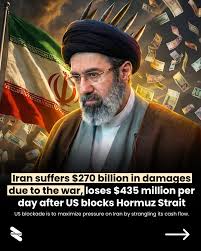
Iran has called for compensation estimated at $270bn for damages caused by attacks by the United States and Israel, as diplomatic efforts to revive negotiations between Tehran and Washington gather momentum.
Speaking on Tuesday, Iran’s envoy to the United Nations said five regional countries should also contribute to the compensation, alleging their territories were used to launch strikes against Iran. Tehran has further proposed a “Strait of Hormuz protocol,” which could involve taxing vessels passing through the key global shipping route to help cover the losses.
Iranian government spokeswoman Fatemeh Mohajerani said early assessments show the country has suffered about $270bn in direct and indirect damages since the start of the US-Israel conflict on February 28. She did not provide a detailed breakdown but confirmed that compensation was a key issue discussed during last week’s talks between Iranian and US officials in Pakistan, and would remain central in any future negotiations.
Authorities say the full extent of the destruction is still being evaluated, with critical infrastructure heavily affected. Oil and gas facilities, petrochemical plants, steel and aluminum factories, and military sites were repeatedly targeted, alongside bridges, ports, rail networks, universities, power plants, and water facilities. Many hospitals, schools, and residential buildings were also damaged or destroyed, with reconstruction expected to take years.
Mohajerani noted that current economic realities mean the government lacks the capacity to compensate civilians whose homes were destroyed. Meanwhile, the Association of Iranian Airlines reported that 60 civilian aircraft were rendered inoperable, including 20 completely destroyed.
Despite the widespread damage and the impact of a US naval blockade on Iranian ports, Iranian officials have signaled a firm stance ahead of negotiations, particularly on nuclear enrichment. Ebrahim Rezaei, spokesperson for parliament’s National Security and Foreign Policy Commission, warned against extending the recently announced two-week ceasefire, arguing it would allow adversaries to regroup.
“They must either recognize Iran’s rights, including control over the Strait of Hormuz, or return to war,” he said.
Iran’s military spending stood at nearly $8bn in 2024, according to the Stockholm International Peace Research Institute, with officials pledging to significantly increase the budget following earlier clashes with Israel. However, the country continues to grapple with financial constraints driven by sanctions, economic mismanagement, and corruption.