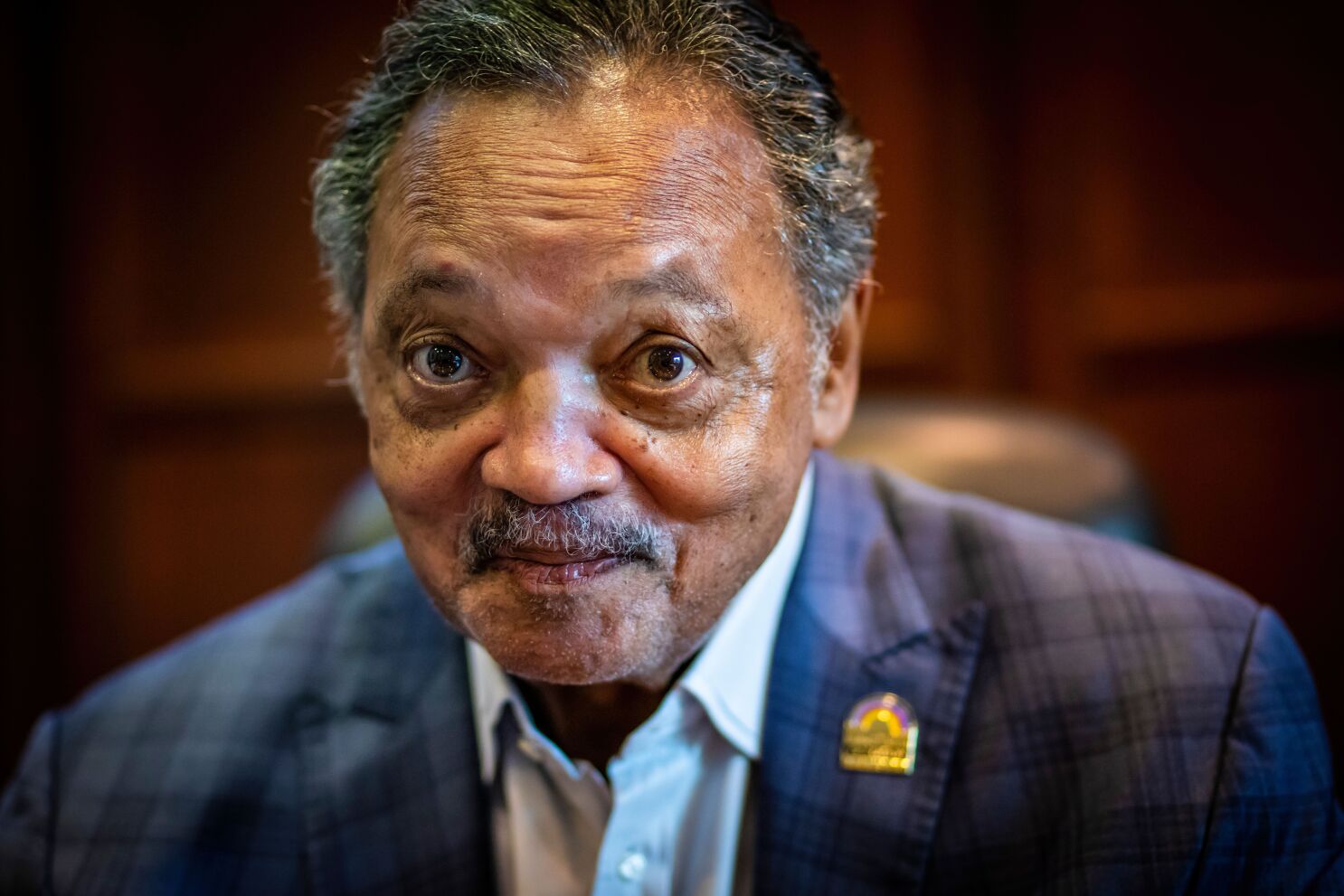
Veteran American civil rights leader Jesse Jackson, one of the United States’ most influential Black voices, has died peacefully at the age of 84, his family announced Tuesday morning.
Jackson, a Baptist minister and longtime activist, had been at the forefront of the civil rights struggle since the 1960s, when he marched alongside Martin Luther King Jr. and helped mobilize resources for the movement.
In a statement, his family described him as “a servant leader — not only to our family, but to the oppressed, the voiceless, and the overlooked around the world.” They added that his steadfast commitment to justice, equality, and love inspired millions, urging supporters to continue advancing the causes he championed.
No official cause of death was disclosed. However, Jackson revealed in 2017 that he had been diagnosed with Parkinson’s disease. He was also hospitalized in November for observation related to another neurodegenerative condition, according to reports.
A gifted orator and skilled mediator, Jackson played a significant role in expanding African American participation in national politics for more than six decades. He made history in the 1980s as the most prominent Black candidate to seek the U.S. presidency under the Democratic Party banner — a milestone later surpassed when Barack Obama was elected president in 2008 and took office in 2009.
Jackson was present at many pivotal moments in America’s racial justice movement. He was in Memphis in 1968 when King was assassinated, and decades later was seen openly weeping as Obama celebrated his historic presidential victory. In 2021, he stood with the family of George Floyd following the conviction of a former police officer for Floyd’s murder.
Born Jesse Louis Burns on October 8, 1941, in Greenville, South Carolina, to a teenage mother and a former professional boxer, he later adopted the surname of his stepfather, Charles Jackson. Reflecting on his humble beginnings, he once said, “I was not born with a silver spoon in my mouth. I had a shovel programmed for my hands.”
Jackson excelled academically and athletically in high school, earning a football scholarship to the University of Illinois before transferring to North Carolina Agricultural and Technical College, a historically Black institution, where he obtained a degree in sociology.
He began his activism early, participating in a sit-in in Greenville in 1960 and later joining the Selma-to-Montgomery marches in 1965, where he first caught King’s attention.
Beyond domestic activism, Jackson served as a mediator in several international disputes. He was an outspoken opponent of apartheid in South Africa and, in the 1990s, was appointed presidential special envoy for Africa by Bill Clinton. His diplomatic efforts also took him to Syria, Iraq, and Serbia on missions to secure the release of U.S. prisoners.
In 1996, he founded the Rainbow PUSH Coalition, a Chicago-based nonprofit focused on social justice advocacy and political empowerment.
Jackson is survived by his wife and six children.