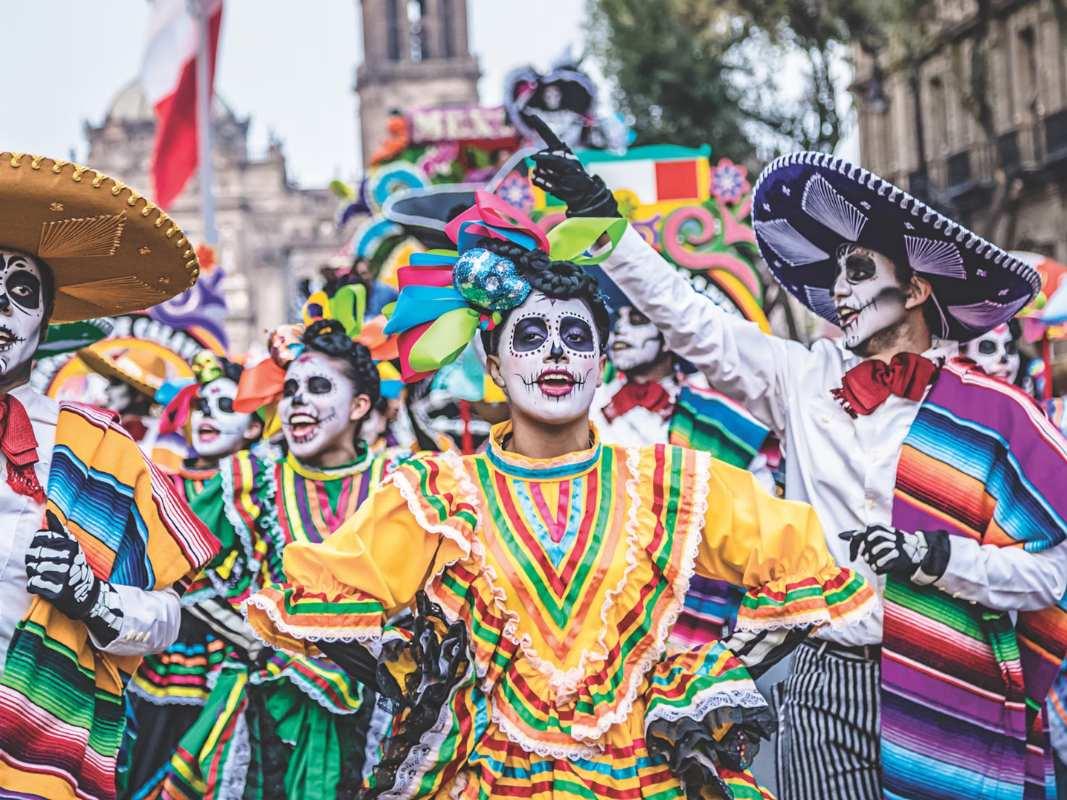
As the world embraces the spooky atmosphere of Halloween on October 31, millions of people are preparing for celebrations that go far beyond frightening costumes, carved pumpkins, haunted houses and trick-or-treating.
Across continents, communities observe extraordinary festivals rooted in ancient beliefs, religious practices, folklore, seasonal changes and cultural identities.
Some celebrate the dead, others honour supernatural figures, while several involve unusual competitions, strange costumes, unusual food traditions and activities that might appear unbelievable to outsiders.
From the famous Halloween celebrations in the United States to Mexico’s Day of the Dead, Europe’s Night of the Witches and Asia’s Hungry Ghost Festival, these events reveal how different societies interpret life, death, spirituality and entertainment.
Here are some of the world’s most unusual festivals and celebrations.
1. Halloween – United States, Ireland and other countries
Celebrated every October 31, Halloween is one of the world’s most recognisable spooky festivities. Its historical roots are associated with the ancient Celtic festival of Samhain, observed in Ireland and parts of Scotland to mark the transition from harvest season into winter.

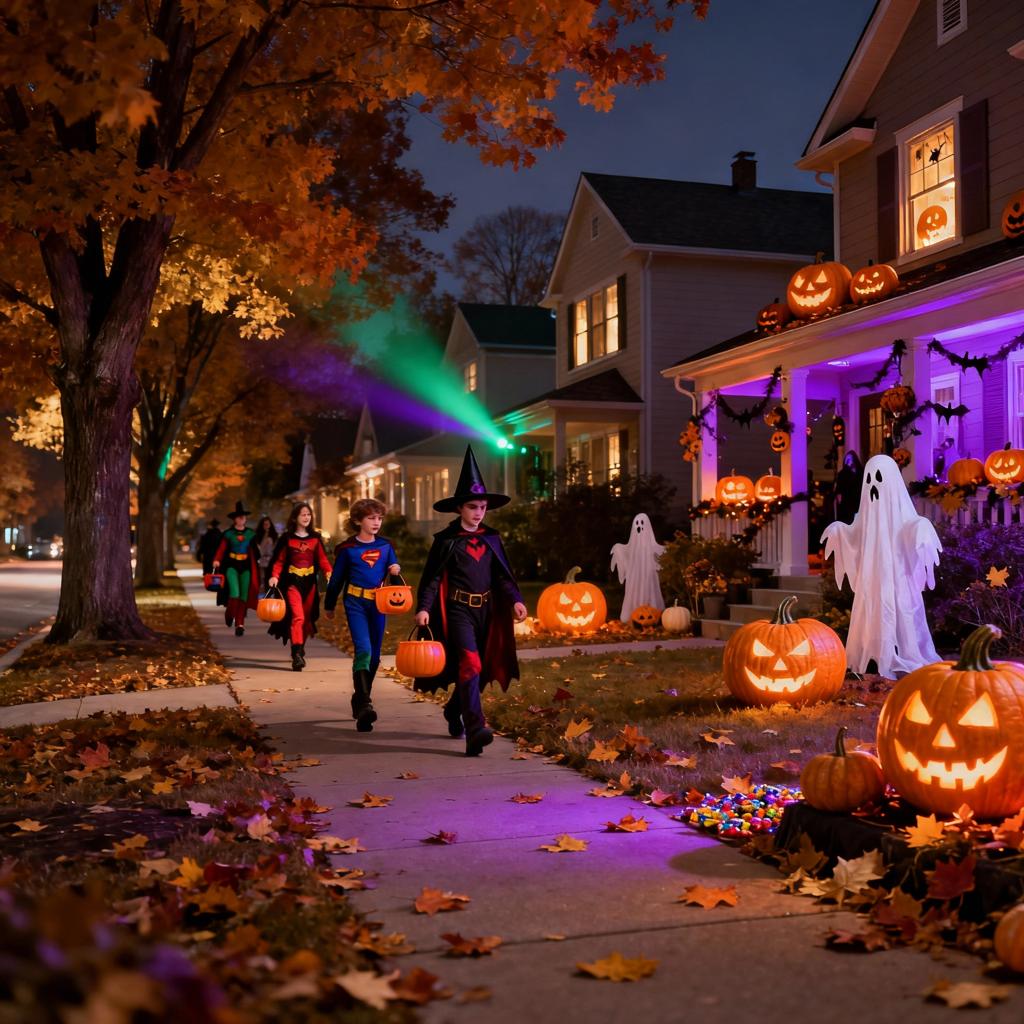
Ancient communities believed that the boundary between the living and the dead became thinner around this period. Bonfires, disguises and rituals were used to ward off unwanted spirits.
Today, Halloween has evolved into a major entertainment and commercial celebration, particularly in the United States, Canada, Ireland and the United Kingdom.
Children dress as witches, ghosts, vampires and superheroes, while adults organise costume parties, horror-themed events and haunted-house experiences.
2. Day of the Dead – Mexico
Known locally as Día de los Muertos, the Day of the Dead is among the world’s most visually spectacular celebrations.

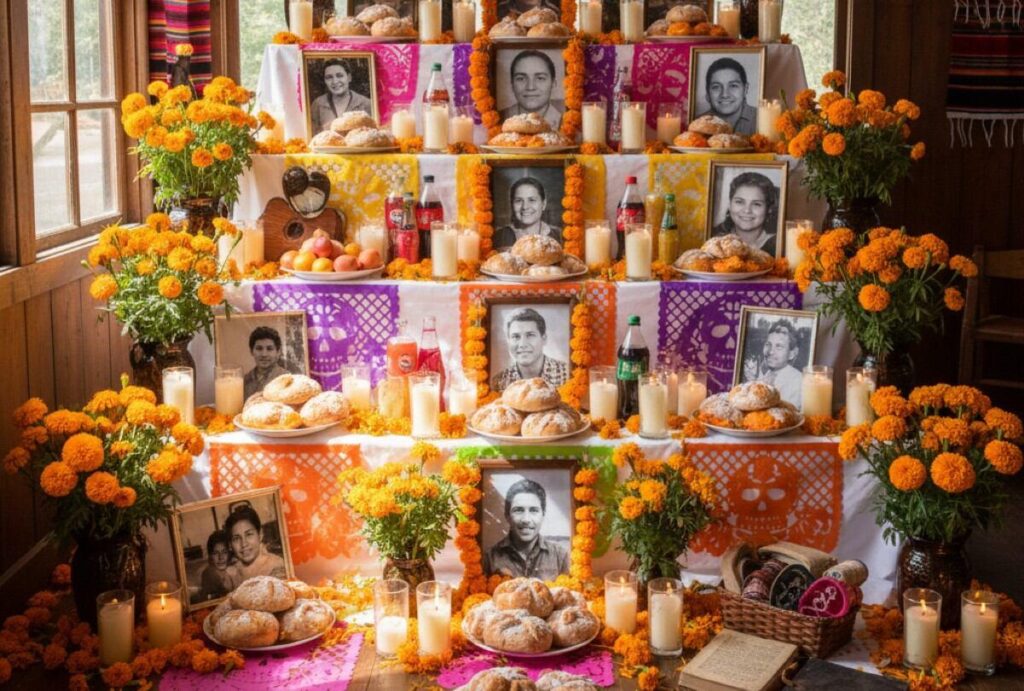
Observed mainly on November 1 and 2, the Mexican festival honours deceased family members and loved ones.
Rather than presenting death exclusively as something frightening, the celebration embraces remembrance, family connections and the belief that departed relatives can symbolically return to visit the living.
Families construct colourful altars known as ofrendas, decorating them with photographs, candles, marigold flowers, food, drinks and personal belongings of the deceased.
Skeleton costumes, painted faces, elaborate skull decorations, music and cemetery gatherings make the festival particularly distinctive. Its indigenous and Catholic influences have helped establish it as an important part of Mexican cultural heritage.
3 Night of the Witches – Walpurgis Night, Europe
For lovers of supernatural folklore, Walpurgis Night, also known in German-speaking regions as Hexennacht or Witches’ Night, is one of Europe’s most intriguing celebrations.

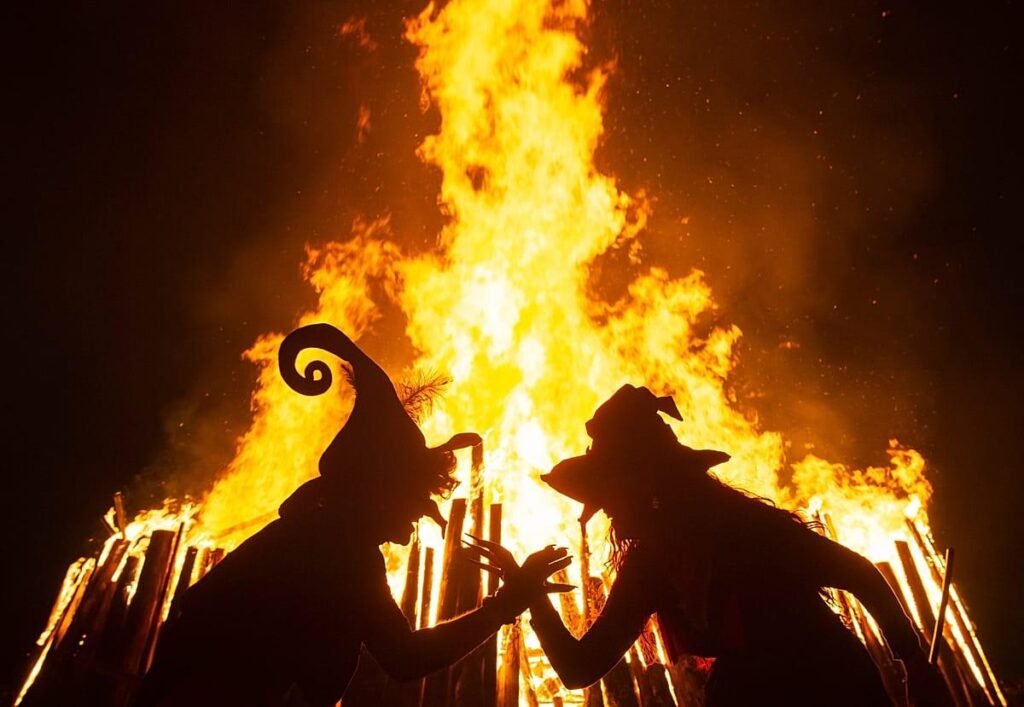
Observed on April 30, particularly in Germany, the Czech Republic, Sweden and parts of Scandinavia, the event is associated with ancient seasonal customs and legends about witches gathering on mountain tops.
In Germany’s Harz Mountains, particularly around the Brocken, folklore tells of witches assembling for mysterious nighttime gatherings.
Modern celebrations feature bonfires, witch costumes, dancing, music and theatrical performances.

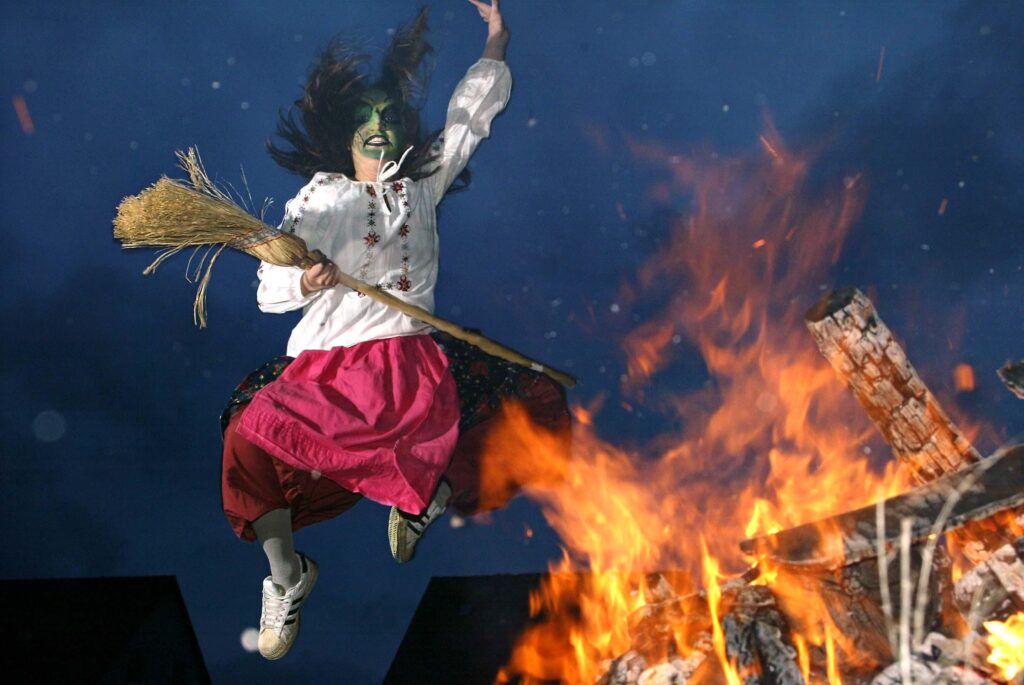
Although the historical beliefs vary across communities, the event has become a colourful combination of folklore, tourism and seasonal entertainment.
4 Day of the Ñatitas – Bolivia
Bolivia has one of the world’s most unusual celebrations involving human remains. Every November 8, devotees in La Paz observe Día de las Ñatitas, popularly known as the Day of the Skulls.
The celebration revolves around human skulls believed by devotees to possess protective and spiritual powers.


Families who keep these skulls in their homes bring them out for public celebrations, decorating them with flowers, colourful hats, sunglasses and other accessories.
Some devotees offer cigarettes, coca leaves, food and drinks while asking the skulls for protection, good health, prosperity, love and assistance with personal challenges.
The practice draws from ancient Andean traditions and has incorporated elements of Catholic culture.
Although controversial and not universally accepted, it remains a remarkable example of how different societies relate to death and ancestral beliefs.
5. Hungry Ghost Festival – China, Singapore, Malaysia and Hong Kong
Imagine an entire month dedicated to feeding and appeasing wandering spirits. That is the central idea behind the Hungry Ghost Festival, also known as the Ghost Month celebrations.


Observed during the seventh month of the traditional Chinese lunar calendar, the festival is particularly prominent among Taoist and Buddhist communities in China, Singapore, Malaysia, Hong Kong and other parts of Asia.
According to traditional beliefs, the gates of the underworld open during this period, allowing spirits to visit the world of the living.
Families prepare food offerings, burn joss paper representing money and other necessities, and organise religious ceremonies. Some communities stage outdoor Chinese opera performances, leaving front-row seats symbolically reserved for invisible spiritual guests.
The festival is both a religious observance and a cultural expression of respect for ancestors and the departed
6. Monkey Buffet Festival – Thailand
While many festivals celebrate human achievements, Thailand has an annual event in which monkeys become the guests of honour.
The Monkey Buffet Festival takes place in Lopburi, a historic Thai town famous for its population of free-roaming macaque monkeys.


Usually organised on the last Sunday of November, the celebration features tables filled with fruits, vegetables, sweets and other food items for the animals.
The tradition began in the late 1980s as a way of appreciating the monkeys, which had become a major tourist attraction and symbol of the town.
Tourists gather to watch the animals climb over tables, grab fruits, compete for food and occasionally create amusing scenes.
7 La Tomatina – Spain
Spain is home to one of the world’s largest and most entertaining food fights.
La Tomatina takes place in Buñol, Valencia, usually on the last Wednesday of August. Thousands of participants gather in the streets to throw ripe tomatoes at one another in an extraordinary celebration that transforms the town into a sea of red pulp.


What began as a local street disturbance in 1945 developed into an internationally recognised festival.
Participants are advised to wear old clothes, protect their eyes and crush tomatoes before throwing them to reduce the risk of injury.
For many visitors, the attraction is not simply the food fight but the opportunity to participate in a celebration where strangers become temporary teammates in a colourful battle.
8. El Colacho – Spain’s Baby-Jumping Festival
Perhaps one of the most astonishing religious celebrations in Europe is El Colacho, held in Castrillo de Murcia, Spain.
Dating back to the 17th century, the festival features men dressed in colourful devil-like costumes jumping over babies laid on mattresses along a procession route.

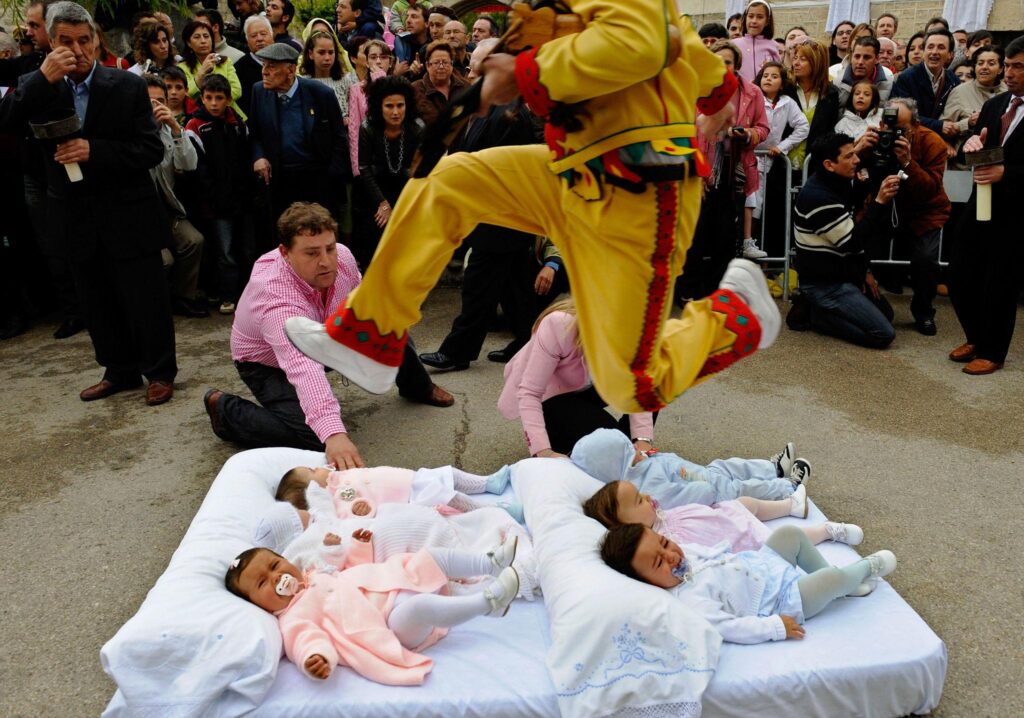
The ritual is associated with the Catholic feast of Corpus Christi. According to local tradition, the jumping symbolically cleanses the children of evil and protects them from misfortune.
Although the spectacle may appear frightening to outsiders, participating families regard it as an important cultural and religious tradition.
It is one of Spain’s most unusual annual events and attracts visitors interested in the country’s historical customs.
9 Cooper’s Hill Cheese-Rolling – England
In Gloucestershire, England, people risk bruises, injuries and spectacular falls in pursuit of a wheel of cheese.
The Cooper’s Hill Cheese-Rolling competition involves participants chasing a large round of Double Gloucester cheese down a steep hillside. The cheese is released first, and competitors race after it, hoping to reach the bottom ahead of everyone else.


The hill is so steep that participants frequently tumble, roll and collide as they struggle to maintain their balance.
The winner receives the cheese, while spectators enjoy one of Britain’s most unusual sporting traditions. The event has attracted international attention because of its combination of danger, humour and local pride.
10. Up Helly Aa – Scotland
Scotland’s Shetland Islands host an extraordinary Viking-inspired fire festival known as Up Helly Aa.
Usually celebrated in January, the event features hundreds of participants dressed as Vikings, carrying flaming torches through the streets in a spectacular nighttime procession.

The highlight is the ceremonial burning of a replica Viking longship, accompanied by music, performances and community celebrations.
The festival reflects Shetland’s Norse heritage and its historical connections with Viking culture. It is a dramatic celebration of identity, history and community spirit.
11 Kanamara Matsuri – Japan’s Fertility Festival
Japan is also home to one of the world’s most unconventional celebrations of fertility.
Kanamara Matsuri, popularly called the Festival of the Steel Phallus, takes place in Kawasaki, near Tokyo.

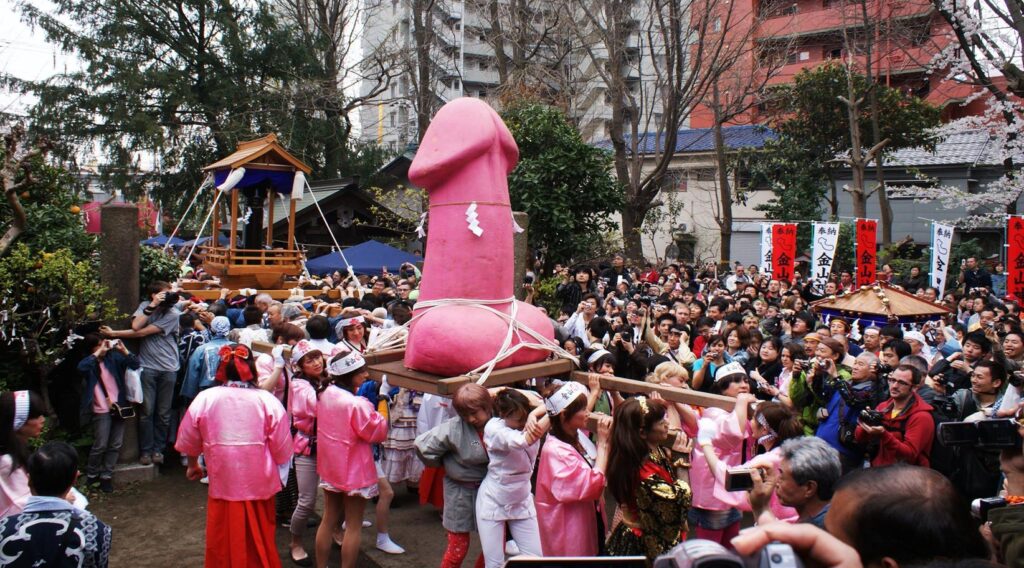
The annual spring festival features colourful processions, giant phallic-shaped decorations, themed sweets and traditional religious ceremonies.
Despite its humorous appearance, the event has historical religious associations with fertility, childbirth, marital relationships and protection against sexually transmitted infections.
Today, it also attracts international tourists and supports charitable activities, including fundraising for HIV/AIDS awareness.
12. The Night of the Radishes – Mexico
Mexico offers another unusual celebration with the Noche de los Rábanos, or Night of the Radishes.
Held every December 23 in Oaxaca, the event features artists carving oversized radishes into elaborate figures depicting religious scenes, animals, historical personalities and everyday Mexican life.


The carved vegetables are displayed in a public competition, attracting spectators who admire the creativity and craftsmanship.
Although the radishes eventually perish, the festival has become an important part of Oaxaca’s cultural identity and Christmas celebrations.
A world united by unusual traditions
From witches dancing around bonfires in Germany to families honouring departed relatives in Mexico, skull celebrations in Bolivia, monkey banquets in Thailand and tomato battles in Spain, these extraordinary festivals demonstrate the remarkable diversity of human culture.
Some are deeply spiritual, others are rooted in ancient folklore, while several have developed into major international tourism attractions.
What may appear strange or bizarre to one society can represent history, faith, identity and community pride to another.
As Halloween approaches each October, these celebrations offer a reminder that the world has never lacked imagination when it comes to marking special occasions. Whether through costumes, supernatural folklore, unusual competitions, food fights or elaborate ceremonies, people everywhere continue to find fascinating ways to celebrate life, remember the dead and preserve traditions for future generations.