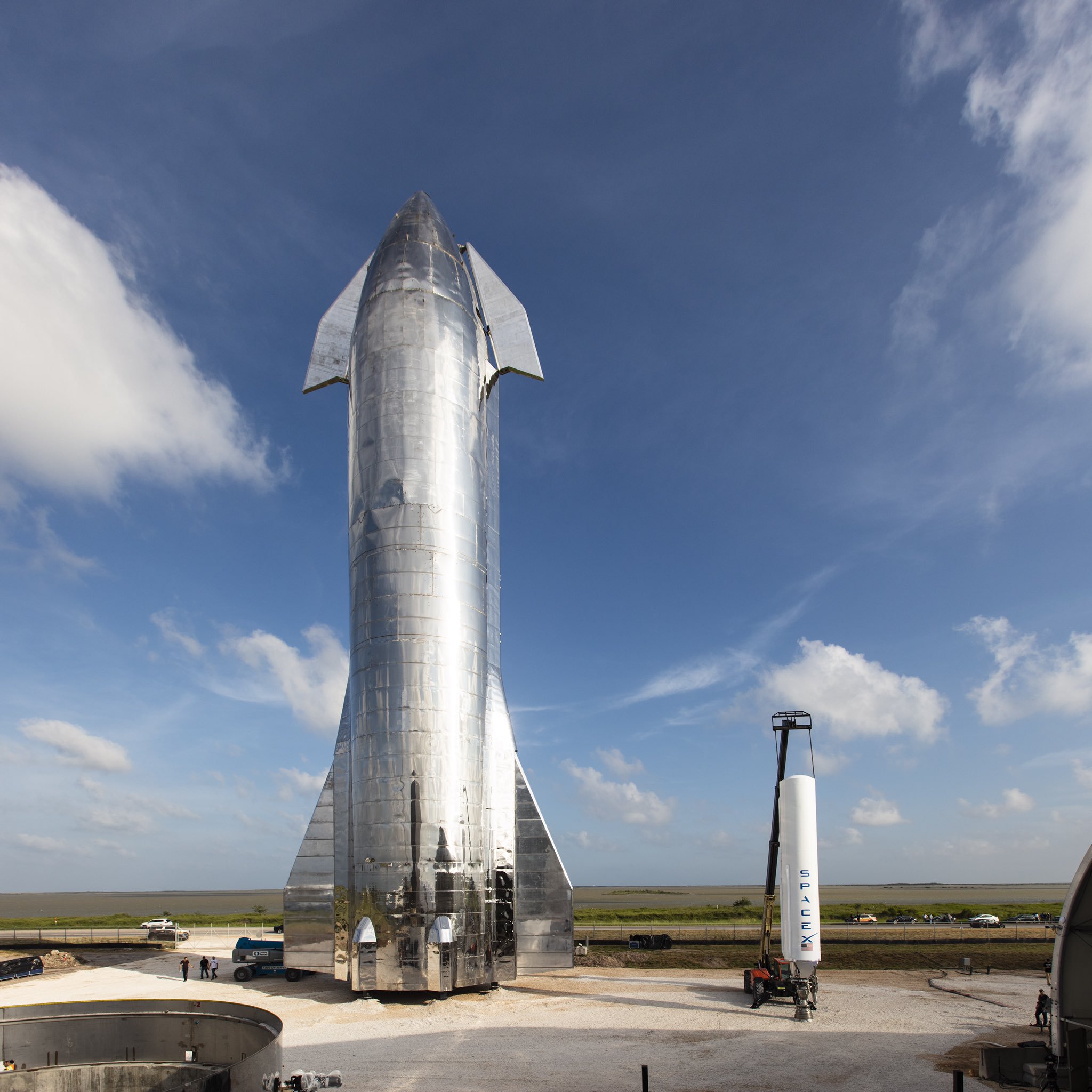
SpaceX’s enormous Starship rocket blasted off from South Texas on Monday in its most ambitious flight yet, beginning the company’s first attempt to send the giant spacecraft into Earth orbit.
The launch from SpaceX’s Starbase facility in Cameron County, Texas, marked the 14th full-scale Starship flight test since the programme began in 2023 and represented a major escalation in the company’s efforts to develop a fully reusable transportation system for missions to the Moon, Mars and eventually beyond.
The 407-foot-class Starship lifted off atop its Super Heavy booster, generating the immense thrust required to propel the vehicle away from Earth.
The mission is designed to take Starship more than 170 miles above the planet and keep the spacecraft in orbit for approximately six laps before a planned splashdown in the Pacific Ocean.
Unlike earlier Starship tests, which followed suborbital trajectories and ended with the spacecraft splashing down in the Indian Ocean, Flight 14 is intended to demonstrate the vehicle’s ability to enter and operate in orbit.
The mission also carries a significant payload. SpaceX has loaded the Starship with 26 next-generation Starlink satellites, marking the first time the giant vehicle is being used to deploy Starlink spacecraft during an orbital mission.
The satellites are intended to expand the company’s rapidly growing internet constellation.
The flight represents another step in SpaceX’s effort to transform Starship from an experimental rocket into a reusable space transportation system. The company envisions Starship eventually carrying large quantities of cargo and astronauts into orbit, while also supporting NASA’s Artemis programme and future lunar missions.
Starship’s development has been marked by spectacular successes as well as failures.
Earlier test flights demonstrated the vehicle’s ability to leave the launch pad and reach space, but the programme had yet to complete an orbital mission. The July 2026 flight, for example, successfully sent the upper stage into space and deployed next-generation Starlink satellites, but the vehicle followed a suborbital trajectory and ultimately splashed down in the Indian Ocean.
That history has made Monday’s mission particularly important. Engineers are testing virtually every major component of the system, including launch, stage separation, orbital flight, satellite deployment, re-entry and the eventual recovery of the spacecraft.
The Super Heavy booster is also expected to separate from Starship and return toward the Gulf of Mexico. SpaceX has been developing increasingly sophisticated techniques for recovering the booster, with the long-term objective of rapidly reusing both stages.
For NASA, the progress of Starship is closely connected to plans for returning astronauts to the Moon. NASA has selected a version of Starship as the Human Landing System for Artemis missions, making the rocket’s development an important part of the agency’s broader lunar programme.
SpaceX founder Elon Musk has also repeatedly presented Starship as the foundation for the company’s long-term ambitions for human settlement beyond Earth.
But Monday’s launch remains a test rather than a routine commercial mission. Reaching orbit is only one part of the challenge.
The spacecraft must perform a sequence of demanding manoeuvres before ultimately surviving atmospheric re-entry and reaching its designated splashdown area.
If the vehicle completes its planned objectives, the flight would provide SpaceX with a huge amount of engineering data and demonstrate capabilities that previous Starship tests could not achieve.
For now, the rocket’s journey has begun. After years of development, repeated tests and spectacular failures and successes, SpaceX has finally sent its supersized Starship on its first attempt to circle Earth a crucial test of whether the world’s most ambitious reusable rocket can move from experimental prototype toward an operational space transportation system.