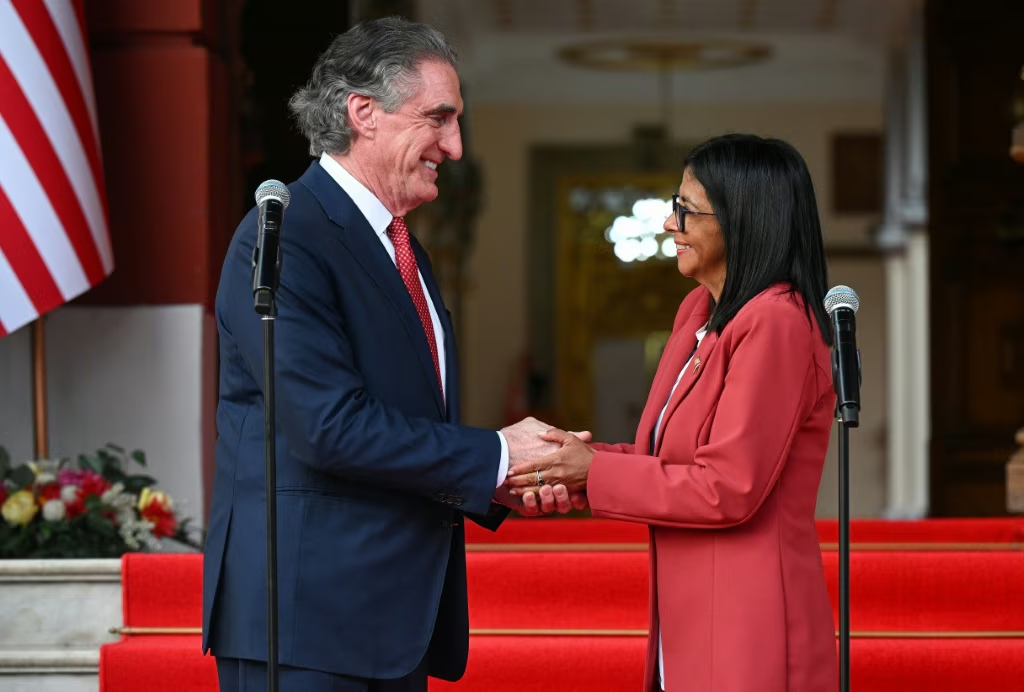
The United States and Venezuela have agreed to restore full diplomatic and consular relations, marking a dramatic turn in ties between the two countries following the capture of Venezuelan leader Nicolás Maduro earlier this year.
In a joint statement, officials said both nations would work together to promote political stability, support economic recovery and encourage national reconciliation in Venezuela.
Relations between Washington and Caracas had already begun improving after a surprise US military operation in January led to the arrest of Maduro. The raid, ordered by Donald Trump, resulted in Maduro and his wife being taken into US custody and brought before a court in Manhattan to face allegations of weapons and drug-related offences. Maduro has strongly denied the accusations.
The decision to formally re-establish diplomatic ties is widely viewed as a symbolic breakthrough after years of hostility between the two countries.
The US embassy in Caracas, which had been closed since 2019, has already reopened. Washington has also appointed a new diplomatic representative to Venezuela, while additional embassy staff from the US mission in Bogotá are expected to relocate to Caracas soon to strengthen diplomatic engagement.
The Venezuelan government said it was prepared to enter a “new stage of constructive dialogue based on mutual respect”, adding that the renewed relationship should ultimately deliver “social and economic happiness for the Venezuelan people.”
However, Caracas did not mention a political transition or future elections in its statement, a point that contrasts with the US State Department’s position.
American officials say their engagement with Venezuela aims to create the conditions for a peaceful transition toward a democratically elected government.
The US has accused Maduro and several senior figures in his administration of running a criminal network involved in illegal mining, drug trafficking and other illicit activities. The Venezuelan leader is expected to stand trial in the United States later this month.
US Interior Secretary Doug Burgum, speaking to reporters after visiting Caracas, described the intervention as a “brilliant strategic move.” He argued that acting in Venezuela first strengthened US geopolitical positioning ahead of tensions with Iran.
In late February, the US and Israel launched military strikes on Iran that resulted in the death of Iran’s Supreme Leader Ali Khamenei.
Burgum, who also heads the US National Energy Dominance Council, said cooperation with Venezuela would help secure energy supplies for the United States, noting that “oil will flow to America.”
Since the intervention, Washington has already approved new energy agreements with Caracas. The US government has allowed Venezuela to sell sanctioned oil under American oversight, while Venezuelan authorities have revised laws to permit increased foreign investment in the oil industry.
Beyond oil, Venezuela holds vast reserves of gold, diamonds and rare earth minerals—materials critical to modern technology such as smartphones and electric vehicles.
Officials from both countries have also signalled plans to collaborate on mining projects, with Venezuela’s interim president Delcy Rodríguez confirming discussions on developing the country’s mineral resources.
With the world’s largest proven oil reserves and significant untapped mineral wealth, Venezuela is likely to become a key focus of global energy and resource politics in the coming years.